
Sports Equipment and Apparel Market Overview
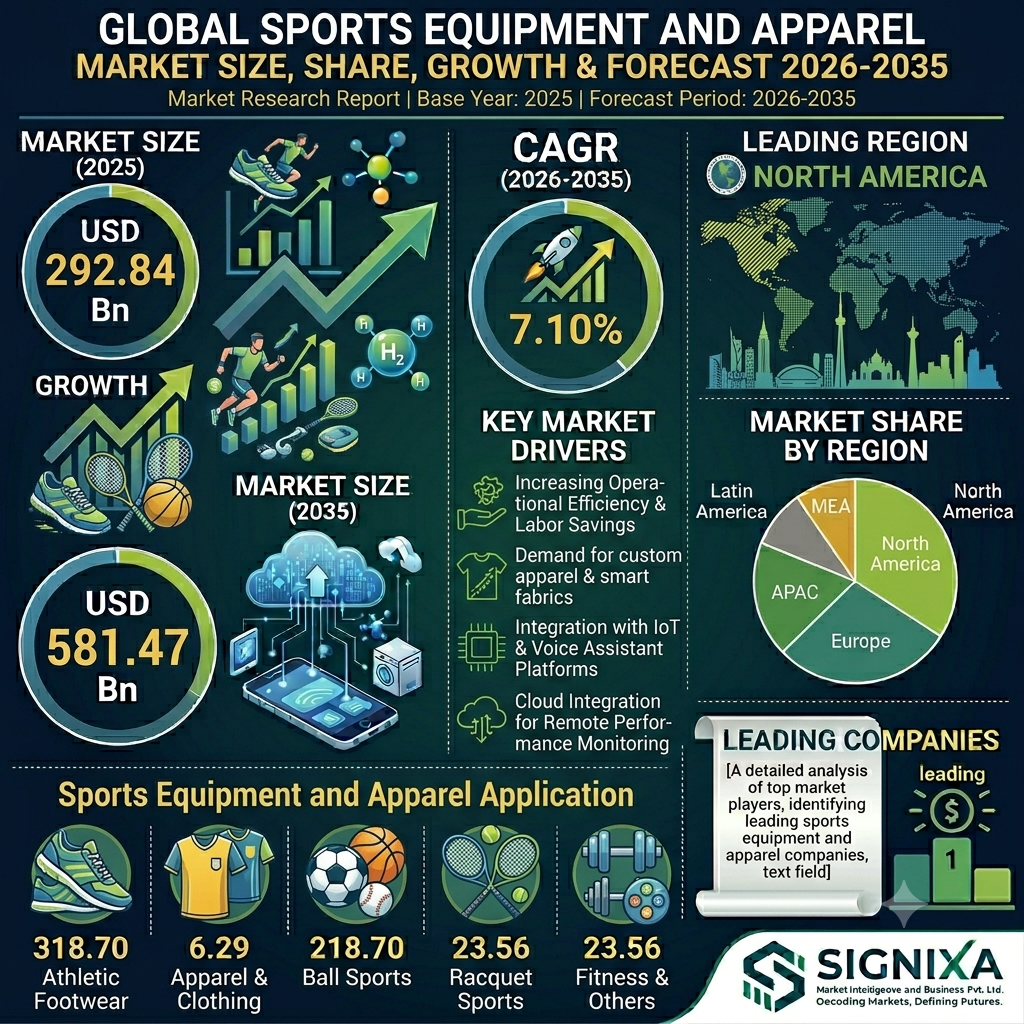
The size of the global sports equipment and apparel market was valued at around USD 292.84 billion in 2025 and is projected to reach approximately USD 581.47 billion by 2035, growing at a compound annual growth rate (CAGR) of about 7.10% between 2026 and 2035. The global market spans products designed for both recreational and professional activities across a wide array of sports.
Demand is growing due to rising health consciousness, increased participation in sports, urban fitness trends, and expanding global sports culture. The global sports equipment and apparel market is experiencing robust growth, driven by rising health awareness, increased participation in sports and fitness activities, and growing popularity of athleisure trends. Consumers worldwide are becoming more health-conscious and are engaging in physical activities such as running, yoga, gym workouts, cycling, and organized sports. The surge in sports events, including marathons, triathlons, and international tournaments, has also played a key role. Sportswear is no longer limited to athletic use — it is now part of everyday fashion, blending comfort, style, and performance.
Technological advancements in fabric design — such as moisture-wicking, anti-microbial, and temperature-regulating textiles — are enhancing the appeal of sports apparel. Equipment manufacturers are integrating smart features like sensors and connectivity to track athletic performance and training metrics. The e-commerce boom has further accelerated market growth by making premium sportswear and gear accessible to consumers across geographies. Sustainability is also becoming a priority, with companies investing in eco-friendly materials and ethical production methods.
Key Findings
- The global sports equipment and apparel market is forecast to grow at a CAGR of 7.10% between 2026 and 2035.
- Market size reached USD 292.84 billion in 2025 and is projected to surpass USD 581.47 billion by 2035.
- Fitness and running segments are expected to witness strong growth due to increasing adoption of healthy lifestyles.
- By Distribution Channel, the online segment is projected to grow rapidly at a CAGR of 9.3%, driven by digitalization and ease of access.
- North America currently dominates the market, but Asia-Pacific is expected to emerge as the fastest-growing region.
Sports Equipment and Apparel Market Dynamics
Global Health Consciousness & Athleisure Trend Redefining Consumer Expectations Beyond Traditional Athletic Use
One of the most influential drivers of the sports equipment and apparel market is the global rise in health consciousness and fitness-centric lifestyles. Consumers are increasingly prioritizing wellness, nutrition, and physical activity — not only for aesthetic or performance reasons but also for preventive health and mental well-being. This shift is especially prominent in urban centers where sedentary work patterns have triggered demand for accessible fitness options like home gyms, group classes, and outdoor activities. The popularity of athleisure has blurred the lines between sportswear and everyday fashion, expanding the consumer base to include those who may not actively participate in sports but still seek sporty aesthetics. Government initiatives are reinforcing the momentum — public health campaigns, gyms in public parks, and tax incentives for fitness memberships are consistent structural demand drivers. Social media and fitness influencers also play a major role by inspiring individuals to adopt healthier lifestyles, showcasing sports gear as part of aspirational living through the forecast period.
Smart Fabric Technology, AI-Powered Equipment & Wearable Sensors Elevating Performance & Personalization
Innovation and digital transformation are revolutionizing the sports equipment and apparel market, offering new value propositions to both brands and consumers. Technological advancements in fabric engineering have led to the creation of performance materials that regulate temperature, manage moisture, enhance breathability, and improve muscle compression. Beyond clothing, wearable tech integration is reshaping consumer expectations — equipment such as smart balls, rackets, shoes, and fitness gear now include sensors that connect to mobile applications, providing real-time data on speed, impact, calorie burn, and technique. On the business side, AI and machine learning are being used for predictive analytics, inventory optimization, and personalized marketing. Digital customization tools let consumers design products to their taste, encouraging deeper brand engagement. This convergence of apparel, equipment, and digital technology allows users to monitor progress and tailor their training, enhancing performance outcomes through the forecast period.
E-Commerce Expansion & Direct-to-Consumer Models Transforming Distribution & Brand-Consumer Relationships
The expansion of e-commerce and mobile shopping platforms has transformed how consumers access sports products. Online distribution channels provide convenience, product variety, and price comparisons, boosting customer engagement. Interactive marketing, social media endorsements, and loyalty programs are further strengthening brand-consumer relationships, particularly among younger demographics who value online experiences and community-based fitness. The direct-to-consumer model is expanding, helping brands bypass traditional retail bottlenecks. Virtual try-ons, AR features, and flexible return policies enhance consumer experience. The online channel is projected to grow at a CAGR of 9.3%, reaching over USD 305 billion by 2035. Despite digital growth, offline retail remains dominant with USD 168 billion in 2025 sales, as physical stores offer personalized service, product trials, and immediate fulfillment for premium consumers, particularly in North America and Europe through the forecast period.
Sports Equipment and Apparel Market: Segmentation Analysis
By Sports Type Segment Analysis
Fitness
The fitness segment dominates the market due to the rising adoption of active lifestyles and home-based workouts. In 2025, the fitness category accounted for over USD 58 billion in sales. The rise of wearable tech and virtual fitness platforms has increased demand for gym gear, resistance bands, yoga mats, and fitness apparel. The proliferation of connected fitness equipment — including smart treadmills, stationary bikes with integrated screens, and AI-powered strength training machines — has created a premium product tier that is commanding high average selling prices and driving significant revenue growth in the fitness segment. The pandemic-accelerated adoption of home gym equipment has created a lasting behavioral shift, with many consumers maintaining home fitness investments alongside or instead of gym memberships. The growing popularity of group fitness formats such as HIIT, CrossFit, and functional training is also driving consistent demand for specialized performance apparel and equipment through the forecast period.
Running
Valued at around USD 41 billion in 2025, the running segment is growing steadily, supported by participation in marathons, running clubs, and health-focused apps. High-performance running shoes, moisture-wicking garments, and injury-prevention accessories are in strong demand, especially among urban youth. The running footwear sub-category — particularly carbon-fiber plate running shoes that improve running economy — has experienced remarkable growth driven by both elite athlete performance gains and recreational runners seeking competitive advantages. The gamification of running through apps like Strava and platforms that create community challenges is sustaining runner engagement and encouraging equipment and apparel upgrades through the forecast period.
Football/Soccer
Football remains one of the most lucrative categories, generating USD 36 billion in 2025. With extensive global appeal and increasing youth engagement, demand for jerseys, cleats, balls, and training equipment is robust, particularly in Europe, South America, and Africa. The global football apparel market is strongly driven by licensed replica kit sales tied to club and national team championships — with major tournaments such as the FIFA World Cup and UEFA Champions League generating massive spikes in jersey and merchandise sales. The growing professionalisation of women's football globally — including increased media coverage, sponsorship investment, and women's league development — is creating an expanding new consumer segment for football-specific products through the forecast period.
Outdoor
The outdoor segment, including hiking, trekking, and camping gear, reached USD 31 billion in 2025. Increased eco-tourism, national park tourism, and interest in outdoor exploration post-pandemic are supporting market growth, especially in the U.S., Germany, and Japan. The growth of the "outdoor wellness" trend — where consumers seek mental health benefits from nature immersion alongside physical activity — is supporting sustained demand for outdoor gear beyond purely performance-driven purchasing. The expanding trail running category, which bridges outdoor adventure and competitive running, is creating demand for specialized footwear and apparel that combines terrain durability with performance running features through the forecast period.
Bike
Biking equipment, including bikes, helmets, and accessories, recorded USD 28 billion in 2025, driven by rising urban cycling and fitness biking. E-bike demand is a major growth driver, especially in Europe and China. The e-bike revolution — which is expanding cycling participation beyond fitness enthusiasts to commuters, older adults, and those seeking an assisted riding experience — is creating a massive new addressable market for cycling accessories, apparel, and safety gear. Urban infrastructure investments in dedicated cycling lanes in major European and Asian cities are reinforcing the trend toward cycling as a mainstream transportation mode, supporting consistent demand for cycling products through the forecast period.
Tennis
Tennis and other racket sports together contributed USD 20 billion in 2025. Demand for racquets, clothing, and court footwear is driven by international tournaments and increasing recreational play. The "padel tennis" phenomenon — one of the fastest-growing sports globally — is creating significant new demand for specialized padel racquets, court shoes, and apparel across Europe, Latin America, and increasingly other regions. Grand Slam tournament campaigns featuring high-profile athlete endorsements consistently drive consumer interest and product launches. The growth of pickleball as a recreational sport — particularly in North America — is creating a new equipment sub-category that is driving incremental market growth through the forecast period.
Winter Sports
Valued at USD 18 billion in 2025, winter sports equipment such as skis, snowboards, and thermal wear remain popular in North America and Europe. Seasonal spikes, tourism, and Winter Olympics campaigns boost this category. The premium nature of winter sports equipment — where technology-driven performance improvements in ski and snowboard construction command significant price premiums — supports strong average selling prices that sustain revenue despite the relatively smaller number of active winter sports participants compared to year-round sports. The growing adoption of indoor ski centers and snow parks in non-traditional winter sports markets in Asia and the Middle East is expanding the winter sports consumer base through the forecast period.
Watersports
With sales of approximately USD 16 billion in 2025, the watersports category benefits from the growing popularity of surfing, diving, and kayaking. Growth is significant in coastal regions and adventure travel markets. The post-pandemic surge in outdoor adventure activities has created sustained elevated demand for watersports equipment, particularly in premium segments such as advanced surfboard technology, high-performance freediving equipment, and foil boarding. The growing accessibility of stand-up paddleboarding (SUP) — which combines ease of entry with fitness benefits and social aspects — is creating broad consumer appeal for watersports that extends beyond traditional coastal communities through the forecast period.
Other Team Sports
The Other Team Sports segment encompasses equipment and apparel for basketball, baseball, rugby, cricket, volleyball, and other organized team sports. This segment benefits from consistent demand driven by school and college sports programs, professional league participation, and recreational team sports engagement across multiple cultures and geographies. Cricket — particularly across South Asia, Australia, and the UK — represents a significant sub-category with strong demand for bats, protective gear, and specialist apparel. Basketball's global cultural influence, driven by NBA popularity and streetwear crossover, sustains strong demand for basketball shoes and apparel that extend well beyond court performance into everyday fashion through the forecast period.
Others
The Others segment includes specialist sports categories such as golf, combat sports (boxing, martial arts, wrestling), equestrian sports, rock climbing, and other niche activities. Golf — experiencing a renaissance particularly among younger players globally following the COVID-19 period when outdoor activities were favored — represents a significant sub-segment with strong demand for premium clubs, bags, footwear, and performance apparel. The climbing gym proliferation globally — particularly in urban areas where artificial climbing walls provide accessible participation without access to natural crags — is driving strong demand for specialized climbing equipment, footwear, and technical apparel through the forecast period.
By Distribution Channel Segment Analysis
Online
The online channel is projected to grow at a CAGR of 9.3%, reaching over USD 305 billion by 2035. Rapid adoption of e-commerce, digital fitness communities, and influencer-driven promotions support online sales. Virtual try-ons, AR features, and flexible return policies enhance consumer experience. The direct-to-consumer brand model enabled by e-commerce is allowing sports brands to build customer relationships, capture first-party data, and improve margin profiles by bypassing traditional retail intermediaries. The growing role of social commerce — where products are discovered and purchased directly through social media platforms — is creating frictionless shopping journeys that are particularly effective for sports and fitness products targeting younger demographics. Mobile-first shopping experiences with seamless payment integration are becoming the dominant channel for sports apparel purchases in markets with high smartphone penetration through the forecast period.
Offline
Despite digital growth, offline retail remains dominant with USD 168 billion in 2025 sales. Physical stores offer personalized service, product trials, and immediate fulfillment. Specialty sports outlets and brand-owned stores continue to attract premium consumers, particularly in North America and Europe. The experiential retail format — where physical stores serve as brand experience centers featuring immersive environments, personalized fitting services, and in-store training sessions — is allowing premium sports brands to differentiate their offline offering beyond simple product availability. Running specialty stores, which provide professional gait analysis and personalized shoe fitting recommendations, maintain strong consumer loyalty in a category where proper fit significantly impacts performance and injury prevention. The click-and-collect model — where consumers purchase online and collect in-store — is creating beneficial integration between online and offline channels for major sports retail chains through the forecast period.
Report Attributes & Market Scope
| Report Attribute | Details |
|---|---|
| Market Size Value in 2025 | USD 292.84 Billion |
| Market Size Value in 2035 | USD 581.47 Billion |
| CAGR (2026–2035) | 7.10% |
| Base Year Used for Estimation | 2025 |
| Historic Data | 2020 - 2025 |
| Forecast Period | 2026 - 2035 |
| Segments Covered – By Sports Type |
|
| Segments Covered – By Distribution Channel |
|
| Regions Covered | North America, Europe, Asia Pacific, Latin America, Middle East and Africa |
| Major Countries Covered | U.S., Canada, Mexico, Germany, UK, France, Italy, Spain, Russia, China, Japan, South Korea, India, Southeast Asia Countries, Brazil, Argentina, GCC Countries, Turkey, Iran, Israel, South Africa, Egypt, Nigeria, etc. |
| Key Companies Profiled | Nike, Adidas, Puma, Under Armour, ASICS Corporation, Reebok, Decathlon, New Balance, Columbia Sportswear, and Yonex, among others. |
Sports Equipment and Apparel Market Regional Analysis
North America leads the global market with a strong presence of major sports brands, organized retail, and high consumer spending on fitness. Europe follows, with widespread sports culture and eco-conscious product innovations. Asia-Pacific is the fastest-growing region, driven by urbanization, youth sports participation, and rising income levels. Latin America and the Middle East & Africa are emerging markets with growing investment in sports infrastructure.
North America (Dominant Region)
North America remains a dominant region in the sports equipment and apparel market due to its mature retail infrastructure, widespread fitness culture, and high consumer spending. The United States, in particular, is a trendsetter in the global fitness industry, driven by strong participation in sports, rising health awareness, and a deep-rooted culture of athletic performance. Professional sports leagues such as the NFL, NBA, and MLB, along with college sports programs, have significantly influenced apparel styles and consumer preferences. The popularity of athleisure is especially high, with consumers embracing activewear for both gym and everyday wear. The fitness tech boom — including smart wearables and connected equipment — has further elevated expectations around functionality and design. There is also a growing demand for eco-conscious and locally sourced materials, reflecting rising environmental and social awareness. Direct-to-consumer models are expanding, helping brands bypass traditional retail bottlenecks through the forecast period.
Europe
Europe holds a significant position in the global sports equipment and apparel market, supported by a strong tradition of organized sports, government-led fitness initiatives, and a rising interest in wellness and outdoor activities. Countries like Germany, the U.K., France, and Italy drive much of the demand, with football (soccer), cycling, tennis, and skiing among the most popular sports. The region's affinity for sustainability and innovation is reflected in the increasing demand for eco-friendly materials, ethical sourcing, and circular economy practices in sportswear. E-commerce has experienced robust growth post-pandemic, with consumers increasingly opting for online channels. The continent is also witnessing growth in women's sportswear and inclusive product ranges, signaling evolving consumer priorities. However, economic uncertainties and regulatory complexities pose ongoing challenges that market participants must navigate through the forecast period.
Asia-Pacific (Fastest-Growing)
Asia Pacific represents one of the most dynamic and rapidly expanding regions in the sports equipment and apparel market, driven by rising disposable incomes, a growing middle class, and increasing health consciousness across key economies. Countries such as China, India, Japan, Australia, and South Korea are witnessing a shift in lifestyle patterns, with greater emphasis on fitness, sports participation, and athleisure. Government-led initiatives like "Healthy China 2030" and India's "Fit India Movement" have encouraged citizens to engage in physical activity, leading to increased demand for quality sporting goods and apparel. China dominates regional sales, supported by domestic manufacturing capabilities and an expanding base of sports enthusiasts. E-commerce platforms such as Tmall, JD.com, and Flipkart have made international and domestic brands highly accessible. Japan and South Korea favor high-performance, technologically advanced sportswear, while Australia's demand is shaped by a strong outdoor culture through the forecast period.
Latin America & Middle East/Africa
Latin America and the Middle East & Africa are emerging markets with growing investment in sports infrastructure and consumer health trends. In Latin America, Brazil and Mexico lead demand, driven by deep football culture, growing fitness participation, and expanding middle-class consumer bases. Brazil's hosting of major international sporting events has historically catalyzed infrastructure investment and consumer enthusiasm for sports products. In the Middle East, particularly the GCC countries, significant government investment in sports facilities, tourism, and mega-events is creating a burgeoning sports market. Saudi Arabia's Vision 2030 sports development program and the UAE's established reputation as an endurance sports destination (Iron Man races, cycling events) are creating new consumer segments for premium sports equipment and apparel through the forecast period.
Recent Developments in the Sports Equipment and Apparel Market
-
2023
Nike launched a tech-integrated training shoe line with AI-based motion analysis for improved performance feedback.
-
2022
Adidas partnered with Peloton to launch a co-branded collection of performance apparel aimed at digital fitness users.
Sports Equipment and Apparel Market: Competitive Landscape
Key players in the global sports equipment and apparel market include Nike, Adidas, Puma, Under Armour, ASICS Corporation, Columbia Sportswear, Decathlon Group, Amer Sports, VF Corporation, and New Balance. The market is highly competitive, with companies focusing on innovation, sustainability, and digital engagement. Strategic collaborations, product personalization, and expansion into emerging markets remain core growth strategies. Brands are also investing in sustainable materials and circular economy models to align with consumer demand for eco-conscious products.
Key Companies Profiled
Global Sports Equipment and Apparel Market Segmentation Summary
By Sports Type
By Distribution Channel
By Region
Frequently Asked Questions (FAQs) About the Sports Equipment and Apparel Market
What is Sports Equipment and Apparel?
Sports equipment and apparel refer to the gear, clothing, and footwear specifically designed for sports and physical exercise. This includes items like balls, bats, nets, racquets, protective gear, jerseys, shoes, tracksuits, and performance-enhancing wear used across various indoor and outdoor sports.
Which key factors will influence the Sports Equipment and Apparel market growth over 2026–2035?
The global market is expected to grow due to rising health awareness, increased participation in fitness and recreational activities, expanding sports leagues, and growing adoption of athleisure fashion. E-commerce growth and endorsements by athletes also boost market penetration.
What will be the value of the Sports Equipment and Apparel market during 2026–2035?
According to the study, the global Sports Equipment and Apparel market size was worth around USD 292.84 billion in 2025 and is projected to grow to approximately USD 581.47 billion by 2035.
What will be the CAGR value of the Sports Equipment and Apparel market during 2026–2035?
The Sports Equipment and Apparel market is expected to expand at a CAGR of 7.10% during the forecast period from 2026 to 2035.
Which region will contribute notably towards the Sports Equipment and Apparel market value?
North America currently leads the global market, supported by high consumer spending on sportswear and active lifestyles. However, Asia-Pacific is projected to witness the fastest growth, driven by urbanization, a rising youth population, and increased fitness trends.
Which are the major players leveraging the Sports Equipment and Apparel market growth?
The global market is driven by key players such as Nike, Adidas, Puma, Under Armour, ASICS Corporation, Reebok, Decathlon, New Balance, Columbia Sportswear, and Yonex, who lead through product innovation, global branding, and strategic collaborations.
What can be expected from the global Sports Equipment and Apparel market report?
The report provides a comprehensive overview of the market, including in-depth analysis of current trends, growth drivers, challenges, opportunities, competitive dynamics, and detailed segmentation by product, distribution channel, sport type, and end user across major global regions.