
Electric Fencing Market Overview
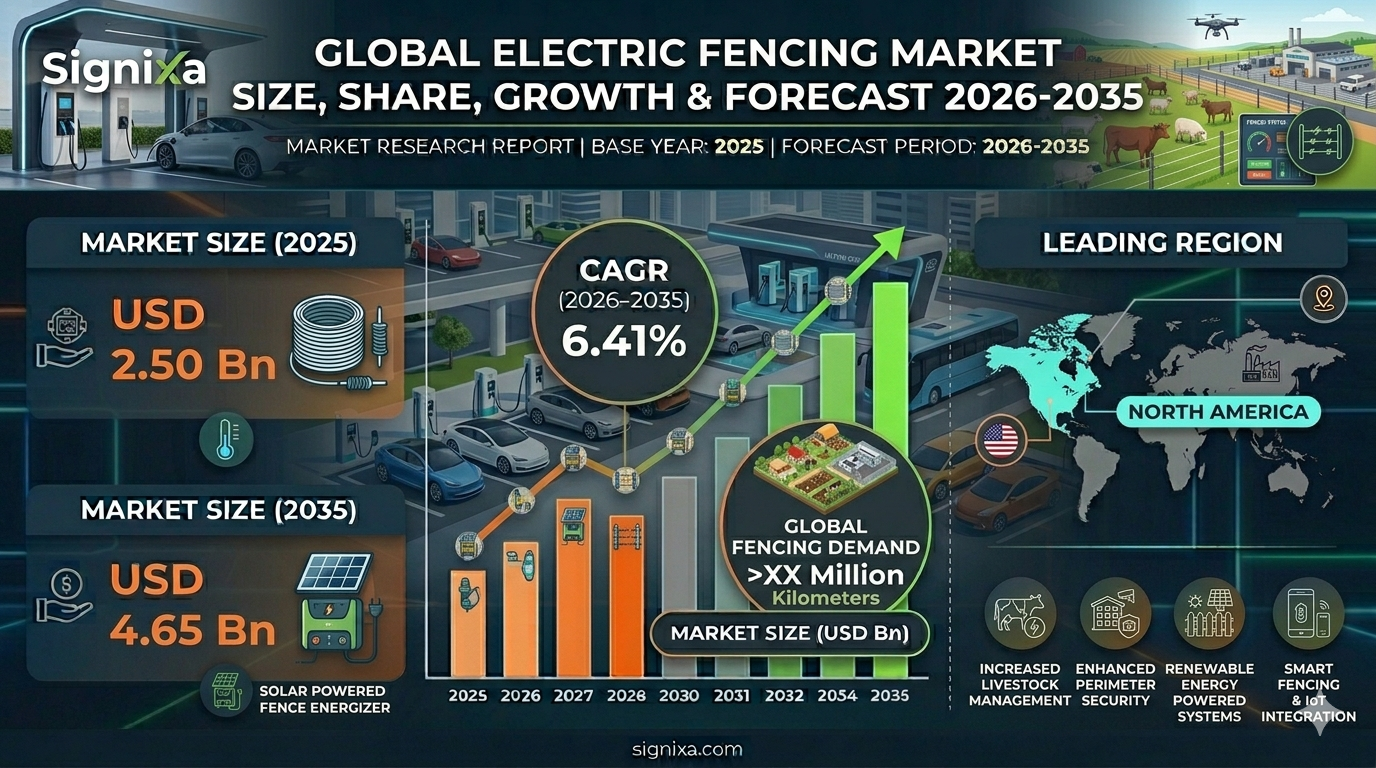
The size of the global Electric Fencing market was worth around USD 2.50 Billion in 2025 and is predicted to grow to around USD 4.65 billion by 2035, with a compound annual growth rate (CAGR) of roughly 6.41% between 2026 and 2035. The report analyzes the Electric Fencing market's drivers and restraints, as well as the impact they have on demand throughout the projection period. In addition, the report examines global opportunities in the global Electric Fencing market.
Electric fencing comprises wires or conductive materials, which are charged with electricity to create a barrier. It includes energizers (which generate the electric current), insulators (to prevent power loss), and fencing wires or tapes. The system may also include controllers, grounding rods, and warning signs. Electric fences are designed for security, livestock control, and wildlife protection. Key features include adjustable voltage, low maintenance, ease of installation, durability, and effectiveness in deterring intruders or animals without causing permanent harm.
The electric fencing market is expanding steadily due to growing needs in agriculture, security, and wildlife management. Farmers increasingly rely on electric fences to protect crops and livestock from wild animals and trespassers, as these fences provide an effective and economical barrier. In security applications, electric fencing is widely adopted for perimeter protection in residential, commercial, and industrial properties, enhancing safety and deterring unauthorized access. Advances in technology have improved electric fencing systems, including the use of solar-powered energizers and smart monitoring features that allow remote control and real-time alerts via mobile devices. This has made electric fences more accessible and user-friendly, especially in remote or off-grid locations. The market is also influenced by environmental concerns, leading to the development of eco-friendly fencing materials and energy-efficient energizers. Additionally, the rising importance of border security and infrastructure protection in various regions fuels demand. Diverse consumer preferences and regulatory frameworks drive manufacturers to innovate and customize solutions for specific applications. Overall, the electric fencing market's growth is shaped by increasing demand for reliable, cost-effective, and technologically advanced fencing solutions across multiple sectors worldwide.
Key Findings
- As per the analysis shared by our research analyst, the global Electric Fencing market is estimated to grow annually at a CAGR of around 6.41% over the forecast period (2026-2035).
- In terms of revenue, the global Electric Fencing market size was valued at around USD 2.50 Billion in 2025 and is projected to reach USD 4.65 billion by 2035.
- Increasing demand for security solutions and efficient livestock management in residential, agricultural, and commercial sectors drives the growth of the electric fencing market globally.
- Based on Type, the Permanent electric fencing segment is growing at a high rate and will continue to dominate the global market as per industry projections.
- On the basis of Application, the Agricultural electric fencing segment is anticipated to command the largest market share.
- In terms of Power Source, the Solar-powered segment is anticipated to command the largest market share.
- By Region, North America is projected to dominate the global market during the forecast period.
Electric Fencing Market Dynamics
Rising Security Concerns, Livestock Management & Solar-Powered Innovation Driving Market Growth
The growth of the electric fencing market is driven by increasing demand for effective security solutions in residential, commercial, and agricultural sectors. The need for efficient livestock management and protection against wildlife is pushing the adoption of electric fences. Additionally, technological advancements, such as solar-powered systems, are boosting market growth by providing sustainable, cost-effective solutions. These factors, combined with the growing trend of property security, are driving the expansion of the electric fencing market globally.
Urbanization & Growing Residential and Commercial Security Concerns Accelerating Electric Fence Demand
The rise in security concerns, both residential and commercial, is fueling the demand for electric fencing. As urbanization increases, more people seek reliable, cost-effective security measures to protect properties from intrusions. Electric fences provide an efficient deterrent, offering a balance of safety without the need for complex surveillance systems, making them a preferred choice for homeowners and businesses looking to enhance their security measures with minimal maintenance.
Expanding Agricultural Use for Livestock Control & Wildlife Crop Protection Fuelling Sector Growth
Electric fencing is widely used in agricultural applications for controlling livestock and protecting crops from wildlife. With the increasing need for efficient farming practices, farmers are opting for electric fences to reduce damage from wild animals and ensure the safety of their livestock. These fences are effective in containing animals within specific boundaries, contributing to higher productivity and protection against wildlife threats, driving the agricultural sector's growth.
Solar-Powered Electric Fencing Technology Advancements Making Fences More Accessible & Eco-Friendly
Advancements in electric fencing technology, particularly in solar-powered systems, are significantly driving market growth. Solar-powered electric fences are becoming a popular choice due to their sustainability and low operational costs. They are particularly suitable for remote areas with no access to electrical grids. With improvements in efficiency, durability, and installation ease, these technological innovations are making electric fencing a more accessible and environmentally friendly option for various applications, further fueling market expansion.
Electric Fencing Market Segmentation Analysis
By Type Segment Analysis
The market is segmented based on type, with each format offering distinct installation permanence, flexibility, and end-use suitability across agricultural, security, and industrial applications globally:
Permanent Electric Fencing
Permanent electric fencing is a durable and long-lasting solution commonly used in agricultural and residential applications. It provides a stable boundary for livestock management and security purposes. The permanent segment holds a significant market share due to its cost-effectiveness over time. It requires less maintenance compared to temporary solutions, making it a preferred choice for long-term use in farms, ranches, and secure properties. Its robust construction and reliability in both rural and urban settings continue to drive demand across core end-user segments globally.
Temporary Electric Fencing
Temporary electric fencing is used for short-term applications, such as during events, temporary livestock management, or to protect specific areas. This type is flexible, easy to install, and can be moved or reconfigured. The market for temporary fences is growing due to its adaptability, especially in agricultural practices and construction sites. However, the temporary segment has a smaller market share compared to permanent fences, as its use is generally limited to specific needs. Its ease of deployment and cost-efficiency for short-duration requirements sustain its growing niche adoption.
By Application Segment Analysis
Residential
Residential electric fencing is gaining popularity due to increasing security concerns in urban and suburban areas. Homeowners are adopting these fences as an affordable solution to safeguard properties from intruders. While not as dominant as agricultural applications, residential electric fencing is growing steadily. The market for residential security solutions is expected to grow at a CAGR of 5.6% over the next five years, driven by concerns over burglary and trespassing. Increasing awareness of smart fencing solutions with remote monitoring capabilities is further enhancing consumer interest in residential applications.
Commercial
Commercial electric fencing is widely used for securing businesses, warehouses, and industrial complexes. Companies prefer electric fences because they provide a deterrent to unauthorized access and protect assets. The demand for commercial electric fences is rising with the increase in the number of thefts and property crimes. Commercial electric fencing accounts for approximately 25% of the market share, and the growth is attributed to businesses seeking cost-effective, scalable security solutions that require minimal ongoing maintenance investment.
Industrial
Electric fences in industrial settings are primarily used to secure sensitive areas, such as factories, manufacturing plants, and storage facilities. These fences help prevent unauthorized access, especially in high-security zones. The industrial segment, although smaller than agricultural and residential applications, is growing as industries seek to enhance security without extensive infrastructure investments. The demand for industrial electric fences is expected to rise in sectors like manufacturing and logistics, with security being a major concern driving sustained adoption.
Agricultural
Agricultural electric fencing dominates the global market, comprising over 40% of the market share. The primary drivers include the need to manage livestock and protect crops from wildlife. Farmers use electric fences to prevent livestock from straying and to guard against predators like coyotes, deer, or wild boars. The agricultural sector's growth is driven by increasing livestock farming, crop production, and the need for efficient farm management solutions. Demand is expected to continue growing, especially in regions with expanding agricultural activities and increasing pressure on farmlands from wildlife encroachment.
Wildlife Protection
Electric fences for wildlife protection are increasingly used to protect biodiversity and prevent wildlife from damaging crops or entering restricted areas. These fences are often deployed in wildlife reserves, national parks, or areas where human-wildlife conflict is common. As the need for wildlife conservation grows, this segment is expanding. Electric fencing plays a crucial role in wildlife management by providing an effective and humane solution to prevent human-wildlife conflicts. It is widely used to protect agricultural lands, livestock, and protected areas from damage caused by wild animals such as elephants, deer, and boars. By delivering a safe but memorable electric shock, these fences deter animals from crossing into farmlands or residential zones without causing harm. This helps reduce crop losses, livestock predation, and property damage, which are significant concerns in many regions globally. Additionally, electric fencing supports conservation efforts by defining protected boundaries in wildlife reserves and national parks, minimizing poaching risks and controlling animal movements. Technological advancements like solar-powered energizers and automated monitoring systems enable efficient fence management, especially in remote and off-grid areas. The flexibility and cost-effectiveness of electric fencing make it a preferred choice for large-scale wildlife protection. Furthermore, it promotes coexistence by minimizing the need for lethal control methods, aligning with ethical and environmental priorities. Overall, electric fencing remains a vital tool for balancing human activities with wildlife conservation and safety.
Report Attributes & Market Scope
| Report Attribute | Details |
|---|---|
| Market Size Value in 2025 | USD 2.50 Billion |
| Market Size Value in 2035 | USD 4.65 Billion |
| CAGR (2026–2035) | 6.41% |
| Base Year Used for Estimation | 2025 |
| Historic Data | 2020 - 2025 |
| Forecast Period | 2026 - 2035 |
| Segments Covered – By Type |
|
| Segments Covered – By Application |
|
| Segments Covered – By Power Source |
|
| Regions Covered | North America, Europe, Asia Pacific, Latin America, Middle East and Africa |
| Major Countries Covered | U.S., Canada, Mexico, Germany, UK, France, Italy, Spain, Russia, China, Japan, South Korea, India, Southeast Asia Countries, Brazil, Argentina, GCC Countries, Turkey, Iran, Israel, South Africa, Egypt, Nigeria, etc. |
| Key Companies Profiled | Asha Solar Fencing, A-1 Fence, Techtree Inc., Omega Solar, C I Network Technologies Pvt Ltd, Arihant Steel, Chemey, Karimulla Group, YSR Security System, Crown Power Fencing, among others. |
Electric Fencing Market Regional Analysis
The Electric Fencing market is primarily dominated by the North America region, due to its high demand for security solutions in both residential and commercial sectors, along with widespread agricultural usage. The region's advanced infrastructure, strong agricultural industry, and increased awareness of security drive this dominance. The fastest-growing regions are Asia-Pacific and Latin America, due to rapid urbanization, increasing agricultural activities, and the rising need for efficient security solutions. Africa is an emerging market, driven by growing agricultural needs and wildlife protection initiatives.
North America (Dominant Region)
North America holds a strong position in the electric fencing market, driven by its widespread use across agriculture, security, and industrial sectors. Farmers extensively use electric fences to safeguard livestock and crops from wildlife and trespassers, especially in rural and farming communities. The security segment benefits from increasing concerns over property protection, with electric fencing widely installed around residential complexes, commercial facilities, and critical infrastructure. Technological advancements, such as solar-powered energizers and smart remote monitoring systems, are gaining traction in the region, enhancing operational efficiency and reducing maintenance costs. The integration of IoT and mobile apps enables real-time alerts and control, appealing to tech-savvy consumers. Additionally, stringent government regulations on perimeter security and border protection contribute to steady demand for electric fencing solutions. The presence of advanced manufacturing capabilities and established distribution networks facilitates easy availability of a variety of electric fencing products. Environmental considerations also promote the adoption of energy-efficient and eco-friendly fencing systems. Overall, North America's market growth is supported by a combination of robust agriculture, heightened security awareness, technological innovation, and regulatory frameworks, positioning it as a key player in the global electric fencing industry.
Asia Pacific
The Asia Pacific electric fencing market is rapidly growing, fueled by increasing urbanization, expanding agricultural activities, and rising security concerns. In countries like China, India, Australia, and Southeast Asian nations, farmers are adopting electric fences extensively to protect livestock and crops from wildlife and theft, driven by the need to improve agricultural productivity and reduce losses. Rapid infrastructure development and industrialization have also increased the demand for electric fencing in commercial and residential security applications. Technological advancements, such as solar-powered energizers and remote monitoring systems, are becoming popular, especially in rural and off-grid areas where conventional power supply is limited. The growing awareness of modern security solutions among consumers and governments is driving adoption further. Additionally, rising investments in border security and critical infrastructure protection support market growth. Manufacturers are tailoring products to meet diverse climatic conditions and regional preferences, enhancing product acceptance. Despite challenges such as initial installation costs and maintenance requirements, the demand for efficient, cost-effective, and sustainable electric fencing solutions in the Asia Pacific region remains strong, making it a vital and expanding market globally.
Europe
Europe's electric fencing market is witnessing steady growth driven by diverse applications in agriculture, security, and wildlife management. The region's well-established agricultural sector relies on electric fences to protect livestock and crops from predators and unauthorized access, enhancing farm productivity and safety. Security concerns in urban and suburban areas have boosted the adoption of electric fencing for perimeter protection in residential, commercial, and industrial properties. Technological innovations, such as solar-powered energizers and smart fencing systems with remote monitoring and IoT integration, are gaining traction, offering enhanced control and efficiency. Environmental regulations and sustainability trends encourage the use of energy-efficient and eco-friendly fencing solutions, aligning with Europe's strong focus on green technologies. Additionally, government initiatives to safeguard critical infrastructure and border areas contribute to market demand. Manufacturers in Europe emphasize product customization to meet specific climatic and regulatory requirements across different countries. The presence of advanced distribution networks and a mature retail market facilitates widespread availability. Although installation and maintenance costs remain a challenge, the overall preference for reliable, innovative, and sustainable electric fencing systems ensures continued growth and competitiveness in the European market.
Middle East
The Middle East electric fencing market is growing steadily, driven by increasing security concerns, rapid urbanization, and expanding agricultural activities across the region. Governments and private sectors prioritize perimeter security for critical infrastructure, residential complexes, and commercial properties due to rising threats and the need for enhanced safety measures. Electric fencing offers an effective, reliable solution for preventing unauthorized access and safeguarding assets. In agriculture, the demand is rising as farmers seek to protect livestock and crops from wild animals and theft, especially in countries like Saudi Arabia, UAE, and Egypt. Technological advancements, such as solar-powered energizers and remote monitoring systems, are particularly attractive in this region where access to conventional power sources can be limited in remote areas. Additionally, the harsh climatic conditions drive the adoption of durable and weather-resistant fencing materials suited for desert environments. The market also benefits from increasing investments in infrastructure development and border security initiatives. Despite challenges like high initial costs and maintenance in extreme weather, the need for robust, cost-effective, and technologically advanced fencing solutions continues to propel the Middle East market forward.
Africa & Latin America
Africa is an emerging market for electric fencing, driven by growing agricultural needs and wildlife protection initiatives. The continent faces significant human-wildlife conflict challenges, particularly in countries with large wildlife populations, making electric fencing an essential tool for crop and livestock protection as well as conservation management. Latin America will see further electric fencing market growth based on growing infrastructure investments, expanding agricultural activities, and the rising need for efficient security solutions. Brazil and Argentina are the primary contributors in the region, each benefiting from extensive agricultural landscapes and growing commercial and residential security requirements. Despite challenges including limited grid infrastructure and initial cost barriers in certain territories, solar-powered fencing solutions are increasingly bridging the access gap, particularly in off-grid rural areas. International development funding and conservation partnerships are further supporting broader deployment of electric fencing solutions across both Africa and Latin America through the forecast period.
Recent Developments in the Electric Fencing Market
-
2026
A-1 Fence highlights electric fencing's role in enhancing security for homes, agriculture, and high-risk facilities. Their advanced systems also protect solar parks from theft and animal intrusions with features like real-time monitoring.
-
2022
Techtree Inc. introduced the Electric Snail Fence, offering a safe, efficient solution for controlling snails in gardens and farming. With features like waterproofing, solar/USB charging, and easy installation, it effectively deters snails without harming them.
Electric Fencing Market: Competitive Landscape
The global Electric Fencing market features major players such as Asha Solar Fencing, A-1 Fence, Techtree Inc., Omega Solar, C I Network Technologies Pvt Ltd, Arihant Steel, Chemey, Karimulla Group, YSR Security System, Crown Power Fencing, among others. The Electric Fencing market is highly competitive, with major players such as Asha Solar Fencing, A-1 Fence, Techtree Inc., Omega Solar, and others driving technological advancements across a range of applications. Companies are competing on factors such as product innovation, cost-efficiency, geographical reach, and sustainability, which are all essential for gaining market share in the growing Electric Fencing industry.
The competitive landscape of the electric fencing market is marked by intense innovation and strategic advancements as companies strive to differentiate their offerings. Manufacturers are focusing on developing advanced technologies such as solar-powered energizers, remote monitoring systems, and smart fencing solutions integrated with IoT for enhanced control and real-time alerts. Product customization to meet varied application needs — ranging from agriculture to high-security installations — is a key strategy to attract diverse customers. Sustainability is becoming increasingly important, pushing companies to use eco-friendly materials and energy-efficient designs. Competitive pricing and flexible financing options also play a crucial role in gaining market share, especially in price-sensitive regions. Strong emphasis on after-sales service, warranties, and technical support helps build brand loyalty and customer satisfaction. Collaborations with distributors, security firms, and agricultural suppliers expand market reach and accessibility. The rise of e-commerce platforms further facilitates direct consumer engagement and broadens sales channels. Overall, competition drives continuous improvement in product quality, technological sophistication, and customer-centric solutions, ensuring dynamic growth and resilience in the evolving electric fencing market.
Key Companies Profiled
Global Electric Fencing Market Segmentation Summary
By Type
By Application
By Power Source
By Region
Frequently Asked Questions (FAQs) About the Electric Fencing Market
What is Electric Fencing?
Electric fencing is a type of security barrier that uses electric shocks to deter animals or intruders from crossing the fence. It consists of conductive wires powered by a charger, providing a safe, low-maintenance solution for perimeter protection.
Which key factors will influence the Electric Fencing market growth over 2026–2035?
Key factors driving growth in the electric fencing market include increasing demand for security solutions, advancements in technology, eco-friendly options like solar-powered fences, and rising agricultural and wildlife protection needs, ensuring broader adoption globally.
What will be the value of the Electric Fencing market during 2026–2035?
According to the study, the global Electric Fencing market size was worth around USD 2.50 billion in 2025 and is predicted to grow to around USD 4.65 billion by 2035.
What will be the CAGR value of the Electric Fencing market during 2026–2035?
The CAGR value of the Electric Fencing market is expected to be around 6.41% during 2026–2035.
Which region will contribute notably towards the Electric Fencing market value?
North America dominates the electric fencing market due to high security concerns, widespread adoption in agriculture and residential sectors, advanced technology integration, and strong demand for eco-friendly solutions like solar-powered fencing systems.
Which are the major players leveraging the Electric Fencing market growth?
The global Electric Fencing market is led by players such as Asha Solar Fencing, A-1 Fence, Techtree Inc., Omega Solar, C I Network Technologies Pvt Ltd, Arihant Steel, Chemey, Karimulla Group, YSR Security System, Crown Power Fencing, among others.
What can be expected from the global Electric Fencing market report?
The report explores crucial aspects of the Electric Fencing market, including a detailed discussion of existing growth factors and restraints while also analyzing future growth opportunities and challenges that impact the market.