
Doxofylline Market Overview
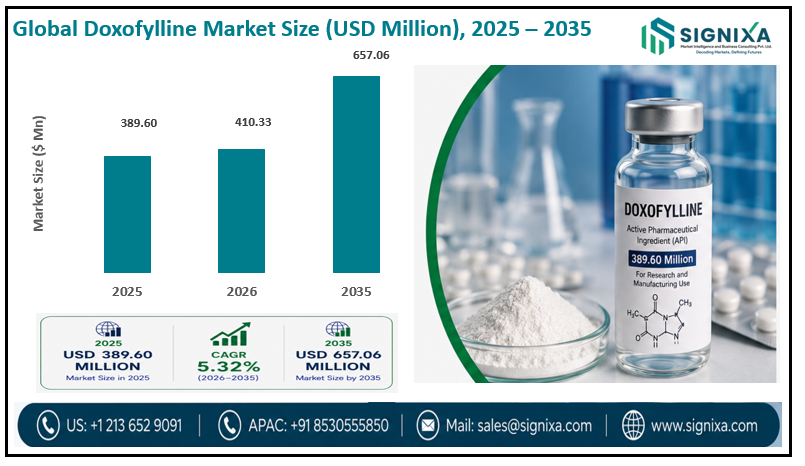
The size of the global Doxofylline market was worth around USD 389.60 Million in 2025 and is predicted to grow to around USD 657.06 Million by 2035, with a compound annual growth rate (CAGR) of roughly 5.32% between 2026 and 2035. The report analyzes the Doxofylline market's drivers and restraints, as well as their impact on demand throughout the projection period.
The Doxofylline market includes pharmaceutical drugs used for treating respiratory disorders such as asthma, COPD, and bronchitis. Doxofylline is a methylxanthine derivative used as a bronchodilator that is primarily prescribed for managing chronic respiratory disorders. Unlike its predecessors, doxofylline exhibits lower cardiotoxicity and does not significantly interfere with sleep patterns or gastrointestinal function, making it a more tolerable choice for long-term use. Physicians increasingly favor doxofylline due to its simplified pharmacokinetics, stable plasma concentration, and minimal drug interactions, which help improve patient adherence and outcomes.
The expansion of the doxofylline market is supported by evolving treatment protocols, ongoing comparative clinical trials, and rising awareness of its differentiated safety profile. Pharmaceutical companies are investing in developing generic formulations and combination therapies involving doxofylline to enhance its accessibility and therapeutic impact. Emerging markets in Asia and Latin America are experiencing a notable rise in its adoption due to increasing respiratory disease incidence and a shift toward cost-effective, well-tolerated medications.
Key Findings
- The global Doxofylline market is estimated to grow annually at a CAGR of around 5.32% over the forecast period (2026–2035).
- The market size was valued at around USD 389.60 Million in 2025 and is projected to reach USD 657.06 Million by 2035.
- The market is projected to grow steadily due to increasing cases of asthma and COPD globally, with COPD projected to become the third leading cause of death worldwide.
- Based on Application, the COPD segment is anticipated to lead the market due to its high disease burden.
- On the basis of Formulation Type, Oral Tablets dominate the market, favored for patient compliance and ease of administration.
- By Grade, the Pharmaceutical Grade segment is expected to maintain dominance throughout the forecast period.
- By Region, Asia-Pacific is expected to account for the largest share of the market, supported by high population density and increasing healthcare awareness.
Doxofylline Market Dynamics
Rising Global Respiratory Disease Burden & Doxofylline's Superior Safety Profile Over Theophylline
The rising global prevalence of respiratory diseases such as asthma, COPD, and bronchitis is a major driver for the Doxofylline market. According to the WHO, over 300 Million people suffer from asthma, while COPD accounts for more than 3 Million deaths annually. Doxofylline's ability to deliver effective bronchodilation without the extensive side effects commonly associated with other methylxanthines makes it a strong candidate for long-term therapy. One of the major barriers to the use of theophylline has been its complex dosing, potential for toxicity, and need for regular blood monitoring. In contrast, doxofylline exhibits minimal central nervous system stimulation and has negligible effects on cardiac rhythm, significantly reducing risks for elderly patients and those with comorbidities. It also does not interfere significantly with sleep patterns or gastrointestinal function, contributing to higher patient adherence and overall satisfaction.
Generic Market Expansion & Regulatory Framework Evolution Enabling Wider Clinical Adoption
The rising availability of generic doxofylline formulations is playing a crucial role in enhancing access to the drug, especially in cost-sensitive and emerging markets. As patents for branded variants expire, numerous pharmaceutical manufacturers are entering the space, driving down prices and improving availability in public health systems and private pharmacies. Several manufacturers are also exploring the development of fixed-dose combinations involving doxofylline and corticosteroids or bronchodilators, enhancing therapeutic convenience and compliance. Shifts in regulatory landscapes and clinical guidelines are also playing an instrumental role, as more comparative studies and meta-analyses validate doxofylline's safety and efficacy. In countries like India, Brazil, and Southeast Asia, doxofylline already enjoys wider clinical use and is often included in regional formularies and hospital protocols, while international respiratory health organizations are beginning to acknowledge it as a viable alternative for patient's intolerant to theophylline.
Healthcare Infrastructure Expansion in Emerging Markets & Air Pollution-Driven Demand
The expansion of healthcare infrastructure and pharmaceutical manufacturing in emerging economies is boosting the market outlook. Regions like Asia-Pacific and Latin America are seeing significant demand due to rising air pollution, urbanization, and increased patient awareness. Air pollution, tobacco use, occupational hazards, and lifestyle-related factors have contributed significantly to the surge in respiratory ailments. In developing countries, where access to specialty respiratory care may be limited, doxofylline provides a valuable alternative that bridges the gap between affordability and therapeutic value. Accessibility through online sales channels and the growth of contract manufacturing organizations (CMOs) are also contributing to market expansion. Government initiatives and reimbursement policies promoting the treatment of chronic respiratory diseases further drive doxofylline demand across multiple regions.
Doxofylline Market Segmentation Analysis
By Grade Segment Analysis
Pharmaceutical Grade
The Pharmaceutical Grade segment holds the largest share of the Doxofylline market. This grade meets stringent quality standards and is used in final drug formulations. The high safety and efficacy standards required by pharmaceutical companies keep demand robust. Pharmaceutical grade doxofylline must conform to pharmacopoeial specifications for purity, potency, and safety including limits on residual solvents, heavy metals, and related impurities that ensure consistent therapeutic outcomes and patient safety across the oral tablets, injectable formulations, and inhalation powders where it is used as the active pharmaceutical ingredient. The increasing number of regulatory approvals for doxofylline formulations globally, combined with the entry of additional generic manufacturers into the active pharmaceutical ingredient supply chain, is gradually improving supply security and cost competitiveness for pharmaceutical grade doxofylline.
Industrial Grade
Industrial Grade Doxofylline is used in limited non-therapeutic applications and holds a marginal market share. The narrow application scope of industrial-grade doxofylline reflects the compound's primary identity as a pharmaceutical active ingredient rather than a broad-application industrial chemical, constraining the industrial grade segment's growth potential relative to the pharmaceutical grade category which benefits from the full tailwind of expanding global respiratory disease treatment demand. As doxofylline's clinical use continues to expand across both branded and generic pharmaceutical formats, the pharmaceutical grade segment is expected to further widen its share lead over the industrial grade category throughout the forecast period.
By Formulation Type Segment Analysis
Oral Tablets
Oral tablets dominate the market due to ease of consumption, patient compliance, and longer shelf life. They are widely prescribed for long-term management of respiratory disorders. The oral tablet format's convenience enabling self-administration without clinical supervision, predictable pharmacokinetics, and ease of incorporation into daily medication routines aligns well with the outpatient, maintenance-phase management of chronic respiratory conditions like asthma and COPD that represent doxofylline's primary indication. Extended-release tablet formulations are a growing sub-segment, offering once-daily or twice-daily dosing schedules that further simplify patient adherence compared to immediate-release formats requiring more frequent administration. The growth of generic oral tablet manufacturing across South Asia and other pharmaceutical manufacturing hubs is increasing product availability and reducing prices, expanding the patient base accessible to doxofylline therapy.
Injectable & Powder for Inhalation
Injectable formulations are used in emergency and hospital settings, particularly for severe COPD attacks. Powder for inhalation is a growing segment, offering rapid onset of action and targeted drug delivery, and is gaining popularity for home-based treatment settings. The injectable format's role in acute exacerbation management provides a critical complement to oral maintenance therapy in the doxofylline clinical ecosystem, ensuring the drug can address the full disease management spectrum from routine outpatient maintenance to acute inpatient care. The powder for inhalation segment represents the most innovative frontier of doxofylline formulation development, offering the pharmacokinetic advantages of pulmonary drug delivery bypassing hepatic first-pass metabolism, achieving faster bronchodilation onset, and allowing lower systemic doses while extending doxofylline's convenience advantage into the inhalation therapy segment traditionally dominated by beta-agonists and inhaled corticosteroids.
By Application Segment Analysis
The Doxofylline market is segmented across key respiratory disease applications, with each indication representing a distinct patient population and clinical use case driving prescription volume and market revenue globally:
COPD (Chronic Obstructive Pulmonary Disease)
The COPD segment is anticipated to lead the market due to its high disease burden. COPD is projected to become the third leading cause of death globally, and doxofylline is increasingly prescribed for this indication due to its long-term tolerability. The COPD patient population typically older adults with extensive comorbidities including cardiovascular disease, diabetes, and renal impairment represents an ideal target for doxofylline's differentiated safety profile, as the drug's minimal cardiac effects and absence of CNS stimulation make it far more appropriate for this vulnerable demographic than theophylline, which requires careful monitoring and dose adjustment in patients with compromised cardiac or renal function.
Asthma
Asthma remains a significant application segment, with the WHO estimating asthma affects over 262 Million people globally. Doxofylline is used to relieve bronchial spasms with minimal cardiac side effects. Countries with high pollution levels and seasonal respiratory outbreaks are particularly witnessing a surge in demand for doxofylline as a frontline asthma therapy. In pediatric and geriatric asthma patients' populations where the side effect burden of theophylline is especially concerning doxofylline's improved tolerability profile provides a compelling clinical rationale for its selection as the preferred xanthine derivative bronchodilator when adjunctive bronchodilation beyond standard beta-agonist therapy is indicated.
Acute Bronchitis
Acute bronchitis and other respiratory disorders drive demand, especially in regions with poor air quality. Doxofylline's role in acute bronchitis management centers on its bronchodilatory effects that reduce airway resistance and improve breathing comfort during the inflammatory phase of acute lower respiratory tract infections. Growing urbanization and air pollution in developing nations particularly across South and Southeast Asia is increasing acute bronchitis incidence and creating sustained demand for affordable, safe bronchodilator medications. Doxofylline's availability in affordable generic oral formats makes it particularly well-positioned to serve the large patient volume in these markets that presents with acute bronchitis requiring short-term bronchodilator therapy.
Other Respiratory Disorders
Other respiratory disorders such as emphysema also drive demand, especially in regions with poor air quality. The research and academic community continue to explore doxofylline's anti-inflammatory mechanisms and its synergistic use with inhaled corticosteroids or beta-agonists, which may further broaden its clinical applications in the future. Growing interest in doxofylline's potential anti-inflammatory properties beyond its established bronchodilatory mechanism is generating research activity into its utility across a broader spectrum of inflammatory airway conditions, potentially expanding its addressable market beyond the established COPD, asthma, and bronchitis indications as additional clinical evidence accumulates from ongoing comparative and mechanistic studies.
By End User Segment Analysis
Pharmaceutical manufacturers account for the largest revenue share, given their role in producing and marketing Doxofylline formulations. Both branded originators and generic manufacturers contribute to this segment, with generic market share expanding as patents expire. Contract Manufacturing Organizations (CMOs) are gaining traction due to outsourcing trends and cost benefits pharmaceutical companies increasingly partner with CMOs for API procurement, formulation development, and finished dosage manufacturing to reduce capital investment and leverage specialized manufacturing expertise. Research Institutions contribute significantly to the discovery and clinical development phases, especially in testing new combination therapies and extended indications that could expand doxofylline's clinical application scope beyond its current core respiratory indications.
Distribution Channels Segment Analysis
Direct sales lead the distribution segment, especially in B2B transactions with hospitals and clinics where pharmaceutical companies maintain dedicated medical representative networks that engage prescribing physicians with clinical evidence, sample products, and promotional support. Third-party distributors help extend geographic reach, especially in low- and middle-income regions where direct pharmaceutical company presence is limited, and distributor networks provide essential logistics and last-mile delivery capabilities for reaching pharmacies and healthcare facilities in smaller cities and rural areas. Online sales are rising steadily, supported by the growth of e-pharmacies and digital healthcare platforms offering prescription fulfillment for chronic respiratory drugs like doxofylline, with telemedicine adoption accelerating the digital channel's growth as patients increasingly access respiratory care consultations and prescription renewals remotely.
Report Attributes & Market Scope
| Report Attribute | Details |
|---|---|
| Market Size Value in 2025 | USD 389.60 Million |
| Market Size Value in 2035 | USD 657.06 Million |
| CAGR (2026–2035) | 5.32% |
| Base Year Used for Estimation | 2025 |
| Historic Data | 2020 - 2025 |
| Forecast Period | 2026 - 2035 |
| Segments Covered – By Grade |
|
| Segments Covered – By Formulation Type |
|
| Segments Covered – By Application |
|
| Segments Covered – By End User |
|
| Segments Covered – By Distribution Channel |
|
| Regions Covered | North America, Europe, Asia Pacific, Latin America, Middle East and Africa |
| Major Countries Covered | U.S., Canada, Mexico, Germany, UK, France, Italy, Spain, Russia, China, Japan, South Korea, India, Southeast Asia Countries, Brazil, Argentina, GCC Countries, Turkey, Iran, Israel, South Africa, Egypt, Nigeria, etc. |
| Key Companies Profiled | Glenmark Pharmaceuticals, Zambon Group, Neopharma, Laboratori Guidotti, Cipla Ltd., Macleods Pharmaceuticals, Lupin Ltd., Alkem Laboratories, Abbott, and Mankind Pharma. |
Doxofylline Market Regional Analysis
Asia-Pacific dominates due to high asthma and COPD prevalence, large populations, and developing healthcare systems. North America follows with increasing adoption of bronchodilator therapies and strong clinical research infrastructure. Europe remains a consistent market due to advanced pharmaceutical standards and aging populations. Latin America and the Middle East & Africa are emerging markets driven by improving healthcare access and growing respiratory disease incidence.
Asia-Pacific (Leading Region)
Asia-Pacific represents one of the most dynamic and high-potential markets for doxofylline, driven by a large patient pool, high air pollution levels, and growing healthcare infrastructure in emerging economies. Countries like India, China, Indonesia, and Vietnam are witnessing a sharp increase in chronic respiratory diseases due to rapid urbanization, smoking habits, and industrial emissions. India has emerged as a stronghold for doxofylline, with numerous domestic pharmaceutical companies manufacturing both branded and generic versions, making the drug widely accessible across rural and urban healthcare centers. China is following closely, with growing inclusion of doxofylline in respiratory treatment protocols, especially in secondary care settings. Government-supported respiratory health initiatives and educational campaigns are improving patient awareness, aiding early diagnosis, and promoting maintenance therapies like doxofylline.
Europe
Europe remains a consistent market for doxofylline due to advanced pharmaceutical standards and aging populations. The region's high prevalence of COPD driven by historic high smoking rates among older generations and occupational exposures creates sustained prescription demand for effective bronchodilator maintenance therapies. European pharmaceutical companies, particularly those with Mediterranean and Italian heritage where doxofylline has historically had strong clinical adoption since its original development, maintain active marketing and clinical development programs around the compound. The EU's pharmacovigilance systems and post-marketing surveillance infrastructure continue to generate real-world safety and efficacy data that supports doxofylline's clinical positioning versus older theophylline formulations in European respiratory care guidelines.
North America
In North America, the doxofylline market is gradually gaining traction as healthcare providers increasingly explore safer and more tolerable alternatives to traditional methylxanthines. The rising prevalence of asthma and COPD, particularly among aging populations and smokers, is a primary driver. While the region has long relied on inhalation therapies and newer biologics for respiratory care, a growing number of patients and physicians are turning to doxofylline for maintenance therapy due to its favourable side effect profile and simplified dosing regimen. The United States presents a significant opportunity, as academic studies and clinical trials highlight doxofylline's lower cardiotoxicity and CNS stimulation compared to theophylline. Sun Pharmaceutical's generic doxofylline launch in the North American market directly addresses this opportunity by improving product availability and affordability for the U.S. and Canadian patients.
Middle East & Africa
The Middle East & Africa is an emerging market for doxofylline, where improving healthcare access and growing respiratory disease incidence are driving demand. The region's high rates of tobacco use, indoor and outdoor air pollution, occupational dust exposure, and tuberculosis which is a significant risk factor for obstructive airway disease create substantial unmet need for affordable bronchodilator therapy. The gradual expansion of healthcare insurance coverage and public health infrastructure in the GCC countries, South Africa, and major African economies is improving respiratory disease diagnosis rates and creating a growing addressable patient population for doxofylline. The drug's cost-effectiveness relative to newer inhaled biologics makes it particularly well-suited for the budget-constrained public healthcare systems that serve the majority of patients in this region.
Latin America
Latin America is an emerging market with improving healthcare access and growing respiratory disease incidence driving demand for doxofylline. Countries like Brazil and Mexico have significant respiratory disease burdens driven by urbanization, smoking, and biomass fuel use in rural areas. Glenmark Pharmaceuticals' introduction of an extended release doxofylline formulation in several South American market's signals growing commercial confidence in the region's market potential. The expansion of generic pharmaceutical supply chains and improving drug regulatory frameworks across major Latin American markets is creating better conditions for doxofylline market development, particularly as the drug's combination of affordability and superior safety versus theophylline resonates with healthcare systems seeking to improve chronic respiratory care outcomes within constrained budget environments.
Recent Developments in the Doxofylline Market
-
2025
Glenmark Pharmaceuticals strengthened its respiratory therapy segment by expanding the global presence of its doxofylline-based products, including the Doxovent brand, across several international markets to improve access to treatment for patients with asthma and COPD.
-
2024
Dr. Reddy's Laboratories enhanced its respiratory medicine portfolio by scaling up production and widening the global distribution of doxofylline formulations, directed at increasing the availability of bronchodilator treatments particularly across developing markets where demand for affordable therapies continues to grow.
-
2024
Sun Pharmaceutical Industries expanded the reach of its respiratory product line by promoting doxofylline-based medicines across Asia and other emerging regions, supporting the company's strategy to strengthen its position in bronchodilator therapies while addressing the rising global burden of chronic respiratory illnesses.
-
2023
Glenmark Pharmaceuticals introduced an extended release doxofylline formulation in several South American markets to broaden its respiratory treatment offerings, designed to enhance dosing convenience and support long-term management of asthma and COPD.
-
2023
Sun Pharmaceutical Industries launched a generic version of doxofylline in the North American market to increase the availability of cost-effective bronchodilator medications and strengthen its respiratory drug portfolio.
-
2023
Cipla Limited introduced a new generic doxofylline tablet formulated for improved bioavailability across key markets, intended to optimize drug absorption and deliver more effective relief for patients with respiratory disorders while supporting wider access to affordable bronchodilator therapy.
Doxofylline Market: Competitive Landscape
The global Doxofylline market includes major players such as Glenmark Pharmaceuticals, Zambon Group, Neopharma, Laboratori Guidotti, Cipla Ltd., Macleods Pharmaceuticals, Lupin Ltd., Alkem Laboratories, Abbott, and Mankind Pharma. The market is competitive and innovation-driven, with companies focusing on expanding formulation types, regulatory approvals, and global distribution. Strategic collaborations between CMOs and branded pharma companies are on the rise. Players are also exploring new respiratory indications and combination therapies, which is expected to widen the application scope and boost market penetration globally.
The competitive landscape is shaped by a clear bifurcation between the established European originators notably Zambon Group (which developed and holds key intellectual property around doxofylline) and Laboratori Guidotti and the large cohort of Indian generic pharmaceutical manufacturers including Glenmark, Cipla, Lupin, Macleods, Alkem, and Mankind Pharma that have built significant doxofylline businesses serving emerging markets. Indian manufacturers' cost competitiveness, manufacturing scale, and growing regulatory compliance capabilities are enabling them to compete not only in domestic and developing country markets but increasingly in higher-value developed market generic segments. The wave of expanded-indication studies, fixed-dose combination development programs, and new delivery format innovation (particularly inhalation formats) represents the primary strategic battleground for competitive differentiation as the oral tablet market matures.
Key Companies Profiled
- Glenmark Pharmaceuticals
- Zambon Group
- Neopharma
- Laboratori Guidotti
- Cipla Ltd.
- Macleods Pharmaceuticals
- Lupin Ltd.
- Alkem Laboratories
- Abbott
- Mankind Pharma
- Sun Pharmaceutical Industries Ltd.
- Dr. Reddy's Laboratories Ltd.
- Torrent Pharmaceuticals Ltd.
- Intas Pharmaceuticals Ltd.
- Zydus Lifesciences Ltd.
Global Doxofylline Market Segmentation Summary
By Grade
- Pharmaceutical Grade
- Industrial Grade
By Formulation Type
- Oral Tablets
- Injectable
- Powder for Inhalation
By Application
- Asthma
- Chronic Obstructive Pulmonary Disease (COPD)
- Acute Bronchitis
- Other Respiratory Disorders
By End User
- Pharmaceutical Manufacturers
- Contract Manufacturing Organizations (CMOs)
- Research Institutions
By Distribution Channel
- Direct Sales
- Third-party Distributors
- Online Sales
By Region
- North America
- U.S.
- Canada
- Mexico
- Europe
- Germany
- France
- UK
- Spain
- Italy
- Rest of Europe
- Asia-Pacific
- China
- Japan
- India
- Australia
- South Korea
- Southeast Asia
- Rest of Asia-Pacific
- Latin America
- Brazil
- Argentina
- Rest of Latin America
- The Middle East & Africa
- GCC Countries
- South Africa
- Rest of the Middle East & Africa
Frequently Asked Questions (FAQs) About the Doxofylline Market
What is Doxofylline?
Doxofylline is a methylxanthine derivative used as a bronchodilator in the treatment of respiratory diseases like asthma and chronic obstructive pulmonary disease (COPD). It improves airflow by relaxing the muscles in the airways and exhibits fewer cardiovascular side effects compared to theophylline.
Which key factors will influence the Doxofylline market growth over 2026–2035?
The Doxofylline market is expected to grow due to the rising prevalence of asthma and COPD, increasing awareness of effective respiratory therapies, growing elderly population, and preference for drugs with improved safety profiles and lower toxicity.
What will be the value of the Doxofylline market during 2026–2035?
According to the study, the global Doxofylline market size was worth around USD 389.60 Million in 2025 and is projected to grow to approximately USD 657.06 Million by 2035.
What will be the CAGR value of the Doxofylline market during 2026–2035?
The Doxofylline market is anticipated to expand at a CAGR of around 5.32% during the forecast period from 2026 to 2035.
Which region will contribute notably towards the Doxofylline market value?
Asia-Pacific and Europe are expected to contribute significantly to the Doxofylline market due to a high burden of respiratory conditions, expanding healthcare access, and increasing demand for affordable respiratory therapies.
Which are the major players leveraging the Doxofylline market growth?
Major companies in the global Doxofylline market include Cipla Ltd., Chiesi Farmaceutici S.p.A., Axon Drugs, Macleods Pharmaceuticals, LGM Pharma, Glenmark Pharmaceuticals, AdvaCare Pharma, Incepta Pharmaceuticals, and Alniche Life Sciences.
What can be expected from the global Doxofylline market report?
The report provides a comprehensive overview of the Doxofylline market, analyzing current trends, drivers, restraints, and future opportunities. It includes market segmentation by grade, formulation type, application, end user, and distribution channel, along with regional outlook, competitive landscape, and forecasts up to 2035.