
Cardiovascular Medical Devices Market Overview
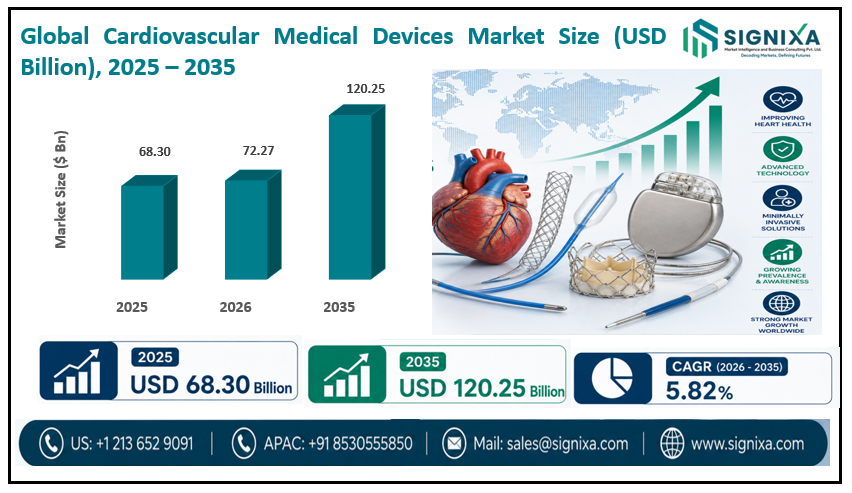
The global cardiovascular medical devices market was valued at approximately USD 68.30 Billion in 2025 and is projected to grow to around USD 120.25 Billion by 2035, representing a compound annual growth rate (CAGR) of 5.82% between 2026 and 2035. This report delves into the key growth drivers, restraints, opportunities, and trends shaping the market landscape while analyzing global and regional adoption trends across different device categories and healthcare applications.
The cardiovascular medical devices market comprises a wide array of diagnostic, monitoring, therapeutic, and surgical equipment used to manage heart-related conditions. These devices play a crucial role in early diagnosis, surgical interventions, and ongoing patient management. A steady rise in cardiovascular disease prevalence, increasing geriatric population, and technological advancements in device capabilities are key contributors to market growth. Additionally, the increasing acceptance of minimally invasive procedures has further accelerated the demand for next-generation cardiovascular devices.
The market encompasses a wide array of devices, broadly categorized into diagnostic & monitoring devices (e.g., ECG, Holter monitors, cardiac MRI, ultrasound) and therapeutic & surgical devices (e.g., pacemakers, stents, catheters, heart valves, defibrillators). The therapeutic and surgical devices segment currently holds the largest market share due to the increasing volume of complex cardiovascular procedures. Key trends shaping the market include a growing preference for minimally invasive surgical procedures, which offer benefits such as reduced recovery times and less patient discomfort. Continuous technological advancements, such as the development of bioresorbable stents, drug-eluting stents, advanced cardiac mapping systems, and wearable remote monitoring devices, are driving innovation and expanding treatment options, making cardiovascular medical devices an indispensable component of modern healthcare.
Key Findings
- The global cardiovascular medical devices market is expected to expand at a CAGR of 5.82% during 2026-2035.
- The market size was valued at USD 68.30 Billion in 2025 and is projected to reach USD 120.25 Billion by 2035.
- Diagnostic and Monitoring Devices, especially ECG systems, are experiencing significant growth due to rising awareness and screening initiatives.
- Therapeutic and Surgical Devices segment holds the dominant market share, driven by high demand for stents and CRM devices.
- Coronary Artery Disease remains the leading application, accounting for a substantial portion of total device usage.
- Hospitals remain the primary end user, supported by infrastructural capacity and specialized cardiac care units.
- North America leads the global market due to advanced healthcare infrastructure and high disease prevalence.
Cardiovascular Medical Devices Market Dynamics
Escalating Global CVD Burden & Rapidly Aging Population Driving Sustained Demand
Cardiovascular disease (CVD) is the leading cause of death globally, with the World Health Organization estimating over 17.9 Million deaths annually. This has led to rising demand for both diagnostic and interventional devices to detect and treat conditions such as coronary artery disease, arrhythmias, and heart failure. According to the United Nations, by 2030, one in six people globally will be over age 60. This demographic shift is pushing healthcare systems to adopt advanced cardiac monitoring and surgical devices tailored to geriatric patients. Devices like heart valves and pacemakers are in greater demand due to age-related heart degeneration. The high prevalence of CVDs, coupled with an increasing incidence of risk factors such as obesity, diabetes, hypertension, and sedentary lifestyles, creates a continuous and expanding need for innovative cardiovascular medical devices.
Technological Innovation & Minimally Invasive Procedure Adoption Transforming Cardiology
From AI-enabled diagnostic tools to remote monitoring platforms, innovations in medical technology are transforming cardiovascular treatment. Wearable ECG monitors and implantable devices with real-time telemetry have enabled faster response times and better patient outcomes. These advancements are enhancing clinician decision-making while reducing the need for invasive procedures. In the therapeutic segment, innovations like bioresorbable stents, drug-eluting stents, transcatheter aortic valve replacement (TAVR), and advanced cardiac mapping systems offer fewer invasive alternatives to traditional open-heart surgeries. Minimally invasive procedures are highly favored due to benefits such as reduced recovery times, shorter hospital stays, less pain, and lower complication rates.
Government Reimbursement Policies & Public-Private Partnerships Expanding Market Access
Many governments are actively supporting cardiac health through national screening programs, public-private partnerships, and subsidies for medical device procurement. The U.S. Centers for Medicare & Medicaid Services (CMS) offers reimbursement policies that favor advanced cardiac care technologies, aiding broader market penetration. The ongoing research and development by medical device manufacturers to create smaller, more precise, and more functional devices with enhanced features are crucial for staying competitive and addressing unmet clinical needs, propelling the market forward across both developed and emerging healthcare economies.
Regulatory Complexity, Device Costs & Reimbursement Variability Constraining Growth
The cardiovascular medical devices market also faces significant dynamic challenges. The stringent and often lengthy regulatory approval processes imposed by health authorities globally (FDA in the US, EMA in Europe) can delay market entry for new devices and increase R&D costs. The high cost associated with advanced cardiovascular medical devices, particularly complex implants and innovative interventional tools, can be a major barrier to widespread adoption, especially in emerging economies or healthcare systems with budget constraints. Reimbursement policies, which vary significantly by region and payer, also play a crucial role in market dynamics, influencing the uptake of new technologies. The intense competition among market players, coupled with pricing pressures from healthcare providers and payers, necessitates continuous innovation, cost-effectiveness, and strategic partnerships to maintain market share and profitability.
Cardiovascular Medical Devices Market Segmentation Analysis
By Device Type Segment Analysis
The market is segmented into two broad device categories -diagnostic & monitoring and therapeutic & surgical -each containing multiple critical sub-segments with distinct revenue profiles and growth trajectories:
Diagnostic & Monitoring Devices
The Diagnostic and Monitoring Devices segment is expanding due to increased use of early detection tools like ECG machines and wearable monitors. In 2025, diagnostic devices accounted for over 30% of the market. The electrocardiogram (ECG) sub-segment holds a dominant share due to its widespread use in clinics and ambulatory settings. Rising awareness of heart disease and emphasis on preventive healthcare is further bolstering demand across this category.
Electrocardiogram (ECG)
ECG devices accounted for over USD 7.2 Billion in 2025. The segment's growth is driven by their use in routine cardiac examinations, emergency response, and post-operative monitoring. Technological innovations, such as AI-driven ECG interpretation and smartphone-connected ECGs, are expanding use beyond hospitals to homecare and telehealth platforms, significantly broadening the addressable user base for ECG monitoring globally.
Remote Cardiac Monitoring
Valued at around USD 5.6 Billion in 2025, remote monitoring is seeing rapid adoption, particularly for chronic condition management. These devices transmit real-time data to physicians, allowing timely interventions. Increased use during the COVID-19 pandemic normalized remote monitoring practices, which are now integral to modern cardiac care and are driving sustained post-pandemic adoption across both hospital-based and home healthcare settings.
Therapeutic & Surgical Devices
Therapeutic and Surgical Devices held the largest share in 2025, accounting for over 60% of the market, driven by the widespread use of stents, VADs, and cardiac rhythm management devices. These tools are critical for managing advanced heart conditions, and the demand is bolstered by technological upgrades like bioresorbable stents and MRI-safe pacemakers that are expanding the eligible patient population for device-based cardiac therapies.
Stents
Stents generated revenue of over USD 10.2 Billion in 2025, making them a key driver in the therapeutic devices category. Drug-eluting stents and biodegradable variants are seeing rising demand due to their efficacy in preventing restenosis. Rising cases of coronary artery blockage are directly influencing segment growth. Ongoing innovations in stent design, including bioresorbable scaffolds and polymer-free drug delivery platforms, continue to expand clinical indications and boost adoption.
Cardiac Rhythm Management (CRM) Devices
The CRM devices market exceeded USD 8.1 Billion in 2025. Innovations such as leadless pacemakers and defibrillators with remote programming have made these devices safer and more effective. CRM devices play a vital role in maintaining electrical stability in patients with arrhythmias or conduction disorders. The growing prevalence of atrial fibrillation and the expanding role of implantable cardioverter-defibrillators in sudden cardiac death prevention are key volume drivers in this segment.
Catheters
The catheter segment was valued at approximately USD 6.8 Billion in 2025. Catheters are essential for diagnostics, ablation, and interventional therapies. Growth is driven by increased demand for catheter-based interventions like angioplasty and electrophysiological mapping. Their central role in minimally invasive procedures is boosting adoption globally, as electrophysiology laboratories expand their procedural capacity to address rising volumes of complex arrhythmia cases.
Heart Valves
With a market value of USD 4.7 Billion in 2025, heart valves are essential for treating valvular diseases like aortic stenosis. The transcatheter aortic valve replacement (TAVR) technique is becoming the preferred method, particularly among older patients who cannot undergo open-heart surgery. The expansion of TAVR indications from high-risk to intermediate- and low-risk patients is significantly expanding the addressable patient pool for transcatheter valve therapies globally.
Ventricular Assist Devices (VAD)
VADs represent a niche but rapidly growing segment with a value of over USD 2.4 Billion in 2025. These devices are used in patients with end-stage heart failure awaiting transplants or ineligible for surgery. Compact and durable models are improving patient mobility and survival rates. The development of miniaturized, fully implantable VAD systems with longer battery life and reduced infection risk is expanding their use as destination therapy for a broader patient population globally.
By Application Segment Analysis
Coronary Artery Disease (CAD)
Coronary Artery Disease accounted for nearly 40% of the total market revenue in 2025. The increasing global burden of lifestyle-related risk factors such as smoking, hypertension, and diabetes is contributing to CAD prevalence. Stents, catheters, and bypass devices are widely used in managing this condition, fueling sustained device demand. CAD remains the most prevalent and economically significant cardiovascular condition globally, directly driving the highest volume of interventional procedures and associated device utilization.
Cardiac Arrhythmia
The Cardiac Arrhythmia segment contributed over USD 13.5 Billion in 2025. CRM devices like pacemakers and defibrillators are the cornerstone of arrhythmia management. Advancements in electrophysiology mapping and ablation catheters are also enhancing precision treatment for atrial fibrillation and other rhythm disorders. The rapidly growing global prevalence of atrial fibrillation, estimated to affect over 33 Million people worldwide, is creating a sustained and expanding demand for both implantable and catheter-based rhythm management devices.
Heart Failure
Heart failure applications represented over USD 11.4 Billion in 2025. With growing cases of end-stage heart disease and better diagnosis rates, this segment is expanding. Key devices include VADs, implantable monitors, and heart failure-specific defibrillators. The aging population is a critical factor propelling demand. Advances in remote hemodynamic monitoring devices, which allow physicians to track heart failure status in real time and intervene before hospitalizations occur, are opening a significant new growth frontier in this application area.
Others (Congenital Heart Disease, PAD & More)
Other applications, including congenital heart disease and peripheral artery disease, jointly contributed over USD 9 Billion in 2025. This segment includes niche devices tailored for pediatric and rare cardiac conditions. Specialized tools and ongoing innovation in custom-designed implants support segment expansion. The growing availability of advanced pediatric cardiac intervention techniques and improved diagnostics for rare structural heart defects are gradually increasing the addressable patient population and device utilization within this diverse application segment.
By End User Segment Analysis
Hospitals
Hospitals accounted for more than 55% of the market revenue in 2025, equating to over USD 35.5 Billion. Their comprehensive infrastructure, specialized staff, and ability to handle complex procedures make them the largest users of advanced cardiovascular devices. Government funding and insurance support further strengthen this segment. Dedicated cardiac catheterization laboratories, electrophysiology suites, and cardiac intensive care units within major hospital systems remain the primary deployment environment for complex therapeutic and surgical cardiovascular devices globally.
Specialty Clinics
Specialty Clinics generated over USD 18.3 Billion in 2025. Focused cardiac centers offer faster service, personalized care, and outpatient procedures, making them attractive for elective and follow-up cardiovascular care. Increasing setup of cardiology specialty clinics globally supports this segment's upward trajectory. The shift of lower-acuity cardiovascular procedures -including device implantation follow-up, ambulatory monitoring, and outpatient stress testing -away from hospitals to specialty clinic settings is driving steady volume growth in this end-user category.
Others (ASCs & Home Healthcare)
The "Others" segment includes ambulatory surgical centers and home healthcare setups, which jointly generated around USD 10.7 Billion in 2025. Growing emphasis on home monitoring and cost-effective treatment alternatives is pushing demand for portable diagnostic and therapeutic tools in this category. The expanding adoption of wearable cardiac monitors, remote patient monitoring platforms, and telehealth-integrated diagnostic devices is enabling an increasing proportion of cardiovascular care delivery to occur outside traditional hospital and clinic settings, creating a rapidly growing end-user segment.
Report Attributes & Market Scope
| Report Attribute | Details |
|---|---|
| Market Size Value in 2025 | USD 68.30 Billion |
| Market Size Value in 2035 | USD 120.25 Billion |
| CAGR (2026-2035) | 5.82% |
| Base Year Used for Estimation | 2025 |
| Historic Data | 2020 - 2025 |
| Forecast Period | 2025 - 2035 |
| Segments Covered -By Device Type |
|
| Segments Covered -By Application |
|
| Segments Covered -By End User |
|
| Regions Covered | North America, Europe, Asia Pacific, Latin America, Middle East and Africa |
| Major Countries Covered | U.S., Canada, Mexico, Germany, UK, France, Italy, Spain, Russia, China, Japan, South Korea, India, Southeast Asia Countries, Brazil, Argentina, GCC Countries, Turkey, Iran, Israel, South Africa, Egypt, Nigeria, etc. |
| Key Companies Profiled | Medtronic, Abbott Laboratories, Boston Scientific, Edwards Lifesciences, Siemens Healthineers, GE Healthcare, Philips Healthcare, Terumo Corporation, Johnson & Johnson, and Biotronik. |
Cardiovascular Medical Devices Market Regional Analysis
North America leads the cardiovascular medical devices market with over 38% share in 2025, backed by high healthcare spending, robust infrastructure, and favorable reimbursement policies. Europe follows, driven by strong medical device regulation and widespread cardiac health programs. Asia-Pacific is witnessing the fastest growth due to rising cardiac disease burden, urbanization, and increased access to healthcare. Latin America and the Middle East & Africa are emerging markets, where investments in healthcare infrastructure and public-private partnerships are unlocking new opportunities.
North America (Dominant Region)
North America, particularly the United States, is the dominant market for cardiovascular medical devices, holding a substantial revenue share. This leadership is driven by a high prevalence of cardiovascular diseases, an aging population, and a well-established, technologically advanced healthcare infrastructure. The region benefits from significant healthcare expenditure, robust R&D investments, and the presence of numerous key medical device manufacturers. There is a strong demand for innovative diagnostic and monitoring devices, as well as advanced therapeutic and surgical tools like pacemakers, stents (especially drug-eluting and bioresorbable), and transcatheter heart valves. The increasing adoption of minimally invasive procedures, robotic-assisted surgeries, and wearable remote monitoring devices further fuels market growth. Favorable reimbursement policies and a high awareness among both patients and healthcare providers regarding advanced treatment options also contribute to North America's strong market position.
Europe
Europe represents a significant and mature market for cardiovascular medical devices, driven by a high burden of cardiovascular diseases, an aging demographic, and strong government initiatives aimed at improving cardiovascular health. Countries like Germany, France, and the UK are key contributors to the regional market. The demand for advanced diagnostic and therapeutic devices is consistent, with a growing emphasis on precision medicine and personalized care. There is a notable trend towards adopting minimally invasive procedures and embracing digital health solutions, including AI-powered diagnostics and remote monitoring of cardiac conditions. European manufacturers and healthcare providers are actively investing in new technologies, such as advanced cardiac ablation devices and improved stent designs. While the market faces challenges related to stringent regulatory approval processes and varying healthcare budgets across member states, the continuous focus on improving patient outcomes and integrating innovative technologies ensures steady growth.
Asia-Pacific
The Asia Pacific region is the fastest-growing market for cardiovascular medical devices globally, propelled by a rapidly expanding healthcare infrastructure, increasing healthcare expenditure, and a surging patient population suffering from cardiovascular diseases. Countries like China, India, and Japan are leading this growth. The large and increasingly aging populations, coupled with changing lifestyles leading to higher incidences of obesity, diabetes, and hypertension, are significantly contributing to the rising burden of CVDs. There is a growing awareness among the populace and an increasing demand for access to advanced diagnostic and therapeutic interventions. The market is also benefiting from government initiatives to improve healthcare access and quality, as well as the rising adoption of minimally invasive procedures. While the region presents challenges such as diverse regulatory landscapes and varying levels of healthcare access in rural areas, the immense market potential and ongoing investments in healthcare modernization make Asia Pacific a critical growth engine for cardiovascular medical devices.
Middle East & Africa
The Middle East & Africa (MEA) region represents an emerging but rapidly expanding market for cardiovascular medical devices. This growth is primarily fueled by significant government investments in healthcare infrastructure development, a rising prevalence of lifestyle-related cardiovascular risk factors, and a growing awareness of heart health. In the Middle East, particularly the GCC countries, there is a strong drive to establish world-class medical facilities and adopt advanced medical technologies. The increase in medical tourism and a growing expatriate population also contribute to demand. In Africa, while market development is slower due to economic disparities and limited healthcare access in some areas, the rising burden of chronic diseases and efforts to modernize healthcare systems are gradually driving adoption. Challenges include high device costs, lack of skilled healthcare professionals for complex procedures, and inconsistent regulatory frameworks.
Latin America
Latin America is an emerging market for cardiovascular medical devices, where investments in healthcare infrastructure and public-private partnerships are unlocking new opportunities. Brazil and Mexico are the primary contributors, each benefiting from growing cardiac care capacity, expanding health insurance coverage, and increasing government attention to the region's significant cardiovascular disease burden. The expansion of hospital networks in secondary and tertiary cities, along with rising awareness of early cardiac intervention among both clinicians and patients, is creating incremental demand for diagnostic and therapeutic cardiovascular devices. International medical device companies are actively expanding their distribution networks and clinical support presence across the region to capture this growing market opportunity.
Recent Developments in the Cardiovascular Medical Devices Market
-
2023
Medtronic received FDA approval for its leadless pacemaker with remote monitoring capabilities.
-
2022
Abbott Laboratories launched a new range of AI-powered ECG monitors under the FreeStyle brand.
-
2021
Boston Scientific introduced next-gen TAVR heart valves with enhanced deliverability and imaging support.
Cardiovascular Medical Devices Market: Competitive Landscape
The competitive landscape includes major players such as Medtronic, Abbott Laboratories, Boston Scientific, Edwards Lifesciences, Siemens Healthineers, GE Healthcare, Philips Healthcare, Terumo Corporation, Johnson & Johnson, and Biotronik. Companies compete on product innovation, miniaturization, AI integration, and global market presence. Strategic acquisitions, regulatory approvals, and regional partnerships are key strategies adopted to strengthen portfolios and expand reach across developed and emerging markets alike.
The cardiovascular medical devices market is characterized by intense competition among a concentrated group of large, globally established medical device companies with broad product portfolios spanning both diagnostic and therapeutic device categories. These major players compete primarily on the basis of clinical evidence supporting their devices, the breadth and depth of their product portfolios, sales force reach, pricing and reimbursement support, and the quality of their post-market clinical and technical service networks. The ability to obtain and maintain regulatory approvals across multiple major markets simultaneously is a key competitive capability, as is the ability to execute complex clinical trials that support expanded device indications. R&D investment intensity is high in this market, as product lifecycles are relatively long but the competitive advantage derived from a breakthrough innovation can be substantial and durable.
Emerging competitive dynamics in the cardiovascular medical devices market include the increasing integration of digital health capabilities into device platforms, including cloud-connected remote monitoring, AI-powered diagnostic interpretation, and patient engagement applications. These software-adjacent capabilities are becoming important differentiators as healthcare systems prioritize outcomes-based contracting and value-based care models that reward demonstrable improvements in patient health and reductions in costly hospitalizations. The growing role of data analytics in cardiovascular device management is attracting new entrants from the technology sector, creating competitive pressure on established device manufacturers to accelerate their digital health strategies and develop integrated care management platforms that extend beyond the device itself.
Key Companies Profiled
- Medtronic
- Abbott Laboratories
- Boston Scientific
- Edwards Lifesciences
- Siemens Healthineers
- GE Healthcare
- Philips Healthcare
- Terumo Corporation
- Johnson & Johnson
- Biotronik
Global Cardiovascular Medical Devices Market Segmentation Summary
By Device Type
- Diagnostic and Monitoring Devices
- Electrocardiogram (ECG)
- Remote Cardiac Monitoring
- Others
- Therapeutic and Surgical Devices
- Ventricular Assist Devices (VAD)
- Cardiac Rhythm Management (CRM) Devices
- Catheter
- Stents
- Heart Valves
- Others
By Application
- Coronary Artery Disease (CAD)
- Cardiac Arrhythmia
- Heart Failure
- Others
By End User
- Hospitals
- Specialty Clinics
- Others
By Region
- North America
- U.S.
- Canada
- Mexico
- Europe
- Germany
- France
- UK
- Spain
- Italy
- Rest of Europe
- Asia-Pacific
- China
- Japan
- India
- Australia
- South Korea
- Southeast Asia
- Rest of Asia-Pacific
- Latin America
- Brazil
- Argentina
- Rest of Latin America
- The Middle East & Africa
- GCC Countries
- South Africa
- Rest of the Middle East & Africa
Frequently Asked Questions (FAQs) About the Cardiovascular Medical Devices Market
What are Cardiovascular Medical Devices?
Cardiovascular medical devices are instruments and technologies used to diagnose, monitor, and treat diseases related to the heart and blood vessels. These include stents, pacemakers, defibrillators, catheters, heart valves, and diagnostic imaging systems.
Which key factors will influence the Cardiovascular Medical Devices market growth over 2026-2035?
The market is expected to grow due to the increasing prevalence of cardiovascular diseases, a growing aging population, advancements in minimally invasive technologies, and rising healthcare expenditures across developing and developed nations.
What will be the value of the Cardiovascular Medical Devices market during 2026-2035?
According to the study, the global cardiovascular medical devices market size was worth around USD 68.30 Billion in 2025 and is predicted to grow to around USD 120.25 Billion by 2035.
What will be the CAGR value of the Cardiovascular Medical Devices market during 2026-2035?
The cardiovascular medical devices market is expected to register a CAGR of 5.82% during the forecast period of 2026-2035.
Which region will contribute notably towards the Cardiovascular Medical Devices market value?
The market is significantly led by North America and Europe, owing to high cardiovascular disease prevalence, rapid adoption of advanced technologies, supportive reimbursement policies, and robust healthcare infrastructure. Asia-Pacific is the fastest-growing region, driven by rising cardiac disease burden and expanding healthcare access.
Which are the major players leveraging the Cardiovascular Medical Devices market growth?
Key companies driving the market include Medtronic plc, Boston Scientific Corporation, Abbott Laboratories, Edwards Lifesciences Corporation, Siemens Healthineers, GE Healthcare, Philips Healthcare, Terumo Corporation, Cardinal Health, and BIOTRONIK SE & Co. KG.
What can be expected from the global Cardiovascular Medical Devices market report?
The report presents an in-depth analysis of market trends, drivers, restraints, and opportunities. It also covers technological innovations, competitive landscape, detailed market segmentation by device type, application, and end user, and regional performance analysis over the 2026-2035 forecast period.