

Nerve Repair and Regeneration Market Overview
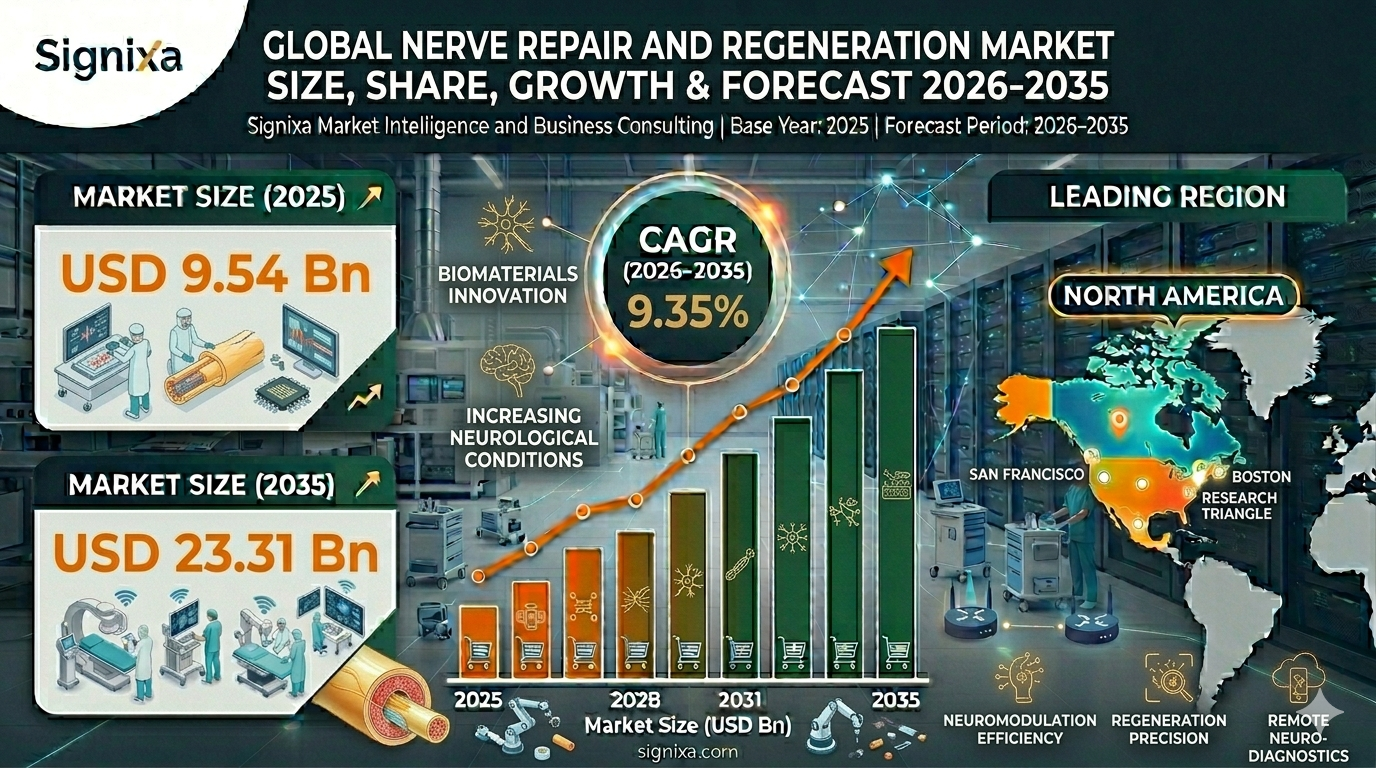
The global nerve repair and regeneration market was valued at approximately USD 9.54 billion in 2025 and is projected to reach around USD 23.31 billion by 2035, reflecting a compound annual growth rate (CAGR) of approximately 9.35% between 2026 and 2035. This report examines the key drivers and restraints influencing market demand and explores growth opportunities in global and regional markets.
The nerve repair and regeneration market comprises a range of technologies and therapies designed to restore nerve function after injury or disease. The market is primarily driven by the rising prevalence of neurological disorders, increasing geriatric population, technological advancements in biomaterials and neuromodulation, and growing awareness of regenerative medicine. Nerve repair and regeneration involve restoring damaged nerve tissues using biological and synthetic products, including nerve conduits, nerve grafts, stem cell therapy, and neurostimulation devices. Advancements in tissue engineering, biomaterials, and regenerative medicine have significantly improved clinical outcomes, making these therapies more attractive for both patients and healthcare providers.
Increasing investments in neuroscience research and funding support from government and private institutions have accelerated the development of innovative nerve repair solutions. The integration of growth factors, biodegradable scaffolds, and electrical stimulation in therapeutic designs has shown promising results in enhancing nerve regeneration speed and efficiency. The demand for minimally invasive surgical techniques is further promoting the use of neurostimulation and bioengineered products. As technologies evolve and clinical success rates improve, the nerve repair and regeneration market is poised for continued expansion across both developed and emerging healthcare systems.
Key Findings
- The global nerve repair and regeneration market is projected to grow at a CAGR of 9.35% between 2026 and 2035.
- Market valuation is expected to rise from USD 9.54 billion in 2025 to USD 23.31 billion by 2035.
- According to WHO, neurological disorders account for over 6% of the global burden of disease, creating significant demand for effective nerve repair solutions.
- Biomaterials dominate the product segment due to their widespread use in nerve grafts and conduits, accounting for over 55% of market share in 2025.
- Direct nerve repair/neurorrhaphy is the most common surgical method, holding over 40% of the surgery segment share in 2025, while neurostimulation surgeries are gaining traction.
- North America leads the global market due to advanced healthcare infrastructure and higher adoption of neuromodulation devices.
Nerve Repair and Regeneration Market Dynamics
Rising Neurological Disease Burden & Aging Population Driving Sustained Demand
The nerve repair and regeneration market is experiencing growth driven by a rise in neurological diseases such as Parkinson's disease, Alzheimer's, traumatic brain injury, and peripheral nerve injuries. According to WHO, neurological disorders account for over 6% of the global burden of disease, creating significant demand for effective nerve repair solutions. A growing aging population is another vital factor fuelling market expansion. As older individuals are more susceptible to neurological and neurodegenerative diseases, the need for nerve regeneration techniques like grafts and neurostimulation becomes increasingly essential. These conditions are becoming more common due to aging populations, increased incidence of chronic diseases like diabetes and cancer, and higher rates of road and sports-related injuries. With improved healthcare access, particularly in developed nations, more patients are undergoing early diagnosis and timely intervention, expanding the treatable patient population.
Biomaterial Innovation, Neurostimulation Technology Advances & Minimally Invasive Surgery Adoption
Technological innovation is transforming the field of nerve regeneration. Breakthroughs in biomaterials, including biodegradable and bioactive scaffolds, have improved the efficacy of nerve grafts. Simultaneously, advancements in neurostimulation technologies, including implantable devices, have expanded treatment capabilities for chronic pain and motor function restoration. These innovations increase treatment success rates while minimizing recovery time and surgical risks. Innovations such as biodegradable nerve conduits, neurostimulation implants, and cell-based therapies are gaining clinical traction due to their ability to mimic natural nerve environments and promote regeneration. The expanding adoption of minimally invasive surgeries is accelerating the uptake of advanced repair products and devices. Growing acceptance of stem cell therapy and 3D-printed nerve conduits supports the evolving landscape of personalized medicine in nerve repair.
Government Research Funding, Favorable Reimbursement & Regenerative Medicine Investment
Government initiatives and increasing investment in regenerative medicine are playing a pivotal role in market expansion. Various programs and grants aimed at neurological research and development are encouraging public-private collaborations. Growing public and private investments in neuroscience research, along with initiatives to improve access to regenerative therapies, are further boosting innovation and clinical trials. Favorable reimbursement policies in regions like North America and Europe are supporting patient access to high-cost therapies, contributing to sustained market growth. Collaborations between hospitals, universities, and biotech firms are accelerating the pace of clinical translation of novel therapies. Despite challenges including high treatment costs, limited availability of skilled professionals, and stringent regulatory requirements, the competitive landscape is vibrant with companies actively pursuing R&D and strategic partnerships to improve efficacy and scalability of nerve regeneration products.
Nerve Repair and Regeneration Market Segmentation Analysis
By Product Segment Analysis
Biomaterials (Dominant Segment)
Biomaterials represent the dominant product segment, accounting for over 55% of market share in 2025, due to their extensive application in nerve conduits, grafts, and wraps. These materials support axonal regeneration and create a conducive environment for nerve repair. Innovations in biodegradable polymers and collagen-based scaffolds are improving biocompatibility and healing efficiency. Biomaterials form the structural backbone of both direct nerve repair solutions and nerve conduit bridging devices, encompassing a broad range of natural and synthetic materials including collagen, polyglycolic acid (PGA), polylactic acid (PLA), and chitosan-based scaffolds. Their widespread clinical adoption is driven by their proven ability to provide a permissive microenvironment for axonal growth while gradually resorbing as nerve regeneration progresses, eliminating the need for secondary removal surgery and reducing the risk of long-term foreign body reactions in treated patients.
Neurostimulation & Neuromodulation Devices
The Neurostimulation and Neuromodulation Devices segment is witnessing rapid growth owing to the rising adoption of devices like spinal cord stimulators, deep brain stimulators, and vagus nerve stimulators. These devices are especially effective in treating chronic pain, Parkinson's disease, and epilepsy. With technological advances in device miniaturization and programmability, this segment is expected to grow significantly over the forecast period. The device sub-segments include Spinal Cord Stimulation Devices, Deep Brain Stimulation Devices, Sacral Nerve Stimulation Devices, Vagus Nerve Stimulation Devices, and Gastric Electric Stimulation Devices. Each addresses distinct neurological indications, collectively expanding the segment's total addressable market. Closed-loop neurostimulation systems that automatically adjust stimulation parameters in response to real-time physiological feedback represent the frontier of device innovation, offering superior therapeutic outcomes compared to conventional open-loop systems.
By Surgery Segment Analysis
The nerve repair and regeneration market is segmented by surgery type, with each approach addressing distinct clinical presentations, injury severities, and nerve gap sizes across peripheral and central nervous system repair applications globally:
Direct Nerve Repair / Neurorrhaphy
The Direct Nerve Repair/Neurorrhaphy segment is the most common and widely adopted surgical method for nerve repair, holding over 40% of the surgery segment share in 2025. It involves direct suturing of severed nerve ends and is particularly effective for clean, sharp injuries. This method's dominance is attributable to its simplicity, minimal invasiveness, and proven outcomes in restoring nerve continuity. Neurorrhaphy is the first-choice surgical approach whenever a clean nerve laceration can be repaired without tension — a condition achievable in approximately 50% of peripheral nerve injuries. Microsurgical techniques and improvements in suture materials have significantly improved neurorrhaphy outcomes over the past two decades, reducing the incidence of neuroma formation and misaligned axonal regrowth. Intraoperative nerve monitoring technologies are further enhancing surgical precision and post-operative functional recovery rates.
Nerve Grafting
Nerve grafting is utilized when direct repair is not feasible, especially in large-gap injuries. Autografts, allografts, and synthetic grafts fall under this category. Nerve grafting is a standard approach in reconstructive surgeries and accounted for around 30% of the market in 2025. Advancements in synthetic conduits and decellularized allografts are enhancing its adoption. The gold standard for nerve grafting remains the autologous sural nerve graft, valued for its biocompatibility and lack of immunogenic response. However, donor site morbidity — including sensory deficit at the harvest site — has driven strong clinical interest in processed nerve allografts and bioengineered synthetic conduits as alternatives. Products like Axogen's Avance Nerve Graft have demonstrated outcomes comparable to autografts in shorter nerve gaps, reducing donor site morbidity while maintaining acceptable regeneration outcomes across a range of peripheral nerve repair indications.
Neurostimulation & Neuromodulation Surgeries
Neurostimulation and neuromodulation surgeries are increasingly used to manage chronic neurological conditions that are unresponsive to conventional treatments. In 2025, this segment represented nearly 20% of total surgical procedures in nerve regeneration. Growing preference for minimally invasive, device-based therapies is pushing its adoption further. Spinal cord stimulation for failed back surgery syndrome and complex regional pain syndrome, deep brain stimulation for Parkinson's disease and essential tremor, and vagus nerve stimulation for drug-resistant epilepsy are among the highest-volume neurostimulation surgical procedures globally. The strong clinical evidence base accumulated over decades of neuromodulation practice, combined with ongoing advances in device longevity, programmability, and MRI compatibility, continues to drive procedural volume growth across established and emerging market geographies alike.
Stem Cell Therapy
The stem cell therapy segment is gaining momentum due to its potential to regenerate damaged nerves through cell differentiation and neurogenesis. While still under clinical development, stem cell therapy is being extensively studied for spinal cord injury and peripheral nerve damage. Though holding a smaller share of approximately 10% in 2025, it presents significant long-term growth opportunities. Multiple stem cell modalities — including mesenchymal stem cells (MSCs), neural stem cells (NSCs), Schwann cells, and induced pluripotent stem cells (iPSCs) — are being evaluated in clinical trials for their ability to promote axonal regeneration, remyelination, and neuroprotection. As clinical evidence matures and regulatory frameworks for cell-based therapies develop, stem cell therapy for nerve repair is expected to transition from experimental to mainstream clinical practice, particularly for spinal cord injuries and severe peripheral nerve damage where other therapeutic options remain inadequate.
Report Attributes & Market Scope
| Report Attribute | Details |
|---|---|
| Market Size Value in 2025 | USD 9.54 Billion |
| Market Size Value in 2035 | USD 23.31 Billion |
| CAGR (2026–2035) | 9.35% |
| Base Year Used for Estimation | 2025 |
| Historic Data | 2020 - 2025 |
| Forecast Period | 2026 - 2035 |
| Segments Covered – By Product |
|
| Segments Covered – By Surgery |
|
| Regions Covered | North America, Europe, Asia Pacific, Latin America, Middle East and Africa |
| Major Countries Covered | U.S., Canada, Mexico, Germany, UK, France, Italy, Spain, Russia, China, Japan, South Korea, India, Southeast Asia Countries, Brazil, Argentina, GCC Countries, Turkey, Iran, Israel, South Africa, Egypt, Nigeria, etc. |
| Key Companies Profiled | Axogen Inc., Boston Scientific Corporation, Medtronic plc, Integra LifeSciences Holdings Corporation, Abbott Laboratories, Nevro Corp, LivaNova PLC, Stryker Corporation, Synapse Biomedical Inc., and Checkpoint Surgical, Inc., among others. |
Nerve Repair and Regeneration Market Regional Analysis
The nerve repair and regeneration market is led by North America, supported by advanced healthcare infrastructure, favorable reimbursement policies, and high adoption rates of neuromodulation technologies. Europe follows with strong demand for nerve grafts and neurostimulation devices, particularly in Germany, France, and the UK. Asia-Pacific is the fastest-growing region, driven by rising healthcare expenditures, improving access to advanced treatments, and increasing incidence of traumatic injuries. Latin America and the Middle East & Africa are emerging regions where increasing awareness and investment in healthcare are expected to boost market potential.
North America (Leading Region)
North America leads the nerve repair and regeneration market, supported by advanced healthcare infrastructure, favorable reimbursement policies, and high adoption rates of neuromodulation technologies. The U.S. dominates regional revenue due to significant investment in neurological research and a strong presence of key market players. The increasing prevalence of peripheral nerve injuries, traumatic brain injuries, and spinal cord damage caused by accidents, sports injuries, and chronic conditions like diabetes drives demand. The presence of leading research institutes and biotechnology firms focused on regenerative medicine is fostering innovation. Government agencies and private investors are actively funding neuroscience research and clinical trials, encouraging the development and commercialization of cutting-edge therapies. Collaborations between hospitals, universities, and biotech firms are accelerating the pace of clinical translation of novel therapies.
Europe
Europe follows with strong demand for nerve grafts and neurostimulation devices, particularly in Germany, France, and the UK. The region faces a growing incidence of neurodegenerative disorders like Parkinson's and Alzheimer's disease, along with peripheral nerve injuries caused by trauma and surgical procedures. The EU's focus on promoting innovation in medical technologies and regenerative medicine through Horizon Europe research funding programs is boosting the development of novel nerve repair products. Healthcare providers are increasingly adopting biomaterials, synthetic conduits, and neuromodulation solutions to enhance patient outcomes. Despite challenges such as high therapy costs and variations in reimbursement policies across countries, ongoing research, investment in healthcare innovation, and rising collaboration between universities, medtech firms, and hospitals are expected to strengthen Europe's position as a key contributor to the global nerve repair and regeneration market.
Asia Pacific (Fastest-Growing Region)
Asia-Pacific is the fastest-growing region, driven by rising healthcare expenditures, improving access to advanced treatments, and increasing incidence of traumatic injuries. Countries like China, Japan, India, and South Korea are witnessing a surge in demand for nerve repair solutions as their populations age and chronic conditions such as diabetes and neurodegenerative diseases become more common. In China and India, large patient pools and rising awareness about available treatment options are prompting hospitals and clinics to adopt advanced nerve regeneration therapies. Japan and South Korea, known for their innovation-driven healthcare systems, are investing heavily in R&D with strong biotech sectors focused on neurological recovery. Medical tourism is further stimulating demand across the region. The region is expected to emerge as a significant hub in the global nerve repair and regeneration landscape.
Middle East & Africa
The Middle East & Africa nerve repair and regeneration market is steadily progressing, driven by rising awareness of neurological disorders and gradual improvements in healthcare infrastructure. In the Middle East, nations like the UAE and Saudi Arabia are accelerating investments in healthcare innovation, including neurology and regenerative medicine. These countries are building state-of-the-art medical facilities and attracting global players through strategic collaborations and favorable policies. Demand for nerve repair solutions is increasing due to a rise in accident-related injuries and spinal cord trauma. High per capita healthcare spending in GCC nations supports the introduction of novel products like nerve grafts, neurostimulation devices, and stem cell therapies. Africa is in the early stages of adopting nerve repair technologies, with South Africa leading regional development, while international aid programs and regional health initiatives are gradually fostering neurological care awareness.
Latin America
Latin America is steadily progressing in nerve repair and regeneration, driven by rising awareness of neurological disorders and gradual improvements in healthcare infrastructure. Countries such as Brazil, Mexico, and Argentina are showing increased interest in adopting advanced neurotherapies as the burden of neurodegenerative diseases, diabetes-related neuropathy, and traumatic nerve injuries grows. Although access to cutting-edge treatments remains uneven across the region, investments in public healthcare and growing partnerships with global medical device companies are helping bridge the gap. Brazil's large healthcare system and growing private sector investment in medical technology are creating a foundation for expanded nerve repair therapy adoption. As regional medical infrastructure improves and awareness campaigns expand neurological care access beyond major urban centers, Latin America's contribution to the global nerve repair and regeneration market is expected to grow steadily through the forecast period.
Recent Developments in the Nerve Repair and Regeneration Market
-
2023
Axogen Inc. expanded its product portfolio with new nerve repair solutions targeting upper extremity injuries, reinforcing its position as a leader in peripheral nerve repair and broadening the clinical applicability of its advanced nerve graft and conduit product line for hand, wrist, and arm nerve injury reconstruction.
-
2022
Boston Scientific received FDA approval for a next-generation spinal cord stimulation device for chronic pain therapy, representing a significant regulatory milestone that validates the company's continued innovation in closed-loop neurostimulation technology and expands patient access to advanced pain management solutions.
Nerve Repair and Regeneration Market: Competitive Landscape
Key players in the nerve repair and regeneration market include Axogen Inc., Boston Scientific Corporation, Medtronic plc, Integra LifeSciences Holdings Corporation, Abbott Laboratories, Nevro Corp, LivaNova PLC, Stryker Corporation, Synapse Biomedical Inc., and Checkpoint Surgical, Inc. Competition in this market is fueled by continuous R&D, product innovation, and strategic partnerships. Leading companies focus on expanding their portfolios through new product launches, acquisitions, and clinical trials to strengthen their market positions and address the growing demand for effective nerve repair and regeneration solutions.
The competitive landscape is shaped by technological advancements, strategic collaborations, and a focus on demonstrating clinical efficacy across diverse patient populations and nerve injury types. Companies in this space are intensifying efforts to enhance biomaterial biocompatibility, extend neurostimulation device battery life and programmability, and advance cell-based therapy platforms through clinical trials. A significant competitive trend is the development of combination products that integrate biomaterial scaffolding with pharmacological growth factor delivery or electrical stimulation capabilities, aiming to replicate the natural biological and biophysical signals that guide nerve regeneration more completely than single-modality approaches. The emphasis on generating robust clinical evidence through well-designed comparative trials is a key competitive priority, as reimbursement decisions in major markets increasingly demand demonstration of superiority over the current standard of care.
Key Companies Profiled
Global Nerve Repair and Regeneration Market Segmentation Summary
By Product
By Surgery
By Region
Frequently Asked Questions (FAQs) About the Nerve Repair and Regeneration Market
What is nerve repair and regeneration?
Nerve repair and regeneration refers to the medical strategies and technologies used to restore the function of damaged nerves. This includes surgical interventions, biomaterials, neurostimulation devices, and emerging therapies like stem cell treatments aimed at promoting nerve healing and functional recovery.
Which key factors will influence the nerve repair and regeneration market growth over 2026–2035?
The market will grow due to the increasing prevalence of neurological disorders, rising demand for minimally invasive surgeries, advancements in neurostimulation technologies, and a growing geriatric population prone to nerve injuries and degenerative conditions.
What will be the value of the nerve repair and regeneration market during 2026–2035?
According to the study, the global nerve repair and regeneration market size was worth around USD 9.54 billion in 2025 and is projected to reach approximately USD 23.31 billion by 2035.
What will be the CAGR value of the nerve repair and regeneration market during 2026–2035?
The nerve repair and regeneration market is expected to grow at a CAGR of around 9.35% from 2026 to 2035.
Which region will contribute notably towards the nerve repair and regeneration market value?
North America will continue to lead the market due to its advanced healthcare infrastructure and high adoption rate of innovative therapies, while the Asia-Pacific region is expected to show the fastest growth due to rising healthcare access and increasing neurological disease burden.
Which are the major players leveraging the nerve repair and regeneration market growth?
Key players include Medtronic plc, Boston Scientific Corporation, Abbott Laboratories, AxoGen Inc., Integra LifeSciences Corporation, Stryker Corporation, NeuroPace Inc., LivaNova PLC, Nevro Corp., and Synapse Biomedical Inc.
What can be expected from the global nerve repair and regeneration market report?
The report explores essential aspects of the nerve repair and regeneration market, including a thorough analysis of current drivers and restraints, emerging opportunities, competitive dynamics, product and surgery segmentation, regional performance, and future growth prospects from 2026 to 2035.