
Fitness Supplement Market Overview
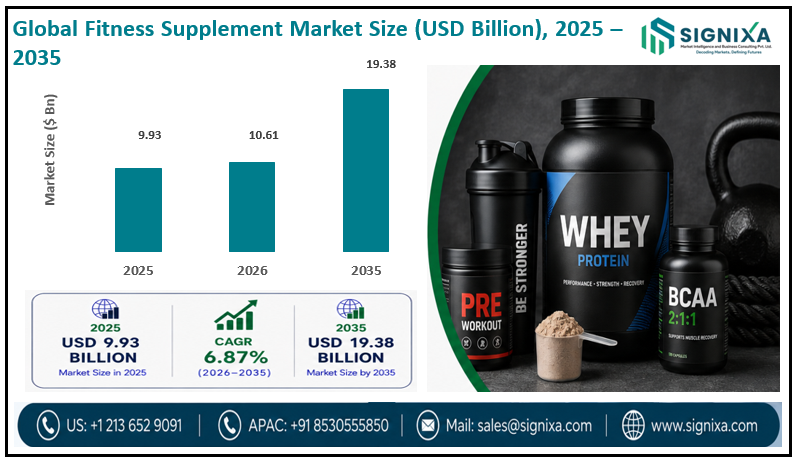
The global fitness supplement market was valued at USD 9.93 Billion in 2025 and is projected to reach USD 19.38 Billion by 2035, growing at a compound annual growth rate (CAGR) of 6.87% during the forecast period. This report explores the key factors driving the market, identifies the main challenges, and evaluates future growth opportunities across product categories, distribution channels, and regions.
The fitness supplement market encompasses a broad range of nutritional products consumed to enhance athletic performance, muscle recovery, endurance, and overall physical health. The market is expanding due to growing health consciousness, increasing gym memberships, and the rising influence of fitness influencers on digital platforms. Manufacturers are diversifying their offerings with plant-based proteins, ready-to-drink formats, and personalized nutrition solutions to cater to changing consumer preferences and lifestyle trends.
The global fitness supplement market has experienced significant growth over the past decade, driven by rising awareness of health and wellness, increasing gym memberships, and a surge in sports participation across all age groups. Fitness supplements comprising protein powders, creatine, amino acids, pre-workouts, and post-workout recovery products are widely used by athletes, bodybuilders, and fitness enthusiasts to enhance performance, improve endurance, and support muscle recovery. The rise of online retail, especially during and after the COVID-19 pandemic, has enabled direct-to-consumer brands to flourish and target niche demographics with personalized supplement solutions.
Consumer trends are shifting toward natural, plant-based, and clean-label supplements, with a growing preference for vegan proteins, stimulant-free pre-workouts, and adaptogenic herbs. Younger consumers in particular demand transparency in sourcing, functionality, and safety, prompting brands to invest in clinical validation and third-party certifications. The rising interest in mental well-being and holistic health is expanding the fitness supplement category beyond muscle-building to include brain health, energy metabolism, and gut health supplements.
Key Findings
- The global fitness supplement market is expected to grow at a CAGR of 6.87% from 2026 to 2035.
- The market value is forecast to rise from USD 9.93 Billion in 2025 to USD 19.38 Billion by 2035.
- Protein Powder dominates the type segment and is expected to continue its lead due to high consumer demand for muscle recovery and maintenance products, while Online Retailers are the fastest-growing application segment, driven by digital convenience and subscription models.
- North America holds the largest market share, with Asia-Pacific emerging as a fast-growing regional market due to rising fitness awareness.
Fitness Supplement Market Dynamics
Growing Awareness of Health and Wellness
Growing awareness of health and wellness has significantly influenced the uptake of fitness supplements worldwide. Consumers are increasingly shifting from reactive to preventive health management, prompting higher consumption of dietary supplements to support fitness, immunity, and longevity. This shift is particularly strong among millennials and Gen Z populations, who actively seek high-protein, clean-label, and plant-based supplement options.
Rapid Growth of Fitness Centers and Sports Academies
The rapid growth of fitness centers, sports academies, and organized athletic events across Asia-Pacific, Latin America, and the Middle East is boosting the demand for fitness supplements. Countries like India, China, and Brazil are witnessing a surge in gym subscriptions and athletic participation, driven by urbanization, disposable income growth, and celebrity fitness endorsements. This trend is expected to sustain long-term demand for both basic and performance-enhancing supplements.
E-Commerce Revolutionizing Fitness Supplement Sales
E-commerce is revolutionizing how fitness supplements are sold, enabling direct-to-consumer (DTC) brands to gain a foothold without traditional retail intermediaries. Online platforms offer broader product variety, customer reviews, subscription-based services, and influencer-driven marketing, all of which enhance consumer trust and accessibility. Brands like Myprotein, Optimum Nutrition, and Transparent Labs are leveraging digital sales channels to penetrate new markets rapidly and cost-effectively.
Preventive Healthcare and Active Lifestyles Drive Demand
The rising global awareness around preventive healthcare and active lifestyles is a major factor driving the fitness supplements market. Increasing concerns about obesity, cardiovascular diseases, and sedentary habits are prompting individuals to adopt healthier lifestyles, with fitness routines becoming more mainstream across age groups. As a result, supplements that support endurance, muscle recovery, weight management, and general vitality are witnessing a surge in demand. This shift is particularly visible among millennials and Gen Z, who are more fitness-oriented than previous generations and actively invest in wellness products. The post-pandemic era has further intensified the focus on immunity, energy, and mental clarity, expanding the scope of fitness supplements beyond traditional bodybuilders. Home workouts, outdoor running, and hybrid fitness models are creating consistent demand for on-the-go nutrition and performance-enhancing products. Social media influencers, fitness coaches, and mobile health apps also play a key role in promoting supplements as an essential part of a healthy lifestyle. As fitness becomes synonymous with daily routine rather than a niche activity, the consumption of sports and fitness supplements is transforming from seasonal or goal-specific use to year-round demand, ensuring a robust and continuous market expansion.
Innovation in Supplement Delivery Formats
Innovation in supplement delivery formats is significantly influencing market dynamics, reshaping how consumers engage with fitness nutrition. While traditional powders and capsules still dominate, there's growing traction for more convenient and user-friendly formats such as RTD (ready-to-drink) beverages, gummies, protein bars, liquid shots, and sachets. These formats address evolving consumer preferences for portability, ease of use, and better taste profiles. For example, gummy-based BCAA and creatine blends are gaining popularity among casual users and beginners who may find traditional formats intimidating or unpalatable. Additionally, companies are leveraging novel encapsulation technologies and fast-absorption delivery systems to improve bioavailability, reduce digestive discomfort, and enhance performance outcomes. Personalized fitness supplements, offered through quiz-based platforms and AI-driven health tracking tools, are gaining momentum by offering customized blends based on individual goals, workout intensity, and dietary preferences. Clean-label demands are also steering product reformulations to exclude artificial additives, sweeteners, and preservatives, aligning with a broader wellness trend. Brands are focusing on ingredient transparency and efficacy by incorporating clinically validated components like beta-alanine, HMB, and adaptogens. Altogether, innovation in formulation and packaging is not only expanding the consumer base but also increasing brand loyalty and purchase frequency in an otherwise competitive market.
Growth of E-Commerce and DTC Distribution Channels
The growth of e-commerce and direct-to-consumer (DTC) channels has significantly altered the distribution dynamics of the fitness supplements market. Digital platforms offer greater convenience, broader product choices, and access to niche brands that may not be available in physical retail. Online marketplaces like Amazon, Flipkart, and health-specific portals such as iHerb and Bodybuilding.com have made global and local supplement brands accessible to a wider audience. DTC channels have empowered emerging brands to bypass traditional retail, create unique branding narratives, and directly engage with consumers through personalized recommendations, subscription models, and loyalty programs. The pandemic accelerated digital adoption, shifting a significant portion of sales online, a trend that continues post-COVID. Mobile-first shopping, influencer marketing, and real-time customer feedback through social platforms also enable rapid product adaptation. Furthermore, social commerce, where fitness supplements are promoted and sold through platforms like Instagram and TikTok, is reshaping marketing strategies. Subscription-based models are gaining popularity by offering convenience and cost savings to regular users, enhancing customer retention. As competition intensifies, brands are optimizing user experiences through apps, mobile sites, and AI-based customer support. The shift to e-commerce is not only increasing sales volume but also lowering barriers to entry for startups and expanding overall market accessibility.
Regulatory Frameworks and Quality Assurance Standards
Regulatory frameworks and quality assurance standards play a crucial role in shaping the fitness supplements market, influencing product development, labelling, and consumer trust. Different countries impose varying levels of oversight, with agencies such as the U.S. FDA, EFSA in Europe, and FSSAI in India setting guidelines for ingredients, manufacturing practices, and health claims. While the market enjoys rapid growth, it also faces challenges related to inconsistent product quality, under-dosing, contamination, or unverified claims—especially in unregulated or grey market channels. As consumers become more informed, demand for certified products with third-party testing and clean-label transparency is rising. Regulatory pressure is encouraging manufacturers to invest in good manufacturing practices (GMP), ISO certifications, and traceable sourcing of raw materials. Brands that voluntarily adopt high-quality assurance standards are gaining a competitive edge, particularly in premium and clinical nutrition segments. Moreover, increasing scrutiny around banned substances in sports nutrition has made compliance with anti-doping standards (e.g., Informed-Sport or NSF certification) essential for targeting professional athletes. Stricter global enforcement and consumer watchdogs are pushing the industry toward self-regulation and transparency. As governments strengthen oversight, compliance with safety, efficacy, and ethical labelling is becoming a key success factor, helping the market mature responsibly while maintaining consumer confidence.
Fitness Supplement Market Segmentation Analysis
By Type Segment Analysis
In 2025, protein powder accounted for over 42% of the global market revenue, driven by its widespread use among both amateur and professional athletes. Whey protein, plant-based blends, and casein supplements are consumed post-workout for muscle recovery, metabolism enhancement, and weight management. The demand is also rising among non-athletic individuals seeking healthy protein intake alternatives to traditional food sources, particularly in urban areas.
Creatine and Glutamine segment represented nearly 22% of the market in 2025, benefiting from strong endorsements by athletes and fitness trainers. Creatine supports explosive strength and performance, while glutamine aids post-exercise recovery. These supplements are particularly popular in weightlifting and resistance training communities. New formulations combining these ingredients with electrolytes or BCAAs are enhancing their appeal to both professionals and casual gym-goers.
Carbohydrate-based supplements made up around 18% of market share in 2025, mostly in the form of energy drinks, gels, and powders for endurance athletes. These products help replenish glycogen stores and boost energy during long-duration training sessions. Growing participation in marathons, cycling, and outdoor adventure sports globally is sustaining the demand for this category, especially in regions with a strong sports culture.
Others, includes multivitamins, BCAAs, pre-workouts, and fat burners, collectively contributing about 18% of the market. Functional blends that support joint health, energy levels, or fat metabolism are seeing steady demand from both aging populations and bodybuilders. Innovation in flavoring, portability (e.g., gummies and effervescent tablets), and clean-label ingredients is driving growth in this diversified segment.
By Application Segment Analysis
Supermarkets and Hypermarkets segment held nearly 33% of the global fitness supplement sales in 2025, serving as a trusted purchase point for mass-market consumers. Visibility, ease of comparison, and instant availability support sales through retail chains like Walmart, Tesco, and Carrefour. However, this channel faces increasing competition from specialized outlets and online channels due to limited customization and pricing flexibility.
Specialist Retailers, accounting for approximately 28% of sales in 2025, specialist retailers like GNC, The Vitamin Shoppe, and Holland & Barrett remain influential in customer education and brand loyalty. These outlets offer a curated selection and in-store expertise, making them ideal for first-time buyers or customers with specific performance goals. The segment is evolving through in-store digitization and partnerships with premium supplement brands.
Online platforms contributed about 39% of global sales in 2025, emerging as the fastest-growing distribution channel. The convenience of home delivery, product variety, and targeted advertising is accelerating digital transformation in the supplement industry. Subscription models and loyalty programs are further strengthening customer retention. Amazon, iHerb, and brand-owned DTC stores are driving growth, particularly among tech-savvy, urban populations.
Report Attributes & Market Scope
| Report Attribute | Details |
|---|---|
| Market Size Value in 2025 | USD 9.93 Billion |
| Market Size Value in 2035 | USD 19.38 Billion |
| CAGR (2026–2035) | 6.87% |
| Base Year Used for Estimation | 2025 |
| Historic Data | 2020 - 2025 |
| Forecast Period | 2026 - 2035 |
| Segments Covered – By Type |
|
| Segments Covered – By Application |
|
| Regions Covered | North America, Europe, Asia Pacific, Latin America, Middle East and Africa |
| Major Countries Covered | U.S., Canada, Mexico, Germany, UK, France, Italy, Spain, Russia, China, Japan, South Korea, India, Southeast Asia Countries, Brazil, Argentina, GCC Countries, Turkey, Iran, Israel, South Africa, Egypt, Nigeria, etc. |
| Key Companies Profiled | Glanbia plc, Abbott Laboratories, Herbalife Nutrition Ltd., Nestlé S.A., Amway Corporation, MusclePharm Corporation, The Bountiful Company, Optimum Nutrition, Dymatize Enterprises LLC, and BSN (Bio-Engineered Supplements and Nutrition, Inc.). |
Fitness Supplement Market Regional Analysis
North America holds the dominant market share due to mature fitness culture, strong purchasing power, and widespread adoption of health and wellness trends. Europe follows closely, particularly in countries like Germany and the UK, where clean-label and plant-based products are in demand. The Asia-Pacific region is the fastest-growing market, fueled by rising health awareness, sports participation, and e-commerce growth in countries like India, China, and Indonesia. Latin America and the Middle East & Africa are emerging markets were improving access to fitness infrastructure and rising disposable incomes are expected to support future demand.
North America (Dominant Region)
North America remains the dominant region in the global fitness supplements market, driven by a strong gym culture, high health awareness, and an advanced sports nutrition industry. The United States accounts for the largest share due to widespread use of supplements among athletes, gym-goers, and aging populations seeking vitality. The market benefits from strong digital penetration, with e-commerce and DTC brands fueling product accessibility. Clean-label, vegan, and keto-friendly supplements are particularly popular, as consumers seek functional products aligned with their dietary preferences. Regulatory clarity from agencies like the FDA supports trust in label accuracy and ingredient safety.
Europe
Europe's fitness supplements market is characterized by high regulatory standards, strong consumer preference for natural products, and rising participation in recreational sports. Countries like Germany, the UK, France, and Italy dominate regional sales, with a growing demand for plant-based proteins, clean-label pre-workouts, and recovery blends. Europe's stringent EFSA guidelines ensure product transparency and quality, making certification a key differentiator for brands. Environmental and ethical values play a significant role, with sustainability in sourcing and packaging becoming key purchase drivers.
Asia-Pacific
Asia-Pacific is the fastest-growing region in the fitness supplements market, fueled by economic development, growing urbanization, and rising disposable incomes. Countries like China, India, Japan, and South Korea are key contributors, driven by increasing gym memberships, sports participation, and awareness around healthy living. The influence of K-pop and Asian fitness influencers has popularized body aesthetics and nutritional supplementation among youth. Domestic brands are gaining traction alongside global players by offering localized flavors and affordable options, and e-commerce growth is transforming accessibility.
Recent Developments in the Fitness Supplement Market
-
2026
Glanbia plc expanded its sports nutrition portfolio by strengthening premium protein and performance supplement offerings under its Optimum Nutrition brand to meet rising global demand for fitness nutrition products.
Herbalife Nutrition Ltd. expanded its sports nutrition and wellness portfolio with an emphasis on personalized nutrition, protein shakes, and performance supplements for active consumers.
-
2025
GNC Holdings broadened its sports nutrition portfolio with the introduction of GNC Pro Performance 100% Whey + Keto Surge in India. The product combines whey protein with ingredients associated with fat metabolism, including L-Carnitine, CLA, and Garcinia Cambogia, aiming to help consumers support muscle development while also targeting body fat management.
-
2025
Lifeway Foods introduced Muscle Mates, a ready-to-drink functional beverage formulated with approximately 20 grams of protein along with creatine and probiotic cultures. The drink is positioned for athletes and active consumers seeking a convenient option that supports muscle recovery, strength performance, and digestive health.
-
2024
Steadfast Nutrition strengthened its sports nutrition lineup by releasing new whey protein formulations alongside a plant-derived multivitamin supplement. Unveiled during the International Health Sports and Fitness Festival, these products were developed to help athletes and fitness enthusiasts enhance protein intake, recovery, and overall physical performance.
-
2024
Myprotein introduced a customized protein blending program aimed at gyms and wellness centers. The concept allows users to design supplement formulations based on individual nutrition preferences and training goals, reflecting the growing interest in personalized fitness nutrition.
-
2024
Dymatize collaborated with several fitness chains across the United States to develop a co-branded range of protein supplements. Through this partnership, the company aims to increase product availability for gym members while strengthening its visibility in the performance-focused nutrition segment.
Fitness Supplement Market: Competitive Landscape
Key players in the global fitness supplement market include Glanbia plc (Optimum Nutrition), MusclePharm, Abbott Laboratories, GNC Holdings, The Hut Group (Myprotein), Dymatize Enterprises, Amway, Herbalife Nutrition, Iovate Health Sciences, and Nutrabolt (C4). Market competition revolves around innovation, branding, scientific credibility, and retail partnerships. Companies are increasingly investing in digital marketing, influencer collaborations, and product transparency to appeal to a broader and younger demographic.
Key Companies Profiled
- Glanbia plc
- Abbott Laboratories
- Herbalife Nutrition Ltd.
- Nestlé S.A.
- Amway Corporation
- MusclePharm Corporation
- The Bountiful Company
- Optimum Nutrition
- Dymatize Enterprises LLC
- BSN
- NOW Foods
- GNC Holdings, LLC
- Cellucor
- Myprotein
- The Hut Group (THG)
- Orgain LLC
Global Fitness Supplement Market Segmentation Summary
By Type
- Protein Powder
- Creatine and Glutamine
- Carbohydrates
- Others
By Application
- Supermarkets and Hypermarkets
- Specialist Retailers
- Online Retailers
By Region
- North America
- U.S.
- Canada
- Mexico
- Europe
- Germany
- France
- UK
- Spain
- Italy
- Rest of Europe
- Asia-Pacific
- China
- Japan
- India
- Australia
- South Korea
- Southeast Asia
- Rest of Asia-Pacific
- Latin America
- Brazil
- Argentina
- Rest of Latin America
- The Middle East & Africa
- GCC Countries
- South Africa
- Rest of the Middle East & Africa
Frequently Asked Questions (FAQs) About the Fitness Supplement Market
What is the fitness supplement market?
The fitness supplement market comprises nutritional products like protein powders, creatine, amino acids, pre-workouts, and fat burners, designed to improve physical performance, recovery, and overall health in fitness-conscious individuals and athletes.
Which key factors will influence the fitness supplement market growth over 2026–2035?
The market is expected to grow due to rising health awareness, increasing gym memberships, growing participation in sports and physical activities, and the expansion of online retail and social media fitness influencers.
What will be the value of the fitness supplement market during 2026–2035?
According to the study, the global fitness supplement market was worth around USD 9.93 Billion in 2025 and is predicted to grow to around USD 19.38 Billion by 2035.
What will be the CAGR value of the fitness supplement market during 2026–2035?
The CAGR value of the fitness supplement market is expected to be around 6.87% during 2026–2035, driven by rising health awareness, increasing gym participation, and growing demand for protein-rich and performance-enhancing nutritional products.
Which region will contribute notably towards the fitness supplement market value?
The North American region is expected to dominate the market due to high fitness awareness, product innovation, and the presence of key industry players. Asia-Pacific is also witnessing rapid growth driven by urbanization, rising disposable income, and an increasing young population.
Which are the major players leveraging the fitness supplement market growth?
Key players in the market include Glanbia plc, Abbott Laboratories, Herbalife Nutrition Ltd., Nestlé S.A., Amway Corporation, MusclePharm Corporation, The Bountiful Company, Optimum Nutrition, Dymatize Enterprises LLC, and BSN (Bio-Engineered Supplements and Nutrition, Inc.).
What can be expected from the global fitness supplement market report?
The report provides an in-depth analysis of the fitness supplement market, covering market dynamics, detailed segmentation by product type, distribution channel, and end user, along with key regional insights, company profiles, and strategic developments shaping the industry outlook.