

Fortified Wine Market Overview
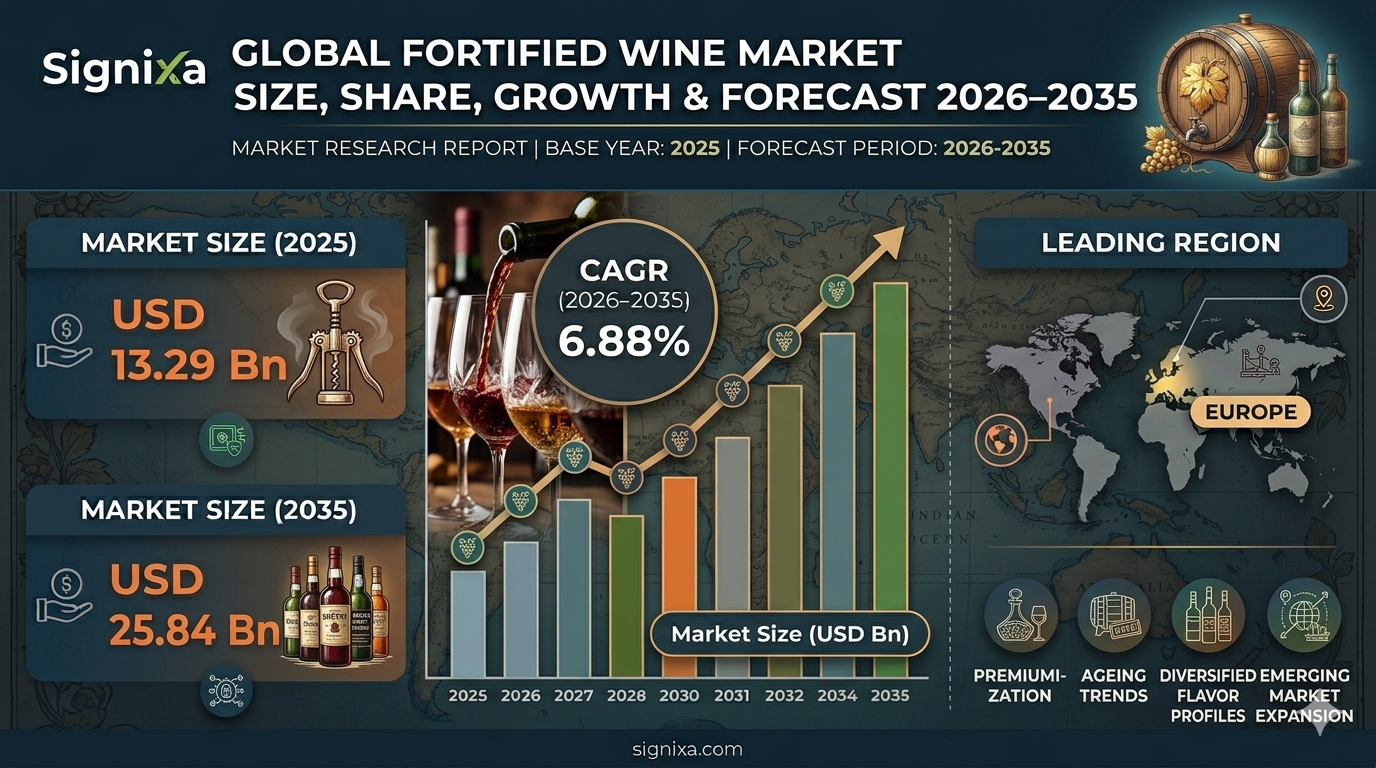
The size of the global fortified wine market was worth around USD 13.29 billion in 2025 and is predicted to grow to around USD 25.84 billion by 2035, with a compound annual growth rate (CAGR) of roughly 6.88% between 2026 and 2035. The report analyzes the fortified wine market's drivers and restraints, as well as the impact they have on demand throughout the projection period. In addition, the report examines global opportunities in the global fortified wine market.
The fortified wine market encompasses a distinctive category of wines strengthened by the addition of a distilled spirit, typically brandy, during the winemaking process. This fortification not only increases the alcohol content but also impacts the wine's flavor profile and shelf stability, leading to a diverse range of styles from sweet and rich to dry and complex. Traditional fortified wines like Port from Portugal, Sherry from Spain, Madeira from its eponymous Portuguese island, and Vermouth, an aromatized fortified wine, form the core of this market. Historically, fortification was a method to preserve wine during long voyages, but it has evolved into a deliberate technique to create unique sensory experiences. The market's allure lies in its heritage, often tied to specific geographical indications and centuries-old production methods, which appeal to connoisseurs and those seeking authentic, artisanal beverages. These wines are frequently enjoyed as aperitifs, digestifs, dessert wines, or as ingredients in sophisticated cocktails, showcasing their versatility.
The market for fortified wine is increasingly driven by a trend towards premiumization and a growing consumer interest in diverse and sophisticated alcoholic beverages. As disposable incomes rise globally, particularly in emerging economies, more consumers are willing to invest in high-quality, unique, and artisanal products. Fortified wines, with their complex flavor profiles, often lengthy aging processes, and rich historical significance, fit well into this trend, being perceived as luxurious and refined choices. Innovations in product offerings, such as new flavor variants, limited editions, and enhanced packaging, are also contributing to market growth. The expansion of distribution channels, including online retail, further enhances accessibility and convenience, making it easier for consumers to discover and purchase fortified wines.
Key Findings
- As per the analysis shared by our research analyst, the global fortified wine market is estimated to grow annually at a CAGR of around 6.88% over the forecast period (2026-2035).
- In terms of revenue, the global fortified wine market size was valued at around USD 13.29 billion in 2025 and is projected to reach USD 25.84 billion by 2035.
- Market growth is driven by increasing consumer preference for rich, aromatic alcoholic beverages and the expanding presence of online alcohol sales.
- Based on Product Type, the Port Wine segment is expected to maintain strong growth and demand.
- On the basis of Distribution Channel, Pubs, Bars & Restaurants continue to dominate global sales.
- By Region, Europe is projected to hold the leading share of the global market due to its historical and cultural association with fortified wine production and consumption.
Fortified Wine Market Dynamics
Heritage & Artisanal Appeal of Fortified Wines Attracting Urban Affluent Consumers Globally
One major factor propelling the fortified wine market is the rising interest in heritage and artisanal alcoholic beverages. Fortified wines have a rich cultural lineage, especially in Europe, and are perceived as premium products. This perception has helped expand their appeal among urban and affluent consumers globally, particularly in North America and Asia. Furthermore, health-conscious drinkers are increasingly exploring low-ABV alternatives and moderate drinking trends, favouring fortified wines as a balanced option compared to spirits. The steady growth in online alcohol retailing is another significant market driver. Changing consumer shopping behaviour, combined with expanded logistics capabilities and legal reforms around e-commerce alcohol sales, has allowed fortified wine producers and retailers to tap into a broader audience. Internet retailing offers ease of access, detailed product information, and delivery convenience, which has been vital during and post-pandemic.
Premiumization Trend & Younger Consumer Discovery of Sophisticated Fortified Wine Formats
The fortified wine market is experiencing a significant shift driven by a burgeoning trend towards premiumization and a growing consumer appreciation for unique and authentic alcoholic beverages. As disposable incomes rise globally, particularly in emerging markets, consumers are increasingly willing to spend more on high-quality, distinctive products that offer a sophisticated drinking experience. This inclination towards premium options benefits fortified wines, which often boast rich histories, complex flavor profiles, and artisanal production methods. This premiumization trend is not just confined to traditional wine connoisseurs; it is also attracting a newer, younger demographic eager to explore beyond conventional wine categories. Producers are capitalizing on this by offering limited editions, vintage releases, and special packaging, which enhance the perceived value and exclusivity of fortified wines.
Global Cocktail Culture Renaissance Driving Vermouth, Sherry & Port Adoption Among Younger Consumers
Another crucial dynamic shaping the fortified wine market is the profound influence of the global cocktail culture and mixology trends. Fortified wines, particularly Vermouth, Sherry, and Port, are experiencing a renaissance as essential ingredients in both classic and innovative cocktails. Mixologists are increasingly incorporating these wines into their creations due to their unique aromatic profiles, complexity, and ability to add depth to mixed drinks. This reintroduction to a broader audience, especially through trendy bars, pubs, and restaurants, is exposing fortified wines to younger consumers who might not otherwise consider them. The versatility of these wines — whether as an aperitif, a digestif, a dessert wine, or a cocktail component — makes them highly appealing in diverse social settings. This expanded utility is crucial for breaking down traditional perceptions of fortified wines as solely an after-dinner drink and is instrumental in broadening their consumer base.
Image Perceptions, Health Consciousness & Regulatory Taxation Presenting Market Restraints
However, the fortified wine market also faces certain challenges and restraints. One significant hurdle is the lingering perception among some consumer segments that fortified wines are old-fashioned or overly sweet, which can deter new consumers. This perception is particularly prevalent in markets where consumption habits lean towards drier, lighter wines or craft beers. Furthermore, the higher alcohol content of fortified wines, compared to unfortified wines, can be a deterrent for health-conscious consumers who are increasingly opting for lower-alcohol or even alcohol-free alternatives as part of wellness trends. Stringent regulations and high taxation on alcoholic beverages in many countries also pose a challenge, affecting pricing and market accessibility. The specialized production methods and often long aging periods for traditional fortified wines can also limit supply and increase production costs, potentially restricting broader market penetration.
Fortified Wine Market Segmentation Analysis
By Product Segment Analysis
The market is segmented by product type, with each fortified wine style offering distinct flavor profiles, cultural heritage, and consumer occasion suitability across global on-trade and off-trade channels:
Port wine dominates the global fortified wine market owing to its long-standing popularity and diverse flavor profiles. In 2025, port wine accounted for over 35% of the total market revenue. Its global appeal stems from the sweet, rich taste and aging potential that make it suitable for both casual and ceremonial consumption. The product's premium positioning and endorsements by sommeliers and connoisseurs are key factors behind its continued demand. European countries, especially Portugal, remain central to global port wine exports. The growing trend of tawny and vintage port varieties among millennial luxury wine consumers is also supporting segment expansion, with premium-aged releases commanding significant price premiums across key import markets in North America, Europe, and Asia-Pacific.
Vermouth holds a significant share of the fortified wine market, particularly due to its versatility in cocktails. In 2025, vermouth contributed nearly 25% of the global market volume. The resurgence of classic cocktail culture has spurred consumption in urban nightlife and mixology spaces. Brands are innovating with botanical infusions, leading to growing interest among younger consumers. Demand is especially strong in North America and Europe, where mixology trends are influencing both off-trade and on-trade vermouth sales. The artisan vermouth movement — featuring small-batch producers using regional botanicals and indigenous grape varieties — is attracting premium-segment consumers and driving product differentiation in what was historically a commodity-oriented category.
Sherry commands a strong market base, especially in Europe and Latin America, and accounted for approximately 20% of market revenue in 2025. The wine's complex flavor range, from dry to sweet, makes it appealing for various culinary pairings and niche uses. While traditionally consumed in mature demographics, modern branding and gourmet pairings are helping rejuvenate interest. Spain remains the largest producer and exporter of sherry, reinforcing its regional dominance. The Fino and Manzanilla styles are experiencing a particular revival among younger wine enthusiasts globally, driven by sommelier advocacy and the natural wine movement's appreciation for sherry's terroir-driven complexity and minimal intervention production methods.
The "Others" category, including Marsala and Madeira, holds a smaller but steadily growing market share. These wines appeal to niche segments and gourmet consumers seeking unique taste experiences. In 2025, this segment accounted for around 20% of market sales. Growth is driven by specialty liquor stores and digital platforms offering access to lesser-known but high-quality fortified wines from smaller producers. Madeira's unique oxidative aging process and extraordinary longevity — with bottles remaining drinkable for well over a century — are attracting collector interest and driving premium pricing for vintage releases. Marsala's dual role as both a culinary ingredient and a sipping wine sustains steady demand across European and North American markets.
By Distribution Channel Segment Analysis
The pubs, bars & restaurants segment dominates the global fortified wine market, contributing over 40% of total revenue in 2025. Social drinking trends, fine dining, and curated wine lists in hospitality venues are major drivers. Fortified wines are favoured for their compatibility with cheese platters, desserts, and post-meal drinks. Upscale restaurants and mixology-driven bars in urban centers continue to influence the consumption patterns and elevate brand visibility. Sommelier education programs and on-trade experiential tastings play a critical role in building consumer knowledge and appreciation for fortified wine varieties, creating a pipeline of informed consumers who subsequently purchase through retail and online channels.
Internet retailing is the fastest-growing distribution channel, with a CAGR exceeding 8% from 2025 to 2035. In 2025, it contributed around 18% to total market sales. Convenience, broader product availability, and consumer reviews make online platforms attractive. As home consumption rises and digital payment systems become more streamlined, e-commerce is expected to play a key role in future market expansion. Subscription wine services, direct-to-consumer winery channels, and specialist online retailers are particularly effective in introducing consumers to premium and niche fortified wine products that may not be available through conventional brick-and-mortar retail, creating discovery opportunities that are reshaping consumer purchasing behaviour globally.
Liquor stores remain a critical retail channel, accounting for nearly 25% of global fortified wine sales in 2025. These outlets offer curated selections, knowledgeable staff, and accessibility, particularly in developed markets. With increasing premiumization trends, consumers are willing to explore diverse product offerings available through liquor stores, contributing to steady sales. Specialist wine and spirit merchants in particular are playing an important role in consumer education and product discovery, often hosting tastings and offering staff recommendations that support trade-up to premium fortified wine expressions. Independent liquor retailers also serve as key distribution partners for smaller, artisan fortified wine producers who lack the scale to secure mainstream supermarket listings.
Supermarkets accounted for approximately 12% of the fortified wine market in 2025. These outlets cater to everyday buyers seeking convenience and affordability. Fortified wines are increasingly being placed in promotional aisles and festive collections, encouraging impulse purchases. Growing supermarket chains in developing countries also provide a valuable entry point for fortified wine brands looking to scale. The integration of premium wine sections within major supermarket chains — featuring wine advisors, temperature-controlled display areas, and curated fine wine selections — is helping to elevate the perceived quality positioning of fortified wines within the mass retail environment and attract a broader consumer base.
Other channels, including duty-free shops, wineries, and boutique stores, represent niche but important market segments. These avenues offer premium and exclusive selections, often with personalized services and tasting experiences. Though contributing less than 5% of overall sales, these channels play a pivotal role in brand positioning and consumer education. Winery cellar door experiences, in particular, are increasingly recognized as powerful brand-building tools that create emotional connections between consumers and fortified wine products — generating loyalty and positive word-of-mouth that translates into repeat purchases through mainstream retail channels. Duty-free shops at international airports provide high-impact exposure to travelling consumers who may be visiting producing regions for the first time.
Report Attributes & Market Scope
| Report Attribute | Details |
|---|---|
| Market Size Value in 2025 | USD 13.29 Billion |
| Market Size Value in 2035 | USD 25.84 Billion |
| CAGR (2026–2035) | 6.88% |
| Base Year Used for Estimation | 2025 |
| Historic Data | 2020 - 2025 |
| Forecast Period | 2026 - 2035 |
| Segments Covered – By Product |
|
| Segments Covered – By Distribution Channel |
|
| Regions Covered | North America, Europe, Asia Pacific, Latin America, Middle East and Africa |
| Major Countries Covered | U.S., Canada, Mexico, Germany, UK, France, Italy, Spain, Russia, China, Japan, South Korea, India, Southeast Asia Countries, Brazil, Argentina, GCC Countries, Turkey, Iran, Israel, South Africa, Egypt, Nigeria, etc. |
| Key Companies Profiled | E. & J. Gallo Winery, The Wine Group, Bacardi Limited, Sogrape Vinhos, Gonzalez Byass, Davide Campari-Milano N.V., Symington Family Estates, Sandeman, Bodegas Osborne, and Bodegas Lustau, among others. |
Fortified Wine Market Regional Analysis
The Fortified Wine market is primarily dominated by Europe, which accounts for more than 45% of total revenue in 2025. The region benefits from a deep-rooted wine culture, especially in countries like Portugal, Spain, and Italy. North America follows, driven by increasing interest in premium and imported wines. The Asia-Pacific region is showing rapid growth, supported by rising disposable income and exposure to Western drinking habits. Latin America and the Middle East & Africa are emerging markets where growth is supported by urbanization and retail expansion.
Europe (Dominant Region)
Europe holds a foundational position in the global fortified wine market, being home to some of the most historically significant and globally recognized styles such as Port, Sherry, and Madeira. These wines are deeply embedded in the cultural and culinary traditions of their respective countries, maintaining a loyal consumer base. While consumption patterns in some traditional markets have seen fluctuations, there's a strong push towards preserving and promoting the heritage and authenticity of these wines through strict appellation controls and quality standards. The European market is also witnessing a renewed interest in these classic styles from younger generations and mixologists who are rediscovering their versatility in modern cocktail creations. Countries like the UK, Germany, and France are significant consumers, with robust import channels supporting a diverse offering. The emphasis on unique terroir, traditional production methods, and often lengthy aging processes continues to drive the premium segment of the market, appealing to discerning consumers who value history and craftsmanship.
North America
North America's fortified wine market is experiencing a resurgence, largely driven by the premiumization trend and a growing interest in sophisticated cocktail culture. The United States is a key market, with consumers — particularly millennials and younger professionals — showing increased curiosity in diverse and high-quality alcoholic beverages. This extends beyond traditional consumption as an aperitif or digestif, with fortified wines like Vermouth finding significant traction as essential ingredients in craft cocktails. This shift is exposing these wines to a new demographic, moving them beyond their conventional image. The market also benefits from a strong distribution network, including well-stocked liquor stores and a rapidly expanding online retail segment, which offers consumers greater access to a wider variety of fortified wines from around the world. Additionally, an increasing appreciation for wine tourism and tasting events further enhances consumer engagement and education about these unique wines, contributing to their growing popularity across the region.
Asia Pacific
The Asia Pacific region is rapidly becoming a significant growth engine for the fortified wine market. This growth is fuelled by increasing disposable incomes, a burgeoning middle class, and a growing adoption of Western lifestyle and consumption patterns, particularly in countries like China, Japan, and India. While traditional red and white wines still dominate, there's a noticeable rise in interest for fortified wines as consumers explore new and diverse alcoholic beverages. These wines are often perceived as sophisticated and luxurious, appealing to the region's aspirational consumers. The expanding hospitality sector, including upscale restaurants and bars, plays a crucial role in introducing fortified wines through food pairings and cocktail menus. Furthermore, the rapid growth of e-commerce platforms in Asia Pacific is providing unprecedented access to international fortified wine brands, overcoming traditional distribution challenges and reaching a vast consumer base across diverse geographies.
Middle East & Africa
The Middle East and Africa (MEA) region presents an emerging but steadily growing market for fortified wines. This growth is largely influenced by rising disposable incomes, urbanization, and a gradual shift in consumer preferences towards premium and diverse alcoholic beverages, particularly in the Gulf Cooperation Council (GCC) countries. While cultural and religious considerations can impact alcohol consumption in some parts of the region, there's a developing market among expatriate communities and a segment of the local population. Fortified wines are often associated with luxury and celebratory occasions, appealing to consumers seeking high-quality and unique beverage experiences. South Africa also stands out as a producer and consumer of fortified wines, with its own rich winemaking heritage. As the tourism sector expands and international culinary trends gain traction across the MEA, the exposure and acceptance of fortified wines are expected to gradually increase, offering growth opportunities for both imported and regionally produced varieties.
Latin America
Latin America is an emerging market for fortified wines where growth is supported by urbanization and retail expansion. Brazil and Argentina are the primary contributors, each benefiting from established wine consumption cultures that create an accessible gateway for fortified wine discovery. Sherry maintains a particularly strong legacy in parts of Latin America due to historical cultural ties with Spain. The growing middle class in the region — combined with expanding modern retail infrastructure, improving logistics, and increasing digital commerce penetration — is broadening access to imported fortified wine brands. Food and beverage pairing culture, especially around celebrations and dining occasions, provides natural demand occasions for fortified wines across the region. Brand marketing investments by leading producers in Latin America are gradually building consumer awareness of fortified wine styles beyond the traditional Sherry-familiar consumer segment through the forecast period.
Recent Developments in the Fortified Wine Market
-
2023
Sandeman launched a new premium range of aged tawny ports targeting the millennial luxury wine consumer.
-
2022
Martini & Rossi introduced a botanical vermouth line in collaboration with mixologists to cater to rising demand in craft cocktail culture.
Fortified Wine Market: Competitive Landscape
The global fortified wine market features key players such as E. & J. Gallo Winery, The Wine Group, Bacardi Limited, Sogrape Vinhos, Gonzalez Byass, Davide Campari-Milano N.V., Symington Family Estates, Sandeman, Bodegas Osborne, and Bodegas Lustau. These companies focus on product innovation, heritage branding, and expanding distribution through both retail and online channels. Strategic partnerships with restaurants, influencers, and e-commerce platforms are vital for market penetration. As demand for premium and artisanal fortified wines continues to rise, brands are also investing in storytelling and experiential marketing to attract and retain consumers.
Despite the challenges, the fortified wine market is presented with significant opportunities, largely driven by product innovation and expanding distribution channels. Manufacturers are actively responding to changing consumer tastes by introducing new flavor variants, including aromatized and flavored fortified wines, and experimenting with different grape varietals and aging techniques. The focus on single-spirit bars and specialized wine bars, which often highlight vintage and unique fortified wines, is also contributing to renewed interest and education. The growth of e-commerce and specialized online liquor retailers has significantly improved accessibility, allowing consumers to explore a wider selection of fortified wines beyond what is available in traditional brick-and-mortar stores. This digital accessibility, coupled with targeted digital marketing and social media campaigns, helps brands connect with new consumer demographics and overcome geographical limitations, ensuring sustained interest and engagement in this unique and historically rich segment of the wine industry.
Key Companies Profiled
Global Fortified Wine Market Segmentation Summary
By Product
By Distribution Channel
By Region
Frequently Asked Questions (FAQs) About the Fortified Wine Market
What is fortified wine?
Fortified wine is a type of wine that has had a distilled spirit, typically brandy, added to it to increase its alcohol content. Common types include port, sherry, vermouth, and madeira. These wines are known for their rich flavor profiles and are often used for sipping, cooking, or in cocktails.
Which key factors will influence the fortified wine market growth over 2026–2035?
The global fortified wine market is expected to grow due to rising consumer interest in premium alcoholic beverages, the revival of classic cocktail culture, and growing accessibility through online retail channels.
What will be the value of the fortified wine market during 2026–2035?
According to the study, the global fortified wine market was worth around USD 13.29 billion in 2025 and is projected to grow to around USD 25.84 billion by 2035.
What will be the CAGR value of the fortified wine market during 2026–2035?
The CAGR value of the fortified wine market is expected to be around 6.88% during the forecast period 2026–2035.
Which region will contribute notably towards the fortified wine market value?
Europe will continue to lead the fortified wine market due to its long-standing wine heritage and demand in countries like Portugal, Spain, and Italy. North America and Asia-Pacific are also key contributors due to rising disposable incomes and evolving beverage preferences.
Which are the major players leveraging the fortified wine market growth?
Key players in the global fortified wine market include E. & J. Gallo Winery, Constellation Brands Inc., Treasury Wine Estates, Trinchero Family Estates, Deutsch Family Wine & Spirits, The Wine Group, John Distilleries, International Beverage Holdings, Sula Vineyards Pvt. Ltd., and Accolade Wines Plc.
What can be expected from the global fortified wine market report?
The report offers in-depth insights into market trends, key drivers, challenges, and future opportunities. It covers segmentation by product type and distribution channel, regional performance, competitive landscape, and recent developments impacting the global fortified wine industry.