
Industry Prospective
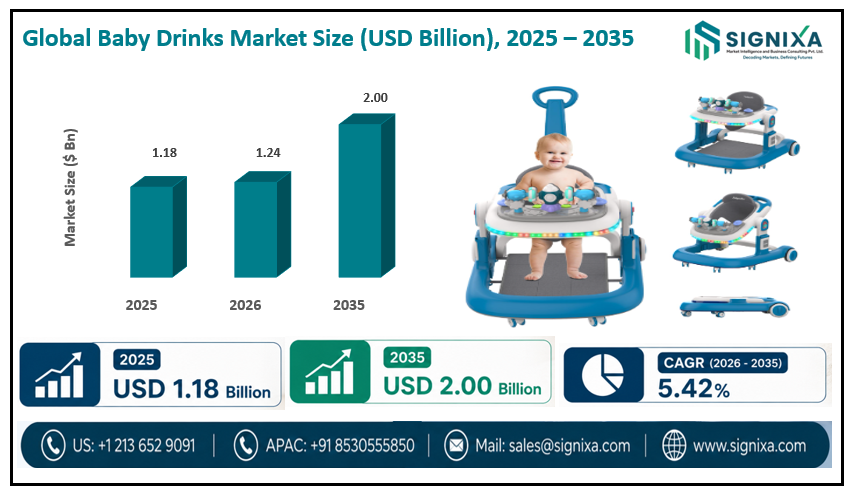
The size of the global baby walkers market was valued at around USD 1.18 Billion in 2025 and is projected to reach approximately USD 2.00 Billion by 2035, growing at a CAGR of 5.42% between 2026 and 2035. This report analyzes the drivers, restraints, opportunities, and future trends in the baby walkers market, providing a complete picture of global and regional growth.
Baby Walkers Market Overview
The baby walkers market includes devices designed to help infants learn to walk, combining functionality with comfort and safety. Rising awareness about child motor development, increasing disposable income among parents, and a growing demand for innovative baby care products are contributing to the market's expansion. Moreover, the demand for ergonomically designed and safety-certified walkers is steadily rising, especially in developed markets.
The baby walker market is experiencing significant growth, driven by increasing awareness of early childhood development, rising disposable incomes, and technological advancements. Parents are increasingly seeking products that support their infants' motor skills and cognitive development, leading to a demand for walkers that incorporate interactive features such as music, lights, and educational toys. Additionally, the integration of safety features, such as brakes and sturdy frames, has become a priority for manufacturers to address concerns regarding accidents and injuries associated with traditional walkers. The market is also witnessing a shift towards multifunctional designs, with walkers being combined with other baby gear like activity centers and push toys, offering greater value and convenience for parents. E-commerce platforms have become a significant sales channel, providing consumers with easy access to a wide range of products and facilitating informed purchasing decisions. However, challenges remain, including regulatory restrictions in certain regions due to safety concerns and competition from alternative products like stationary activity centers. Despite these challenges, the market's outlook remains positive, with continuous innovation and a focus on safety and functionality driving its expansion.
Key Findings
- The global baby walkers market is expected to grow at a CAGR of 5.42% from 2026 to 2035.
- In 2025, the market size was valued at USD 1.18 Billion and is anticipated to reach USD 2.00 Billion by 2035.
- The sit-in walkers segment is projected to dominate the product type category, accounting for over 60% of the global market in 2025, due to safety and ease of use.
- Plastic walkers will continue leading the material segment with 70%+ share, owing to their affordability and lightweight nature.
- Premium baby walkers (above USD 80) are expected to witness the fastest price-segment growth at a CAGR of 6.5% through 2035.
- In terms of distribution, offline channels dominate, but online sales (CAGR 7.6%) are growing rapidly due to e-commerce penetration.
- Asia-Pacific is projected to be the fastest-growing regional market (CAGR 7.8%), while North America remains a key revenue contributor.
Baby Walkers Market Dynamics
Rising Disposable Incomes, Urbanization & Nuclear Family Lifestyles
Growing urbanization and rising disposable incomes globally are enabling more parents to invest in convenience-driven baby care products. Nuclear families, especially in urban areas, prefer products that aid parenting tasks and support child development. Baby walkers are increasingly viewed as essential tools for early mobility. With higher spending capacity, parents are opting for innovative, stylish, and multifunctional baby walkers, particularly in the premium segment. This socioeconomic shift is a primary catalyst driving overall market growth.
Early Childhood Motor Development Awareness & Pediatrician Recommendations
Parents are increasingly aware of the developmental milestones related to motor skills and physical activity in infants. Baby walkers are marketed as tools that help toddlers strengthen their leg muscles, improve balance, and explore their surroundings with greater confidence. Paediatricians and child development experts also promote alternatives like standing walkers, which offer safe, active engagement. This growing understanding of early-stage development is encouraging demand for walkers that promote mobility and learning during critical growth phases.
Product Innovation — Smart Walkers, Anti-Slip Safety Features & Multi-Functional Designs
Continuous product innovation is significantly boosting market interest and consumer engagement. Manufacturers are integrating features like anti-slip wheels, musical toys, interactive panels, foldable frames, and adjustable height settings to enhance product utility and safety. Smart walkers with motion sensors, detachable activity trays, and convertible designs are gaining popularity. These advancements not only make walkers multifunctional but also cater to varying age groups and home environments. Innovation also allows brands to differentiate and capture specific price segments effectively.
E-Commerce Growth & Digital Marketing Reaching First-Time Buyers
The rapid growth of e-commerce platforms is revolutionizing product accessibility and consumer reach in the baby walkers market. Online channels allow parents to browse a wider variety of models, compare prices, read reviews, and purchase from the comfort of their homes. This is especially impactful in developing regions, where access to physical stores may be limited. Additionally, digital marketing, influencer reviews, and discounts offered by online retailers are encouraging first-time buyers and boosting overall sales volumes. In 2025, nearly 32% of all baby walker sales occurred online, with Asia-Pacific and Middle East markets witnessing the fastest digital adoption in baby care products.
Baby Walkers Market Segmentation Analysis
By Product Type Segment Analysis
Sit-In Walkers (Activity Walkers)
Sit-in walkers accounted for more than 60% of the global market in 2025, driven by their convenience and safety features. These walkers allow babies to sit securely and move around using their feet, supporting muscle development. Many come with activity trays, padded seating, and adjustable height levels. Their widespread use in North America and Europe, where safety-certified products are favoured, has strengthened their dominance. Brands like Fisher-Price and VTech lead in this category due to wide consumer trust. Despite some concerns about prolonged use potentially delaying natural walking skills, sit-in walkers remain favoured for aiding motor development and providing entertainment.
Standing / Push Walkers (Montessori-Aligned)
Push baby walkers are projected to grow at a CAGR of 6.8% from 2026 to 2035, as more parents seek non-restrictive, Montessori-aligned products that allow natural movement. Paediatricians increasingly recommend push walkers over sit-in variants for reducing fall risks and encouraging independent walking. The rise of wooden push walkers with toy storage and eco-friendly finishes is particularly boosting demand in developed markets like Germany, the UK, and Japan. These products resonate with parents prioritizing child-led development over assisted mobility.
By Material Segment Analysis
Plastic Baby Walkers (BPA-Free)
Plastic baby walkers captured more than 70% of the market share in 2025 due to their affordability, lightweight build, and design flexibility. They are preferred by mass-market consumers in emerging countries like India, Brazil, and Indonesia. Easy to clean and available in vibrant colors with interactive elements, plastic walkers dominate both offline and online sales channels. However, safety concerns around low-grade plastics have led premium brands to use BPA-free and non-toxic materials. Easy to clean and available in vibrant colors with interactive elements, plastic walkers remain the leading choice for budget-oriented families globally.
Wooden Baby Walkers (FSC-Certified)
Wooden baby walkers are expected to grow at a CAGR of 7.2% between 2026 and 2035, driven by the global shift toward eco-friendly, non-toxic products. Parents in high-income economies are increasingly investing in wooden walkers made from FSC-certified hardwood, known for durability and minimal environmental impact. Scandinavian brands like Hape and PlanToys are gaining traction in North America and Western Europe, where design aesthetics and safety compliance (e.g., EN71 standards) play a major role in purchasing decisions.
Other Materials (Metal Frames, Composites)
The 'Others' category includes walkers made from metal frames combined with fabric seating, composite plastic-wood hybrids, and specialty materials targeting specific age groups or developmental needs. These products often occupy the mid-to-premium price range and are gaining interest among parents seeking durability combined with ergonomic design. Composite walkers that combine plastic interactive elements with wooden push bars are particularly popular in the premium segment.
By Price Point Segment Analysis
Under USD 30
Essential features at affordable prices; dominant in Asia-Pacific, Latin America, and Africa. Plastic construction, basic safety features. Primarily sold through offline channels in price-sensitive markets.
USD 30–80
The mid-range segment generated over USD 540 million in revenue in 2025. Parents prefer products that combine affordability with safety features such as anti-slip pads and adjustable heights. Active competition from Chicco, Mee Mee, and Graco drives high perceived value in this segment.
Above USD 80
Premium baby walkers are projected to grow at a CAGR of 6.5% through 2035, driven by smart and convertible models. High-end products include interactive sound systems, ergonomic design, and infant-safety certified materials. Thriving in U.S., South Korea, and UAE markets.
By Distribution Channel Segment Analysis
Offline (Baby Specialty Stores, Supermarkets, Toy Stores)
In 2025, offline channels continue to be the strongest form of distribution, accounting for over the majority of the market share. Physical stores provide parents with a hands-on opportunity to assess walker safety, size, and functionality before purchase. Baby specialty stores, supermarkets, toy retail chains, and department stores remain primary offline venues. In-store promotional support, bundle deals, and the ability to physically test products reinforce offline dominance, especially for first-time parents who value professional guidance.
Online (E-Commerce: Amazon, Walmart, Flipkart, Shopee)
The online segment is projected to grow at a CAGR of 7.6%, owing to increasing smartphone penetration, digital literacy, and convenience-driven shopping habits. E-commerce platforms like Amazon, Walmart, and Flipkart offer deep product ranges, easy returns, and customer reviews that influence buying behaviour. In 2025, nearly 32% of all baby walker sales occurred online, with Asia-Pacific and Middle East markets witnessing the fastest digital adoption in baby care products. Influencer reviews and parenting community recommendations on social media are powerful online purchase drivers.
Report Attributes & Market Scope
| Report Attribute | Details |
|---|---|
| Market Size Value in 2025 | USD 1.18 Billion |
| Market Size Value in 2035 | USD 2.00 Billion |
| CAGR (2026-2035) | 5.42% |
| Base Year Used for Estimation | 2025 |
| Historic Data | 2020-2025 |
| Forecast Period | 2026-2035 |
| Segments Covered -By Product Type |
|
| Segments Covered -By Material |
|
| Segments Covered -By Price Point |
|
| Segments Covered -By Distribution Channel |
|
| Regions Covered | North America, Europe, Asia Pacific, Latin America, Middle East and Africa |
| Major Countries Covered | U.S., Canada, Mexico, Germany, UK, France, Italy, Spain, Russia, China, Japan, South Korea, India, Southeast Asia Countries, Brazil, Argentina, GCC Countries, Turkey, Iran, Israel, South Africa, Egypt, Nigeria, etc. |
| Key Companies Profiled | Kids II Inc. (Bright Starts), Fisher-Price Inc. (Mattel), Combi USA Inc., Chicco (Artsana Group), Delta Children, and Mee Mee. |
Baby Walkers Market Regional Analysis
North America
The North America baby walker market is growing steadily, driven by increasing parental focus on infant development and safety. Consumers in the region prefer baby walkers that combine fun features like interactive toys, music, and lights with advanced safety mechanisms such as anti-slip bases, adjustable speeds, and secure locking systems. Rising awareness about the benefits of early motor skill development fuels demand, while busy lifestyles encourage the use of multifunctional baby gear that can entertain and assist babies.
Regulatory bodies in North America enforce strict safety standards, prompting manufacturers to innovate continuously to meet these requirements and reduce accident risks. The market also sees growing popularity of eco-friendly and non-toxic materials as consumers become more health-conscious. E-commerce channels have expanded accessibility, allowing parents to compare options and read reviews before purchasing. However, concerns about prolonged use of baby walkers and alternative products like stationary activity centers present challenges. Despite this, technological advancements and growing urban populations continue to drive market expansion.
Asia-Pacific (Fastest Growing)
Asia-Pacific is projected to grow at a CAGR of 7.8% from 2026 to 2035, making it the fastest-emerging market for baby walkers. Rising birth rates, expanding middle class, and increasing urbanization in countries like China, India, and Indonesia are major growth drivers. E-commerce platforms and social media parenting communities have accelerated product awareness. Moreover, local and international brands are expanding aggressively through online platforms like Tmall, Flipkart, and Shopee. Affordability and product variety make this region increasingly attractive for global manufacturers. In 2025, nearly 32% of all baby walker sales occurred online in this region, reflecting the fastest digital adoption in baby care products globally.
Europe
The Europe baby walker market is witnessing steady growth fuelled by increasing awareness of infant safety and developmental needs. Parents in this region prioritize products that meet stringent safety regulations, such as the European Standard EN 1273, which mandates design features to prevent accidents. This has led manufacturers to focus on enhanced safety features like sturdy frames, anti-tip mechanisms, and adjustable heights. Additionally, European consumers favour eco-friendly and non-toxic materials, reflecting the region's strong emphasis on health and sustainability.
The demand for multifunctional baby walkers with interactive elements, including lights, sounds, and educational toys, is rising, as these products support early childhood development while engaging infants. Online retail channels are becoming increasingly popular, offering a broad product range and convenient shopping experiences. Despite challenges like high product standards and competitive pricing, continuous innovation and evolving consumer preferences support steady market expansion.
Middle East
The Middle East baby walker market is gradually expanding, driven by rising disposable incomes, growing urbanization, and increasing awareness of infant development and safety. Parents in the region are becoming more conscious of selecting baby walkers that offer both entertainment and safety features, such as sturdy construction, anti-slip bases, and adjustable heights. The expanding e-commerce landscape has improved product accessibility, allowing consumers to explore a wider variety of options. The demand for stylish, multifunctional, and easy-to-assemble walkers is increasing, catering to modern parenting needs. Ongoing urbanization, lifestyle changes, and a growing young population position the Middle East as a promising market for baby walkers with continued growth potential.
Latin America
Latin America represents a growing market for baby walkers, driven by expanding middle-class populations, rising birth rates, and the expansion of baby care retail networks in Brazil, Mexico, and Argentina. Price-sensitive consumers in this region primarily drive the economy and mid-range segments. As e-commerce penetration grows and awareness of infant development improves, demand for feature-rich baby walkers is gradually increasing. Local brands compete effectively against international players on price, while international brands focus on premium segments targeting upwardly mobile urban consumers.
Recent Developments in the Baby Walkers Market
-
2025
Fisher-Price introduced a new premium baby walker line with sensory panels and adjustable height options, targeting the growing premium segment in North America where parents seek products that stimulate multiple senses while providing ergonomic support and precise height adjustability to accommodate developmental growth stages from 6 to 12 months.
-
2023
Chicco expanded its footprint in Southeast Asia with customized sit-in walker models catering to urban lifestyles, featuring compact foldable designs suited to smaller urban apartments across markets like Singapore, Thailand, and Malaysia. The expansion reflects Chicco's broader Asia-Pacific growth strategy targeting the region's rapidly expanding middle-class parent consumer base.
Baby Walkers Market: Competitive Landscape
The baby walker market's competitive landscape is driven by continuous innovation and safety advancements. Key players like Fisher-Price, Chicco, Joovy, and Evenflo focus on integrating interactive features such as music, lights, and educational toys to enhance infant engagement. These companies prioritize safety by incorporating anti-slip bases, adjustable heights, and sturdy frames that comply with regional regulations. Product differentiation is achieved through multifunctional designs combining walkers with activity centers or push toys, catering to busy parents seeking convenience. Sustainability is increasingly important, with many brands using non-toxic, eco-friendly materials to meet growing consumer demand. E-commerce channels enable these players to expand their reach and gather customer feedback for product improvements.
Regional safety standards heavily influence competitive strategies, encouraging companies to exceed compliance and educate consumers on safe use. Collaborations with paediatric experts and child safety organizations strengthen credibility. Competitive pricing, promotional offers, and bundled deals attract budget-conscious buyers. Together, these factors drive continuous product innovation, enhanced customer experience, and strategic partnerships, positioning leading brands at the forefront of a growing and evolving baby walker market.
Key Companies Profiled
- Kids II Inc. (Bright Starts)
- Fisher-Price Inc. (Mattel)
- Combi USA Inc.
- Chicco (Artsana Group)
- Delta Children
- Mee Mee
- Baby Trend
- Dream On Me
- Britax Child Safety
- Joovy
- Kolcraft
- Combi Corporation
- VTech
- Mothercare
- Mamas & Papas
- Evenflo
- Graco
- Goodbaby International
- Brevi
- Hauck
- Safety 1st
Global Baby Walkers Market Segmentation Summary
By Product Type
- Sit-In Walkers
- Standing/Push Walkers
By Material
- Plastic
- Wooden/FSC-Certified
- Others (Metal, Composites)
By Price Point
- Economy (Under USD 30)
- Mid-Range (USD 30–80)
- Premium (Above USD 80)
By Distribution Channel
- Offline
- Online
By Region
- North America
- U.S.
- Canada
- Mexico
- Europe
- Germany
- France
- UK
- Spain
- Italy
- Rest of Europe
- Asia-Pacific
- China
- Japan
- India
- Australia
- South Korea
- Southeast Asia
- Rest of Asia-Pacific
- Latin America
- Brazil
- Argentina
- Rest of Latin America
- The Middle East & Africa
- GCC Countries
- South Africa
- Rest of the Middle East & Africa
Frequently Asked Questions (FAQs): Baby Walkers Market
What is a baby walker?
A baby walker is a wheeled device designed to support infants who cannot yet walk independently. It helps babies move around while providing support and encouraging motor skill development. Walkers typically include a suspended seat, safety features, and toys for entertainment.
Which key factors will influence the baby walkers market growth over 2026-2035?
Key growth drivers include increasing global birth rates, rising parental spending on baby gear, and growing popularity of multifunctional, foldable, and activity-based baby walkers. Expansion of e-commerce channels and rising safety-conscious innovations will also drive demand.
What will be the value of the baby walkers market during 2026-2035?
According to the study, the global baby walkers market size was approximately USD 1.18 Billion in 2025 and is projected to reach about USD 2.00 Billion by 2035, reflecting robust consumer interest in baby mobility solutions.
What will be the CAGR value of the baby walkers market during 2026-2035?
The global baby walkers market is projected to grow at a CAGR of 5.42% from 2026 to 2035, fueled by increasing product innovation, rising awareness about early childhood development, and a shift toward premium baby products.
Which region will contribute notably towards the baby walkers market value?
North America is expected to dominate due to high consumer expenditure and awareness, while Asia-Pacific will be the fastest-growing region with a CAGR of 7.8%, driven by population growth, rising disposable incomes, and rapid e-commerce adoption in emerging economies.
Which are the major players leveraging the baby walkers market growth?
Prominent players include Kids II Inc. (Bright Starts), Fisher-Price Inc. (Mattel), Combi USA Inc., Chicco (Artsana Group), Delta Children, and Mee Mee. These companies focus on product innovation, quality, and expansion through digital and retail platforms.
What can be expected from the global baby walkers market report?
The report offers a detailed assessment of market size, trends, and competitive landscape. It examines product and material innovations, pricing dynamics, regulatory considerations, and growth opportunities across different regions and distribution channels.