
Medical Carts Market Overview
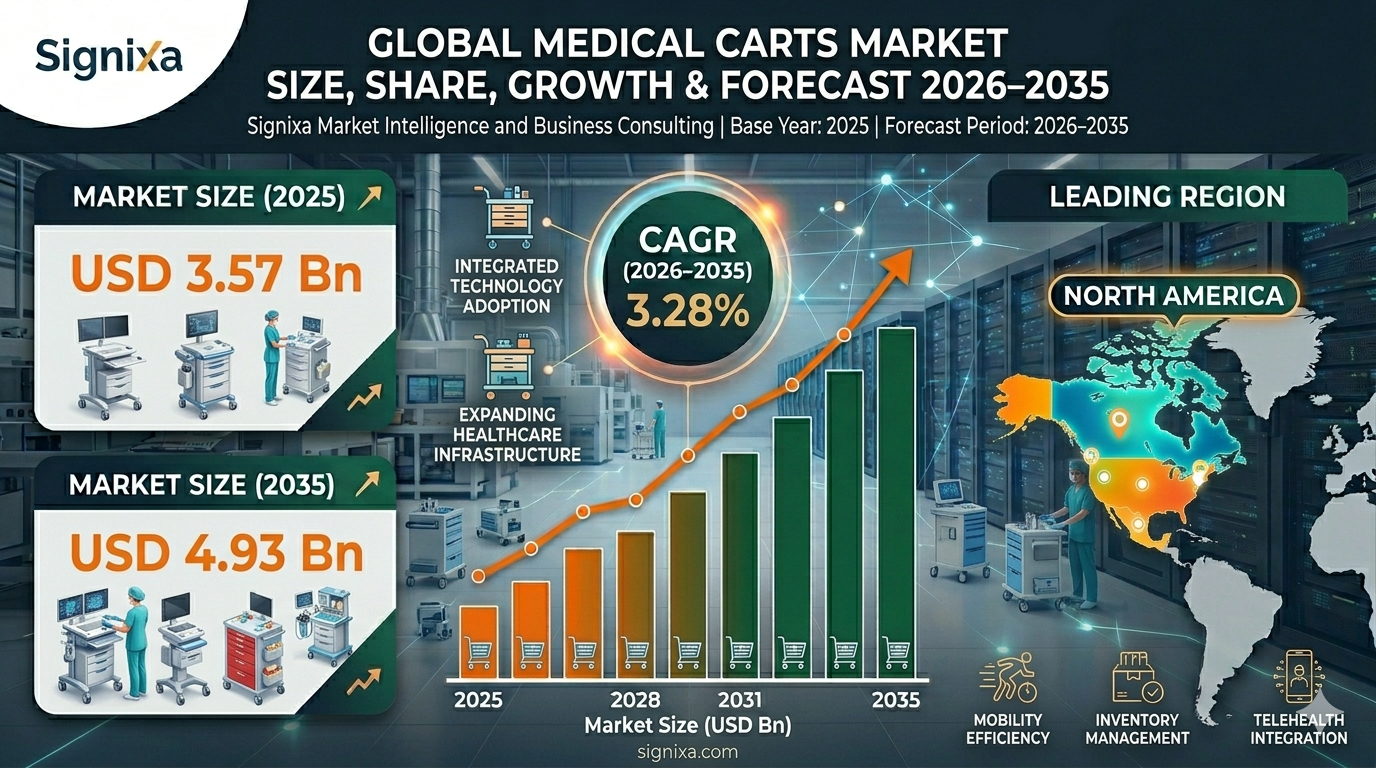
The size of the global medical carts market was valued at approximately USD 3.57 billion in 2025 and is projected to grow to around USD 4.93 billion by 2035, at a compound annual growth rate (CAGR) of roughly 3.28% from 2026 to 2035. This report provides insights into the drivers and restraints influencing market dynamics and identifies emerging opportunities across regional and global levels.
Medical carts are critical components of modern healthcare infrastructure, designed for the efficient and safe transport of medical equipment, medications, and supplies within various care settings. The increasing need for streamlined clinical workflows, patient safety, and point-of-care accessibility has propelled the demand for advanced medical carts. Integration with electronic health records (EHR) systems and the adoption of ergonomic, user-friendly designs are also contributing to widespread use across hospitals, nursing homes, and ambulatory settings. Medical carts, particularly mobile computing carts, serve as vital mobile workstations that allow healthcare professionals to access and update patient data at the point of care, significantly reducing medication errors and improving documentation accuracy.
The growing prevalence of chronic diseases, a surging geriatric population, and an increase in the number of hospital admissions are driving the demand for various types of medical carts, including emergency carts, medication carts, and procedure carts. Emergency carts, for instance, are indispensable in critical care units and emergency departments, providing rapid access to essential drugs and equipment during time-sensitive situations. Technological advancements in cart design, such as ergonomic features, integrated power solutions, RFID tracking, and antimicrobial materials, are also contributing to market growth by enhancing functionality, mobility, and infection control, making medical carts an indispensable tool for modern healthcare delivery.
Key Findings
- The global medical carts market is anticipated to grow at a CAGR of 3.28% over the forecast period (2026-2035).
- In revenue terms, the market stood at USD 3.57 billion in 2025 and is projected to reach USD 4.93 billion by 2035.
- The demand is fuelled by the rising need for efficient medical supply management and enhanced workflow systems in healthcare facilities.
- Based on Type, the Medication Carts segment is expected to dominate the global market share.
- By Material, Metal carts continue to lead due to durability and load-bearing capacity.
- In terms of Configuration, Mobile Carts hold the majority share driven by flexibility and ease of access.
- By End Use, Hospitals remain the largest consumers of medical carts globally.
- Regionally, North America commands the dominant share due to advanced healthcare infrastructure.
Medical Carts Market Dynamics
Point-of-Care Treatment Adoption & Mobile Healthcare Services Driving Real-Time Clinical Access
The increasing adoption of point-of-care treatment and mobile healthcare services is a key driver of the medical carts market. Medical professionals rely on mobile carts to deliver real-time care, access patient records, and perform tasks without needing to return to stationary workstations. This reduces delays in treatment and improves patient satisfaction. As care facilities transition to more mobile, patient-centred models, the demand for versatile, highly functional medical carts continues to rise. Another significant factor is the advancement in cart ergonomics and integration of technology. Modern medical carts now feature battery-powered systems, integrated touchscreens, and secure compartments for controlled medications. These innovations enhance staff productivity while ensuring compliance with safety and hygiene standards. As healthcare providers emphasize infection control and digital documentation, the incorporation of antimicrobial surfaces and secure EHR access in carts further drives adoption.
EHR Integration & Bedside Digital Documentation Transforming Medical Cart Adoption Across Hospital Wards
The medical cart market's dynamics are intensely shaped by the ongoing transformation of healthcare delivery, particularly the widespread adoption of Electronic Health Records (EHR) and the drive for point-of-care efficiency. As of 2023, approximately 90% of healthcare organizations have integrated digital medical records, creating an immense demand for medical carts equipped with computer workstations and EHR capabilities. These mobile workstations empower healthcare professionals to access and update patient data directly at the bedside, significantly reducing the risk of medication errors, improving documentation accuracy, and streamlining workflows. This shift away from paper-based records not only enhances patient safety but also boosts the productivity of nurses and clinicians, allowing them to spend more time on direct patient care. The increasing demand for seamless data integration and real-time information access at every point of care is a fundamental dynamic accelerating the market for these technologically advanced carts.
Chronic Disease Burden, Aging Populations & Rising Hospital Admissions Propelling All Medical Cart Types
The escalating prevalence of chronic diseases, a burgeoning geriatric population, and the continuous increase in hospital admissions globally are strong underlying dynamics propelling the demand for all types of medical carts. Whether it's emergency carts stocked for rapid response in critical situations, medication carts designed for secure and accurate drug dispensing, or procedure carts tailored for specific medical interventions, the sheer volume of patient care activities necessitates efficient mobile solutions. Technological advancements are also profoundly influencing the market, with innovations such as integrated power solutions for computing carts, RFID tracking for inventory management, and the use of antimicrobial materials for infection control becoming increasingly standard. The rise of telehealth services further underscores the need for mobile solutions that can facilitate remote patient monitoring and virtual consultations, broadening the application scope for medical carts beyond traditional hospital settings to clinics and physician offices.
High Capital Costs & IT Integration Complexity Restraining Adoption Among Smaller Facilities & Legacy Systems
However, the medical cart market also navigates significant dynamic challenges that can influence its growth trajectory and adoption rates. A primary concern is the substantial initial capital investment required for advanced medical carts, especially those integrated with sophisticated computing hardware, specialized software, and power management systems. This high upfront cost can be a considerable barrier for smaller healthcare facilities or those operating with tighter budgets, potentially slowing down the pace of modernization. Another critical dynamic relates to the complexities of integration with existing hospital IT infrastructure. Ensuring seamless compatibility between new medical carts and legacy EHR systems or other hospital management software can be challenging, often requiring customized solutions and dedicated IT resources. Additionally, while mobility is a key benefit, physical space constraints in older healthcare facilities can limit the optimal placement and maneuverability of larger or more specialized carts. Addressing these challenges through flexible financing models, robust technical support, and designs that prioritize interoperability and space efficiency will be crucial for the continued expansion and penetration of the medical cart market.
Medical Carts Market Segmentation Analysis
By Type Segment Analysis
The market is segmented by cart type, with each category designed to address the distinct clinical function, safety requirement, and mobility needs of specific healthcare workflows across hospital, surgical, and outpatient care settings:
Medication Carts
Medication carts lead the segment due to the growing emphasis on secure and organized drug dispensing in healthcare settings. These carts feature locking drawers and barcode systems to reduce medication errors, a critical factor considering that medication errors impact over 1.5 million patients annually, according to WHO. The medication cart segment is driven by the global push to implement closed-loop medication management systems that reduce adverse drug events. Modern medication carts increasingly incorporate electronic locking systems, automated dispensing integration, barcode verification, and EHR connectivity, enabling real-time medication reconciliation at the bedside. The growing regulatory pressure on healthcare facilities to document and verify every medication administration event, combined with the clinical consequences of medication errors, makes advanced medication carts an essential patient safety investment across all hospital types and sizes.
Emergency Carts
Emergency carts are widely adopted in critical care units and ERs for rapid response situations. These carts are stocked with life-saving medications, airway management equipment, defibrillators, and resuscitation supplies to enable immediate intervention during cardiac arrest, respiratory failure, and other medical emergencies. The standardization of emergency cart contents — guided by clinical protocols such as ACLS guidelines — is a significant market driver, as hospitals regularly update and replace emergency cart inventory and hardware to comply with accreditation requirements. The growing number of ICU beds globally, driven by aging populations and rising chronic disease burden, is creating sustained demand for properly equipped and maintained emergency carts as essential critical care infrastructure through the forecast period.
Anaesthesia Carts
Anaesthesia carts follow emergency carts in adoption, driven by growing surgical procedures and the need for specialized equipment handling. These carts are purpose-designed to organize and secure the complex range of medications, airway devices, monitoring equipment, and specialized instruments required by anaesthesiologists and nurse anaesthetists in operating rooms and procedural areas. The global increase in surgical procedure volumes — driven by aging populations, rising chronic disease burden, and expanding access to elective procedures — is creating growing demand for well-organized, ergonomically designed anaesthesia carts. Customization options that allow anaesthesia carts to be configured for specific surgical specialties (e.g., cardiac, neurological, paediatric surgery) are increasingly important for procurement decisions in high-volume surgical facilities.
Procedure Carts
Procedure carts serve a broad range of clinical settings from wound care and minor surgery to endoscopy, radiology, and specialty outpatient procedures. These carts are designed to organize and transport the specific instruments, supplies, and medications needed for particular clinical procedures, reducing setup time and ensuring clinical staff have everything required at the point of care. The rapid growth of ambulatory surgical centres, outpatient procedure suites, and specialty clinics is creating significant demand for procedure carts configured for specific clinical workflows. As healthcare systems shift toward more outpatient and same-day care models to reduce costs and improve patient experience, the volume of procedures performed outside traditional inpatient hospital settings is growing, driving consistent demand for well-designed procedure carts across diverse ambulatory care environments.
By Material Segment Analysis
Metal
Metal medical carts dominate the material outlook due to their superior strength, durability, and infection-resistant properties. Stainless steel and aluminium variants are commonly used in hospitals and clinics for their ability to withstand rigorous cleaning protocols using harsh disinfectants and sterilization procedures that would degrade other materials. Metal carts offer high load-bearing capacity essential for heavy equipment, excellent resistance to impact and wear in demanding clinical environments, and long service life that justifies the higher acquisition cost over time. The preference for stainless steel in sterile procedure areas and intensive care units is driven by the material's non-porous surface properties that resist bacterial harboring and support infection control protocols. Aluminium alloy variants are gaining traction for mobile computing and medication carts where weight reduction is a priority for ease of maneuverability by nursing staff throughout the forecast period.
Plastic
Plastic carts are gaining traction in home healthcare due to their lightweight nature and lower cost. Modern medical-grade plastics can offer adequate durability and cleanability for non-acute care settings, making them practical for long-term care facilities, physician offices, and home health aides. The significantly lower acquisition cost of plastic carts makes them attractive for budget-constrained healthcare settings and for applications where the heavy-duty performance of metal carts is not required. High-density polyethylene and ABS plastic variants used in medical carts are formulated for compatibility with common healthcare disinfectants, addressing infection control requirements in non-critical care settings. The growing home healthcare sector — driven by aging populations preferring home-based care and healthcare system efforts to reduce hospital readmissions — is creating an expanding addressable market for cost-effective plastic medical carts through the forecast period.
Wood
Wooden carts, although limited in market share, are used in long-term care facilities and nursing homes for their aesthetic appeal and noise-reducing features. The warm visual appearance of wood creates a more home-like, less clinical environment that can improve the quality of life experience for residents in long-term care settings — a consideration that matters for both residents and their families when evaluating care facility quality. Wood's natural sound-absorbing properties also reduce the institutional noise typically associated with metal carts rolling on hard floors, contributing to quieter environments that are particularly valued in dementia care and palliative care settings. While wood carts are not suitable for acute clinical environments requiring rigorous infection control, they fulfill a specific aesthetic and environmental quality role in residential healthcare settings where patient comfort and dignity are primary considerations.
By Configuration Segment Analysis
Mobile Cart
Mobile carts account for the largest share due to their flexibility in movement and enhanced workflow facilitation. These carts are particularly important in large hospitals where mobility is essential for nurse rounds, emergency services, and medication distribution. Mobile carts on swivel casters can be repositioned throughout wards, across departments, and between patient rooms — maximizing utilization of equipment and supplies across multiple care locations. The shift toward patient-centred care models that bring clinical services directly to the patient's bedside, rather than requiring patients to move to centralized service points, is a major long-term demand driver for mobile medical carts. Advanced mobile computing carts with integrated battery management systems enable extended shifts of autonomous operation, allowing nurses to complete entire medication rounds without returning to charging stations.
Wall-Mounted Carts
Wall-mounted carts are preferred in space-constrained environments and typically support specific applications like computer workstations. These configurations eliminate floor space requirements entirely by mounting directly to wall surfaces or ceiling-mounted rails, making them ideal for small patient rooms, exam rooms, procedure areas, and intensive care bays where floor space is at a premium. Wall-mounted medical computer workstations in particular are widely used in ICUs and emergency departments, providing reliable EHR access at every bedside without obstructing clinical workflow or limiting the mobility of staff and equipment within the patient care area. Articulating arm systems allow wall-mounted carts to be positioned at optimal viewing and working heights for different clinical tasks and clinician body types, improving ergonomics in high-use areas.
Stationary Cart
Stationary carts, while less flexible, serve in procedure rooms and specialized departments where fixed setups are required. These carts provide a stable, permanently positioned platform for clinical equipment in settings where consistent placement and organization are more important than mobility — such as operating room anaesthesia equipment storage, specialized procedure room instrument organization, and central station clinical equipment management. Stationary carts are typically more heavily built and offer greater storage capacity than mobile alternatives, making them suitable for high-inventory applications where comprehensive organization of multiple supply categories is required at a single fixed location. Their reliability and ease of staff orientation — the same supplies are always in the same location — make them preferred in high-stakes environments like operating rooms where speed and certainty of access to correct equipment is critical.
By End Use Segment Analysis
Hospitals
Hospitals represent the largest end-use segment, attributed to the high volume of patient care activities and the need for efficient material and medication management. The increasing adoption of EHR-integrated carts in hospital wards and ICUs supports market growth. Hospitals require diverse cart types across their many departments — medication carts for ward rounds, emergency carts in ICUs and resuscitation areas, anaesthesia carts in operating rooms, and procedure carts across specialist departments. The ongoing expansion of hospital capacity globally — particularly in Asia-Pacific and the Middle East — combined with continuous technology upgrade cycles in North America and Europe, sustains robust demand across the full spectrum of medical cart types. Hospital group procurement programs that standardize on specific cart platforms across multiple facilities are creating particularly large single-contract opportunities for major medical cart manufacturers.
Nursing Homes
Nursing homes and long-term care facilities show steady growth in medical cart adoption, driven by aging populations and the need for at-home medical care support systems. The growing number of elderly residents requiring complex medication management, wound care, and monitoring in long-term care settings is creating sustained demand for medication carts, mobile nursing carts, and basic clinical supply carts. Regulatory requirements for medication safety documentation and infection control in long-term care facilities are driving adoption of more sophisticated medication cart solutions that provide audit trails and secure dispensing. The demographic trend of aging populations across North America, Europe, and increasingly Asia-Pacific ensures a long-term structural growth driver for medical cart demand in the nursing home and long-term care segment through the forecast period.
Ambulatory Surgical Centers
Ambulatory surgical centres (ASCs) are rapidly adopting procedure and anaesthesia carts due to rising outpatient surgeries. ASCs perform a growing share of elective surgical procedures in a cost-effective, focused outpatient setting — creating significant demand for well-organized procedure carts and anaesthesia carts designed for the workflow patterns of same-day surgery facilities. The rapid expansion of ASCs globally — driven by payer preferences for lower-cost outpatient procedures, technological advances in minimally invasive surgery, and patient preference for avoiding hospital admission — is creating a fast-growing installed base for medical carts in this segment. ASCs typically require highly organized, efficiently designed carts given their rapid room turnover requirements and the need to maintain sterile field integrity across multiple cases per day in relatively compact procedure spaces.
Home Healthcare
Home healthcare settings are showing steady growth in medical cart adoption, driven by aging populations and the need for at-home medical care support systems. As healthcare systems increasingly encourage home-based care for elderly and chronically ill patients to reduce hospitalizations and costs, the demand for compact, lightweight, and patient-friendly medical carts that can function effectively in residential environments is growing. Home healthcare carts are typically designed for ease of use by both professional caregivers and family members, with simplified organization systems, lighter weight for maneuverability in domestic spaces, and aesthetic designs that are less intimidating than clinical-grade hospital carts. The convergence of telehealth services with home care — requiring mobile workstations that support remote consultation and digital documentation for home health aides and visiting nurses — is broadening the functional specification for home healthcare carts through the forecast period.
Report Attributes & Market Scope
| Report Attribute | Details |
|---|---|
| Market Size Value in 2025 | USD 3.57 Billion |
| Market Size Value in 2035 | USD 4.93 Billion |
| CAGR (2026–2035) | 3.28% |
| Base Year Used for Estimation | 2025 |
| Historic Data | 2020 - 2025 |
| Forecast Period | 2026 - 2035 |
| Segments Covered – By Type |
|
| Segments Covered – By Material |
|
| Segments Covered – By Configuration |
|
| Segments Covered – By End Use |
|
| Regions Covered | North America, Europe, Asia Pacific, Latin America, Middle East and Africa |
| Major Countries Covered | U.S., Canada, Mexico, Germany, UK, France, Italy, Spain, Russia, China, Japan, South Korea, India, Southeast Asia Countries, Brazil, Argentina, GCC Countries, Turkey, Iran, Israel, South Africa, Egypt, Nigeria, etc. |
| Key Companies Profiled | Capsa Healthcare, Ergotron, Midmark Corporation, Harloff Manufacturing Co., AFC Industries, TouchPoint Medical, Advantech Co. Ltd., Armstrong Medical, InterMetro Industries Corporation, and ITD GmbH, among others. |
Medical Carts Market Regional Analysis
North America leads the global medical carts market, supported by its technologically advanced healthcare infrastructure and early adoption of mobile healthcare IT solutions. The region has strong regulatory frameworks ensuring safety and quality in medical cart design and usage. Europe follows with increased investments in healthcare modernization and geriatric care. The Asia-Pacific region is witnessing the fastest growth, with countries like China and India upgrading their healthcare systems and expanding hospital capacities. Latin America, Middle East, and Africa are emerging markets showing potential through government-led healthcare reforms and rising demand for efficient care delivery tools.
North America (Dominant Region)
North America holds a leading position in the global medical cart market, primarily driven by its highly advanced healthcare infrastructure, significant adoption of Electronic Health Records (EHR) systems, and a strong emphasis on improving patient outcomes and workflow efficiency. The United States accounts for the largest share of the market in this region, with substantial investments from hospitals, clinics, and ambulatory surgical centres in upgrading their medical equipment. The increasing prevalence of chronic diseases and a growing geriatric population requiring long-term care further stimulate the demand for various medical carts, including mobile computing carts for point-of-care data access, medication carts for secure dispensing, and emergency carts for critical situations. Key trends include the integration of advanced technologies like integrated power solutions, RFID for inventory tracking, and antimicrobial materials to enhance safety and functionality. The presence of major medical cart manufacturers and a robust distribution network also contributes significantly to the market's continued growth in North America.
Europe
Europe represents a mature and significant market for medical carts, characterized by a well-established healthcare system, stringent quality and safety regulations, and ongoing efforts to modernize hospital infrastructure. Countries like Germany, the UK, and France are key contributors to the regional market, driven by increasing healthcare expenditure, a rising elderly population, and the continuous adoption of digital healthcare solutions. The emphasis on improving nursing efficiency and patient safety, coupled with the widespread implementation of EHR systems, fuels the demand for mobile computing carts that facilitate bedside charting and real-time data access. Furthermore, the need for efficient management of medical supplies and equipment in various clinical settings supports the demand for medication carts, procedure carts, and emergency carts. While the market faces challenges related to the high initial cost of advanced carts and integration complexities with existing IT systems, the region's commitment to enhancing healthcare quality and efficiency ensures sustained growth in the European medical carts market.
Asia-Pacific (Fastest-Growing Region)
The Asia Pacific region is rapidly emerging as the fastest-growing market for medical carts globally, driven by rapidly developing healthcare infrastructure, increasing healthcare expenditure, and a surging patient population. Countries like China, India, Japan, and South Korea are at the forefront of this expansion, witnessing a significant rise in hospital construction and modernization projects. The growing adoption of digital health technologies, including EHR systems, is creating a substantial demand for mobile computing carts to improve clinical workflows and data management at the point of care. The increasing prevalence of chronic diseases and infectious diseases, alongside a large and aging population, is putting immense pressure on healthcare systems, necessitating efficient medical equipment like various types of medical carts. The region also benefits from the availability of cost-effective manufacturing capabilities in some countries, making medical carts more accessible. Governments are actively investing in public health initiatives and improving healthcare access, further boosting the market through the forecast period.
Middle East & Africa
The Middle East & Africa (MEA) medical cart market is an evolving segment with promising growth potential, fuelled by increasing government investments in healthcare infrastructure, a growing focus on modernizing hospitals, and rising health awareness. In the Middle East, particularly the GCC (Gulf Cooperation Council) countries, significant capital is being allocated to develop world-class healthcare facilities, including new hospitals and clinics equipped with advanced medical technologies. This drive for high-quality healthcare, coupled with a growing expatriate population and an increase in medical tourism, fuels the demand for efficient medical carts, especially mobile computing carts for digital record-keeping and medication management systems. In Africa, while the market is still in its nascent stages, improving economic conditions in certain countries, coupled with efforts to combat the burden of communicable and non-communicable diseases, are gradually increasing the demand for basic and advanced medical equipment. Ongoing investments in healthcare infrastructure and a growing emphasis on enhancing clinical efficiency are expected to drive a steady increase in medical cart demand across the MEA region through the forecast period.
Latin America
Latin America, Middle East, and Africa are emerging markets showing potential through government-led healthcare reforms and rising demand for efficient care delivery tools. In Latin America, Brazil and Mexico are the primary markets, benefiting from ongoing hospital construction programs, expanding private healthcare networks, and government initiatives to improve public health access and quality. The growing incidence of chronic diseases such as diabetes, cardiovascular disease, and cancer across the region is creating increasing pressure on healthcare systems to improve clinical efficiency — driving adoption of medical cart solutions that support streamlined workflows and accurate medication management. The gradual expansion of EHR adoption in Latin American hospitals, supported by regional health informatics initiatives, is creating growing demand for mobile computing carts and EHR-integrated medication management solutions as healthcare facilities modernize their clinical documentation infrastructure through the forecast period.
Recent Developments in the Medical Carts Market
-
2023
Capsa Healthcare introduced a new generation of ergonomic medication carts with enhanced mobility and touchscreen support.
-
2022
Ergotron expanded its medical cart portfolio with smart charging solutions and antimicrobial surfaces for infection control.
Medical Carts Market: Competitive Landscape
Major players in the global medical carts market include Capsa Healthcare, Ergotron, Midmark Corporation, Harloff Manufacturing Co., AFC Industries, TouchPoint Medical, Advantech Co. Ltd., Armstrong Medical, InterMetro Industries Corporation, and ITD GmbH. These companies focus on technological innovations, product customization, and strategic partnerships to enhance their market presence. As hospitals and clinics demand smarter and more efficient workflow solutions, vendors are continuously evolving their cart designs to integrate digital tools, enhance ergonomics, and reduce clinician fatigue, thus shaping the future of the medical carts industry.
Competition in the medical carts market centers on several key dimensions: product durability and infection control properties, technology integration capabilities (EHR connectivity, barcode scanning, RFID), power management for mobile computing applications, ergonomic design to reduce clinician injury and fatigue, and total cost of ownership including maintenance requirements. Companies are differentiating through the quality of their software integration capabilities, the breadth of their accessory and customization ecosystems, and the comprehensiveness of their post-sales service and support networks. The growing importance of cybersecurity for connected medical devices is prompting manufacturers to invest in secure software platforms for their EHR-integrated cart solutions. Strategic partnerships between cart hardware manufacturers and healthcare IT companies are creating integrated solutions that combine hardware and software in single procurement packages increasingly preferred by hospital purchasing departments seeking reduced implementation complexity.
Key Companies Profiled
Global Medical Carts Market Segmentation Summary
By Type
By Material
By Configuration
By End Use
By Region
Frequently Asked Questions (FAQs) About the Medical Carts Market
What is a Medical Cart?
A medical cart is a wheeled, portable equipment platform used in healthcare settings to support the storage and transport of medical devices, medications, and supplies. It plays a critical role in patient care by enhancing workflow efficiency and mobility for healthcare professionals.
Which key factors will influence the medical carts market growth over 2026–2035?
The global medical carts market is expected to grow due to the increasing need for point-of-care accessibility, rising hospital and clinic infrastructure, growing geriatric population, and demand for mobile computing in healthcare facilities.
What will be the value of the medical carts market during 2026–2035?
According to the study, the global medical carts market size was worth around USD 3.57 billion in 2025 and is predicted to grow to around USD 4.93 billion by 2035.
What will be the CAGR value of the medical carts market during 2026–2035?
The CAGR value of the medical carts market is expected to be around 3.28% during 2026–2035.
Which region will contribute notably towards the medical carts market value?
The global medical carts market is led by the North American region, owing to advanced healthcare infrastructure, high investment in digital health systems, and the widespread adoption of electronic medical records. Asia-Pacific is also expected to show robust growth due to expanding hospital networks and government health initiatives.
Which are the major players leveraging the medical carts market growth?
The global medical carts market is led by players such as Capsa Healthcare, Ergotron Inc., Harloff Manufacturing Co., Jaco Inc., Advantech Co. Ltd., AFC Industries Inc., Medline Industries LP, Enovate Medical, ITD GmbH, and Scott-Clark Medical.
What can be expected from the global medical carts market report?
The report explores crucial aspects of the medical carts market, including a detailed discussion of current market drivers and restraints, while also analyzing future growth opportunities and challenges. It offers segment-wise analysis by product type, application, end use, and region, along with profiles of key players and trends shaping the market landscape.